
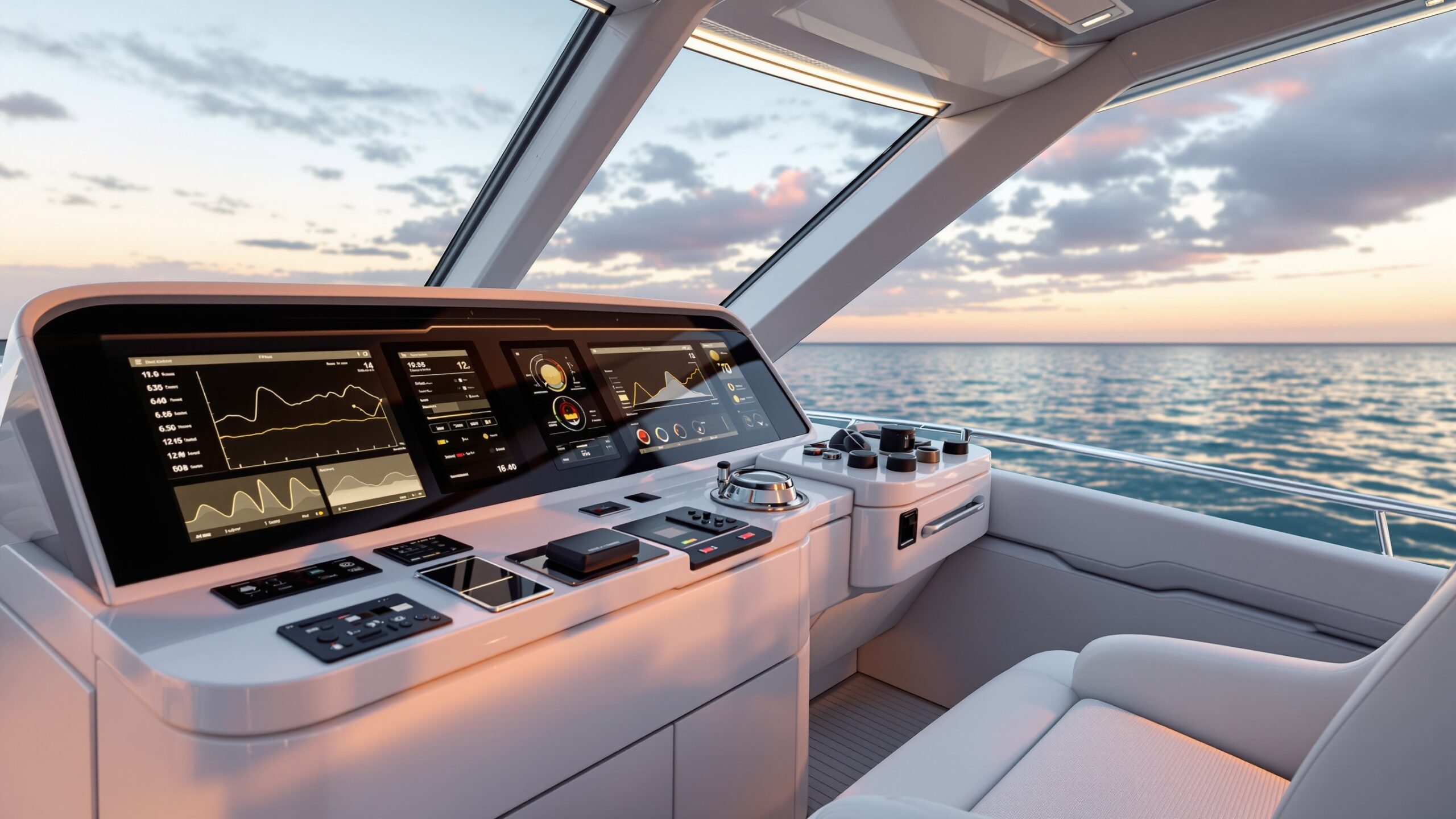
Marine Data & Sensors is where the modern ocean becomes measurable, predictable, and intelligently navigable. Beneath every smooth voyage or precision maneuver lies a network of advanced instruments quietly capturing the pulse of the water—tracking depth, mapping currents, monitoring weather shifts, and translating raw environmental signals into actionable insight. This sub-category explores how cutting-edge sensors and data systems are transforming boats into responsive, data-driven platforms capable of adapting in real time. From sonar and radar to GPS arrays, AIS tracking, and onboard environmental monitoring, today’s marine technologies do more than inform—they empower. Whether you’re optimizing fuel efficiency, enhancing safety, improving route planning, or unlocking new levels of performance, the right data ecosystem turns uncertainty into clarity. These articles break down the tools, innovations, and strategies shaping the future of marine intelligence, helping boaters, engineers, and enthusiasts stay ahead of changing conditions. Dive into Marine Data & Sensors and discover how precision data is redefining what’s possible on the water—smarter decisions, safer journeys, and a deeper understanding of the world below and around you.
A: It is any next-generation method of moving a boat, including electric, hybrid, hydrogen, and alternative-fuel designs.
A: Yes for many short-range, recreational, and near-shore uses, especially where charging access is available.
A: Range, charging infrastructure, and battery weight remain the biggest hurdles for many boat types.
A: They bridge today’s fuel-based systems and tomorrow’s cleaner propulsion with added flexibility.
A: Not universally; hydrogen may suit longer-range or larger vessels, while batteries fit many smaller use cases today.
A: Many electric systems can reduce mechanical complexity, but they still require careful battery and electronics care.
A: In some sectors they may, but the transition will likely happen gradually and differently across boat categories.
A: Not necessarily; some are optimized for efficiency, while others deliver impressive acceleration and modern performance.
A: Look at range, refueling or charging convenience, upfront cost, maintenance, and intended boating style.
A: A mix of electric, hybrid, hydrogen, and cleaner fuel systems designed around different boating missions.