
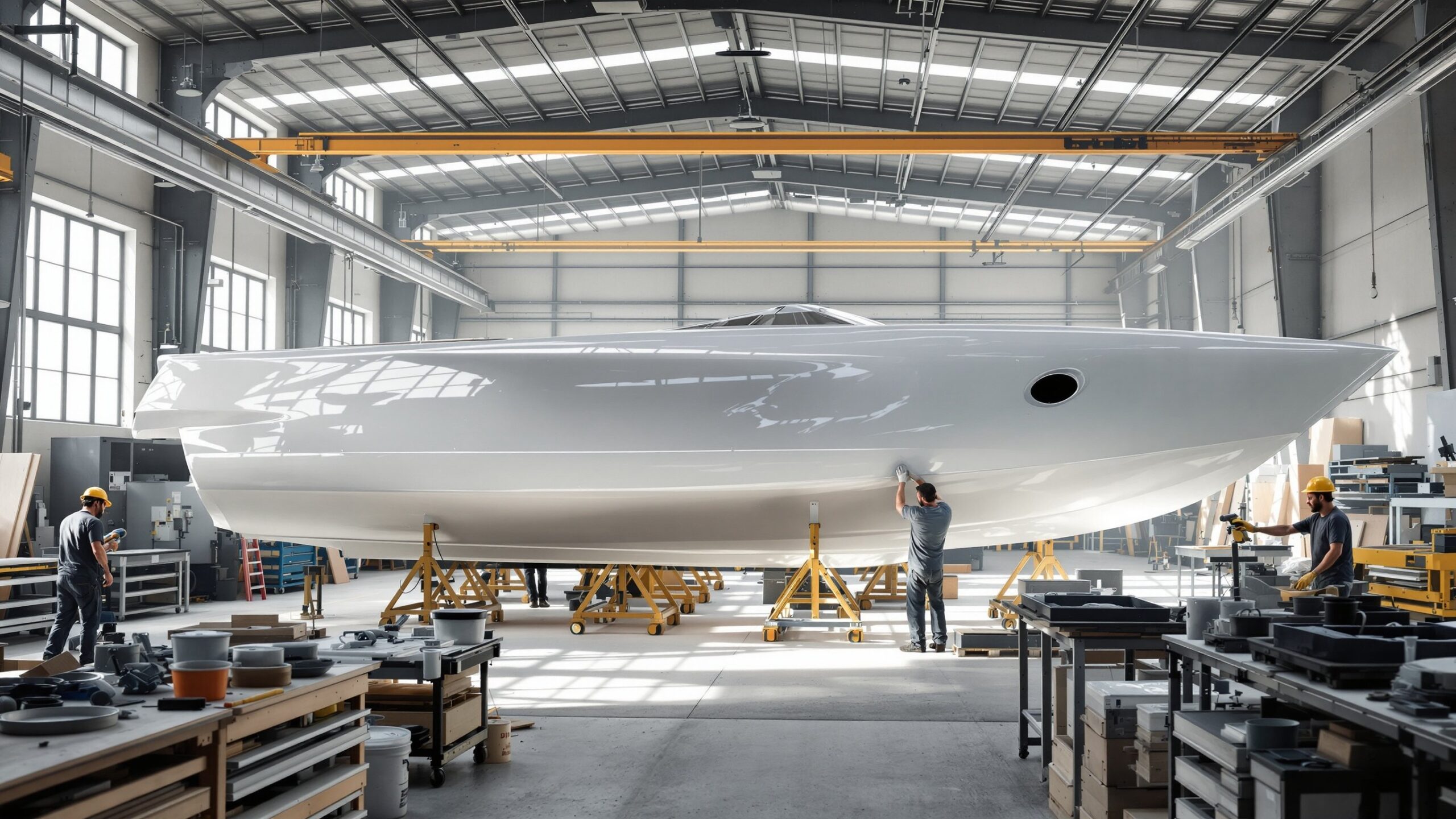
Boat manufacturing is where imagination meets engineering and raw materials become vessels built for adventure. Every boat on the water—whether a sleek offshore cruiser, a rugged fishing skiff, or a handcrafted wooden classic—begins as an idea shaped by skilled designers and brought to life by precise craftsmanship. The journey from blueprint to launch involves fascinating processes: sculpting hull molds, layering fiberglass, welding aluminum frames, fitting powerful engines, and installing the electronics that guide modern navigation. Each step blends tradition with innovation, combining time-tested techniques with cutting-edge technology to create boats that are stronger, lighter, and more efficient than ever before. On this page, you’ll explore the many methods that define how boats are built, from composite construction and resin infusion to metal fabrication and custom finishing. Whether you’re a curious boater, a future builder, or simply captivated by what happens behind the factory doors, these articles reveal the tools, materials, and expertise that transform sheets of material into seaworthy dreams ready to meet the horizon. Welcome aboard the world of boat building.
A: Hand layup is manual resin application; infusion pulls resin through fabric under vacuum for more controlled resin content.
A: Epoxy is typically strongest and most adhesive; vinylester is a common upgrade for better osmosis resistance than polyester.
A: Core adds stiffness with less weight, improving efficiency and reducing flex—when properly sealed against water.
A: Sealed edges, proper bedding, and over-drill/fill/re-drill around penetrations; disciplined hardware install processes.
A: They’re durable, but still need corrosion management: coatings, anodes, isolation of dissimilar metals, and proper bonding.
A: Fiberglass reinforcement strips that bond bulkheads/stringers to the hull, spreading loads across a larger area.
A: To reduce moisture migration in fiberglass and help prevent blistering—especially below the waterline.
A: Often with structural adhesive, mechanical fasteners, and fiberglass bonding—plus a sealed rubrail system.
A: Builders check temps, vibration, steering, WOT RPM, leaks, electrical loads, and overall handling across conditions.
A: Clean, labeled wiring; accessible service points; consistent bonding; tidy compartments; and documented QC/sea-trial notes.