
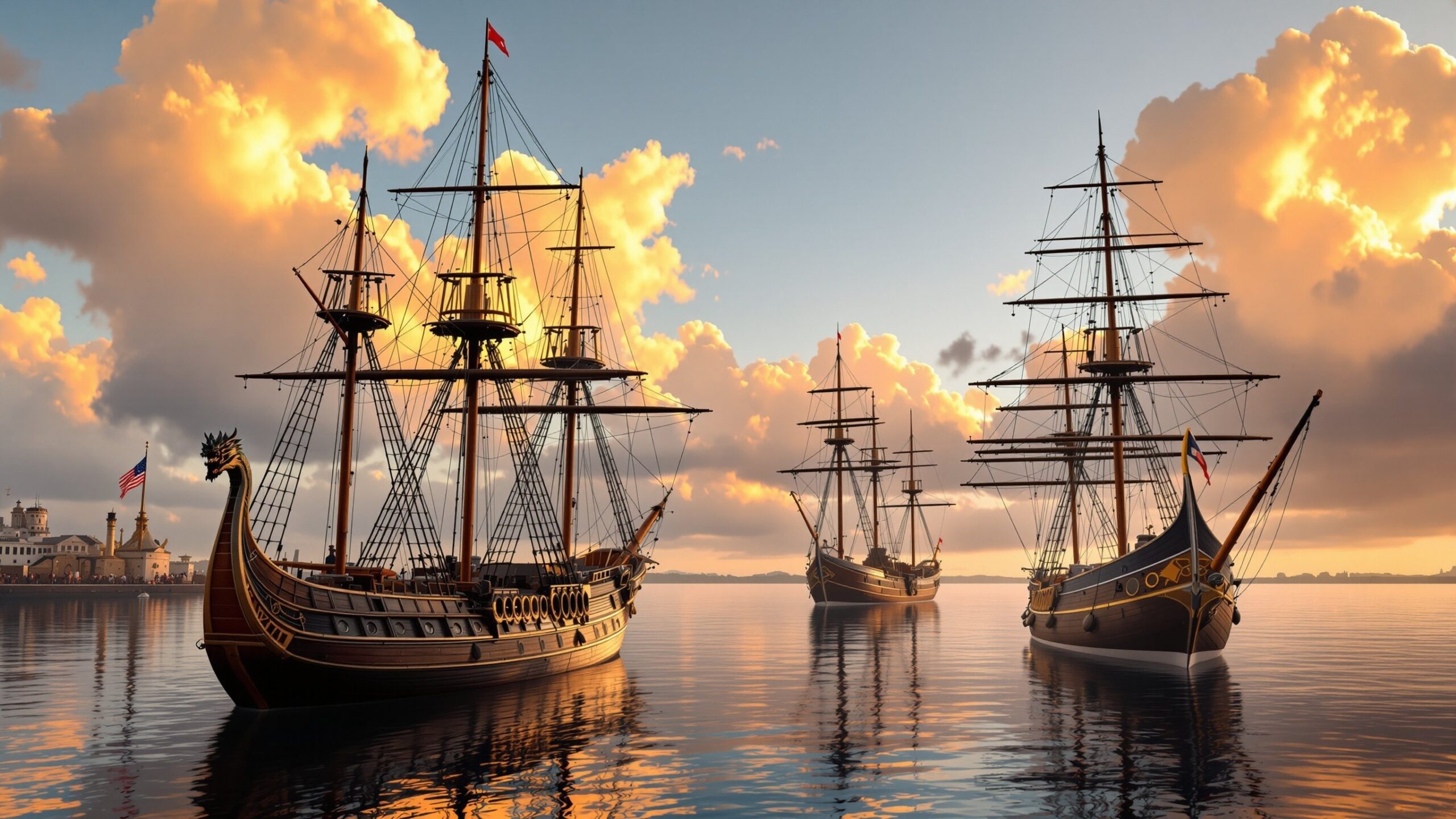
For thousands of years, the story of humanity has been written on water. Maritime History & Evolution invites you to sail through time and explore how boats transformed from simple reed rafts into the powerful vessels that shape our modern world. This corner of Boat Streets is dedicated to the dreamers, explorers, traders, and innovators who pushed beyond the horizon and changed civilization with every voyage. From ancient Phoenician trading ships to Viking longboats, from towering age-of-sail clippers to steel-hulled steam giants, each era brought new technology, new courage, and new possibilities. Here you’ll discover the breakthroughs that revolutionized navigation, the legendary journeys that redrew maps, and the maritime cultures that connected distant shores. Our articles dive into ship design, historic ports, famous captains, naval battles, and the everyday lives of sailors who lived by the rhythm of wind and tide. Whether you love tales of exploration, the mechanics of early engines, or the romance of old lighthouses, this collection celebrates the ever-changing bond between people and the sea—an epic voyage still unfolding today.
A: The shift to steam power—reliable schedules and new global trade patterns.
A: It reduced navigation error on long crossings, cutting wrecks and shortening voyages.
A: Size, durability, and design freedom—plus new industrial shipbuilding methods.
A: No—sail and steam overlapped for decades as costs, routes, and reliability evolved.
A: Speed-focused hulls and rigs, built to outrun competitors on high-value routes.
A: Better standards, training, navigation aids, hull design, and emergency equipment.
A: Standard boxes that move seamlessly between ship, truck, and rail—fast, efficient cargo handling.
A: They shorten routes, reduce fuel/time, and can reshape which ports dominate trade.
A: It studies shipwrecks and submerged sites to reveal trade, technology, and daily life.
A: Efficiency and sustainability: cleaner fuels, smarter routing, and advanced hull/propulsion tech.