
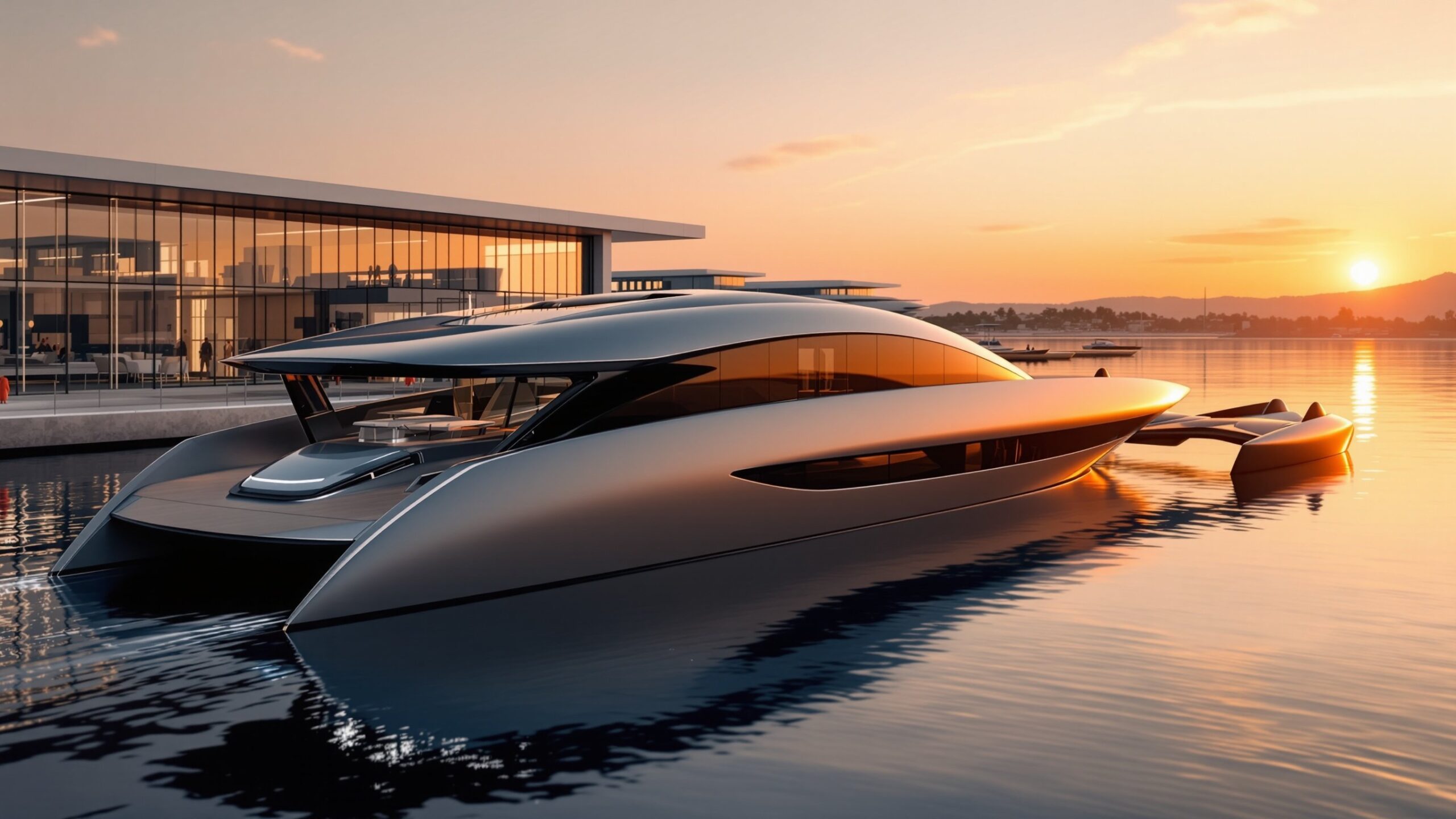
Step into a world where imagination meets open water in Electric & Futuristic Boat Galleries—the showcase of tomorrow’s most daring vessels. This is where silent electric cruisers glide beside hydrogen-powered explorers, and concept yachts look like they sailed straight out of science fiction. At Boat Streets, we celebrate the designs that are reshaping life on the water: sleek solar catamarans, AI-assisted pilothouses, foiling speedsters, and floating smart homes built with materials lighter than ever before. Every gallery tells a story of innovation—how engineers are replacing roar with whisper, fuel with electrons, and tradition with bold new thinking. You’ll discover interiors that feel like luxury lounges, hulls sculpted for maximum efficiency, and technology that turns navigation into an intuitive art. Whether you’re dreaming about the next family day cruiser or curious about autonomous ocean travel, these galleries offer a front-row seat to the marine revolution. Explore the boats redefining freedom, sustainability, and style—proof that the future of boating isn’t approaching, it’s already leaving the dock.
A: It depends heavily on speed, hull type, and battery size—slow cruising goes much farther than fast planing.
A: Yes when built correctly—marine EV systems use sealed components, isolation monitoring, and multiple protection layers.
A: It varies by battery kWh and charger kW—shore power is common; fast charging is growing but not universal.
A: Fewer fluids and moving parts, but you’ll monitor cooling loops, connectors, software updates, and battery health.
A: Sometimes, but it may be slow—dedicated shore power and proper marina wiring make a big difference.
A: They age over cycles and time—gentle charging habits and temperature control help extend life.
A: Typically displacement speeds; pushing onto plane usually drains energy fast.
A: Yes, but sealing and corrosion prevention are critical—inspect connectors and follow service intervals.
A: All non-propulsion power use (AC, fridge, lights, audio) that reduces your remaining range.
A: Yes—some boats use a generator as a range extender, combining electric drive feel with longer endurance.