
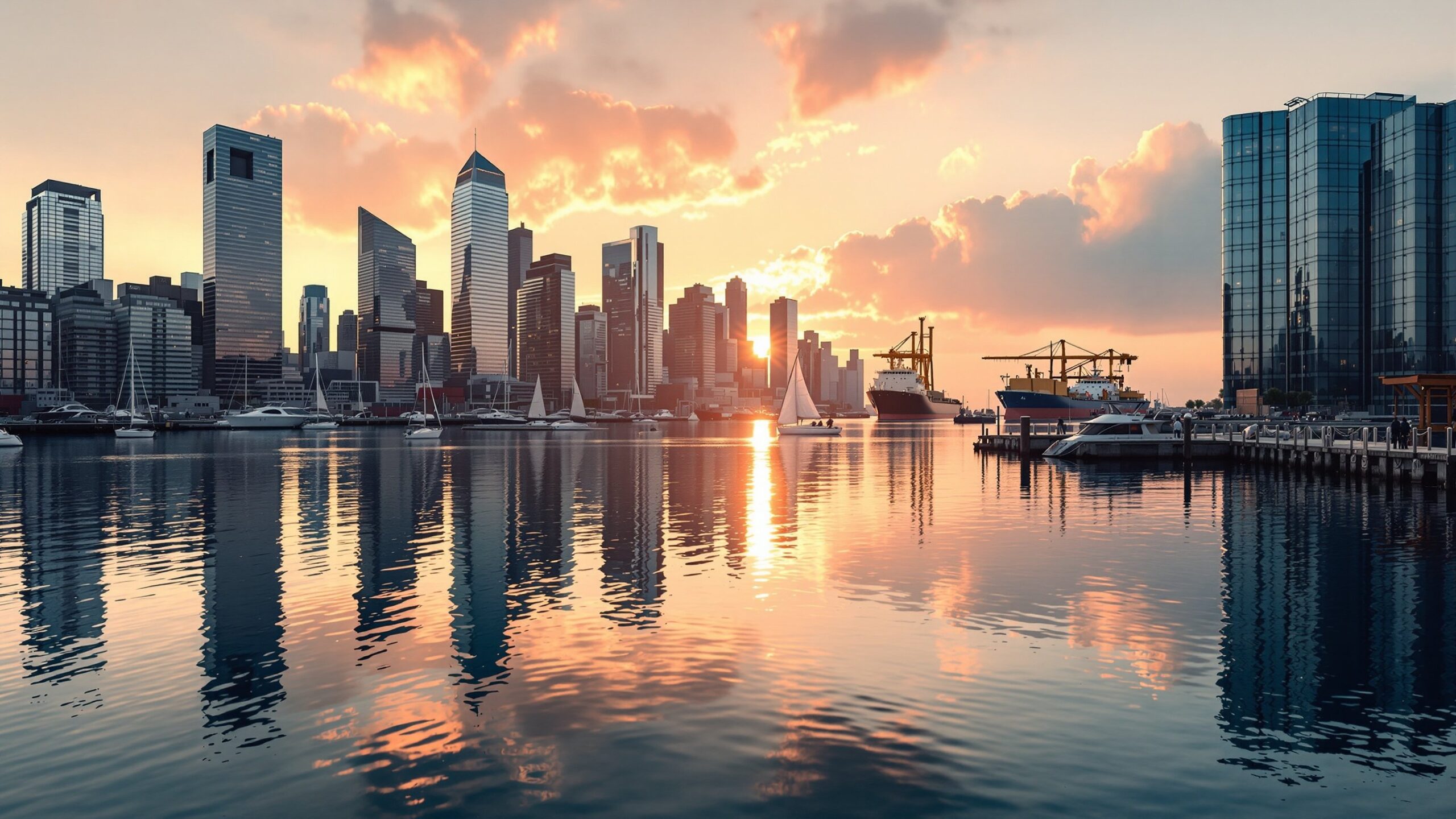
Waterfront Cities & Ports are where movement becomes identity. They are the meeting points of tide and skyline, where working docks, marinas, ferries, and freighters shape the rhythm of daily life. In these cities, water is not just scenery—it’s infrastructure, economy, culture, and escape. From historic harbors that once launched wooden ships into open oceans to modern container terminals orchestrating global trade, ports are living systems that power entire regions. On Boat Streets, this Waterfront Cities & Ports hub explores how coastal design, maritime industry, boating lifestyle, and urban planning intersect along the water’s edge. Discover the stories behind legendary harbor towns, the engineering that keeps deep-water channels open, the lifestyle advantages of marina districts, and the evolving balance between recreation and commerce. We dive into port logistics, waterfront redevelopment, sailing communities, cruise terminals, fishing fleets, and the environmental forces that shape coastal resilience. Whether you’re drawn to weekend cruising, global shipping routes, or the architectural drama of skyline reflections at golden hour, this category charts the pulse of cities that live by the tide—and thrive because of it.
A: A marina focuses on recreational slips/services; a port is a commercial hub for cargo and logistics.
A: Review charts, check tide/current, monitor VHF, and stay in marked channels and traffic lanes.
A: Often yes—hail the marina on VHF or phone to confirm slip assignment and docking help.
A: Slow, controlled speed with a plan for wind/current; set fenders/lines early and use neutral often.
A: Approach into the current when possible, use short bursts of power, and secure the upstream line first.
A: Restricted zones, tug traffic, prop wash, and large-ship blind spots—give wide clearance.
A: Prop walk and current can swing the stern—anticipate it and angle your approach accordingly.
A: Idle/no-wake—minimize wake to protect docks, swimmers, and moored boats.
A: Stay inside markers, mind tide height, watch the depth sounder, and avoid cutting corners at channel bends.
A: Identify fuel/pump-out locations, local no-wake zones, bridge clearances, and emergency contact channels.