Compare the Cost of the Years You Will Own the Boat
A used boat can offer a lower entry price, while a new boat can offer a more predictable starting condition and a different warranty arrangement. Neither advantage alone tells you which purchase will save more over your ownership period. The comparison needs to include inspection, immediate work, ongoing expenses, borrowing where applicable, and what you may recover when selling. Start with boats that perform the same job for you, then compare them across the same number of years. This guide uses a clearly hypothetical five-year example to explain the arithmetic. It does not assign a universal depreciation rate or claim that every older boat is a bargain. The aim is to reveal which assumptions make one candidate less expensive and which uncertainties could reverse that result.
A: Inspection, required work, ownership spending, and later proceeds can change the result.
A: Routine service and other excluded expenses remain separate obligations.
A: Age alone does not guarantee a stable resale price or an easy sale.
A: No. The candidates and amounts are hypothetical comparison inputs.
A: Different periods expose the candidates to different expenses and resale dates.
A: No. That figure stress-tests the example and is not a repair prediction.
A: Its scope and limitations must be agreed, with specialist checks where needed.
A: It may reflect a longer repayment period and does not settle total ownership cost.
A: Include the time, tools, storage, and path to usability in the project decision.
A: Compare documented candidate-specific costs and reserves across the same intended ownership period.
Choose Comparable Boats Before Comparing Their Prices
Define the boating program first: passenger needs, waters, storage, towing capacity, propulsion, and the systems you actually want. Compare candidates that can satisfy that program without a major unbudgeted change. A smaller used runabout and a much larger new cruiser do not isolate the financial effect of age. They change storage, fuel, maintenance, and perhaps the way you will boat. Write down the features that must be equivalent and identify any difference that you are deliberately accepting.
Choose an ownership horizon that reflects your plans. A boat kept for two seasons creates a different exposure to transaction costs and resale value from one kept for fifteen years. Use the same horizon for both candidates. If one is a short-term learning boat and the other is intended as a long-term purchase, compare complete ownership paths rather than pretending they are equivalent single transactions. A second purchase can add inspections, transport, fees, and another sale.
Obtain a Complete New-Boat Acquisition Figure
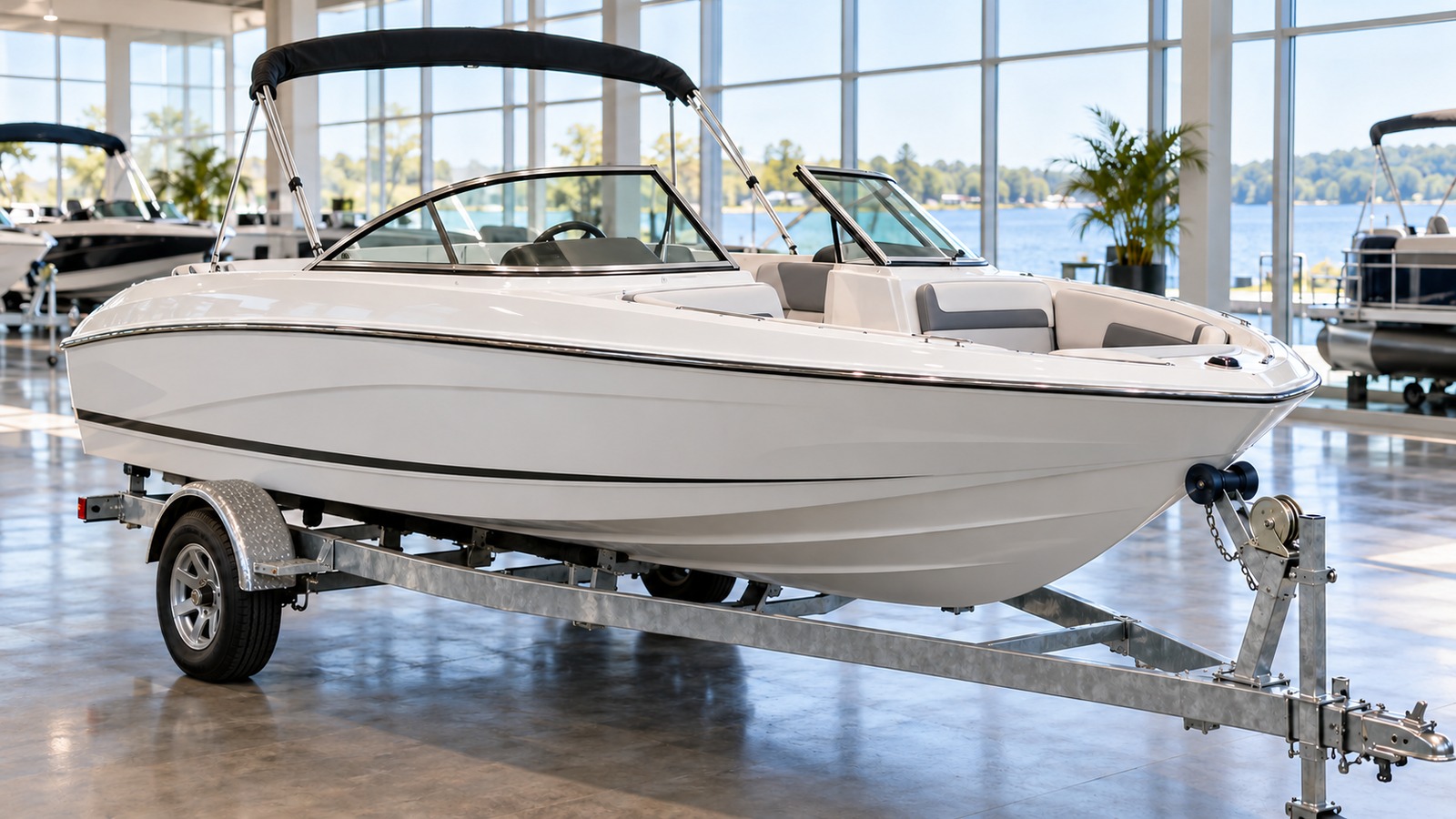
A base advertised price may exclude the engine package, trailer, delivery, commissioning, electronics, safety gear, or options needed for your use. Ask for an itemized out-the-door proposal showing what is included and what remains your responsibility. Confirm taxes and official charges for the actual transaction. Review delivery timing and acceptance arrangements so the start of ownership is clear. An inexpensive base model becomes a different comparison if the practical specification requires substantial additions. Keep optional upgrades separate from essential equipment, and compare the boat you would actually take on the water rather than a stripped headline configuration.
Price the Used Boat’s Condition Before Celebrating the Discount
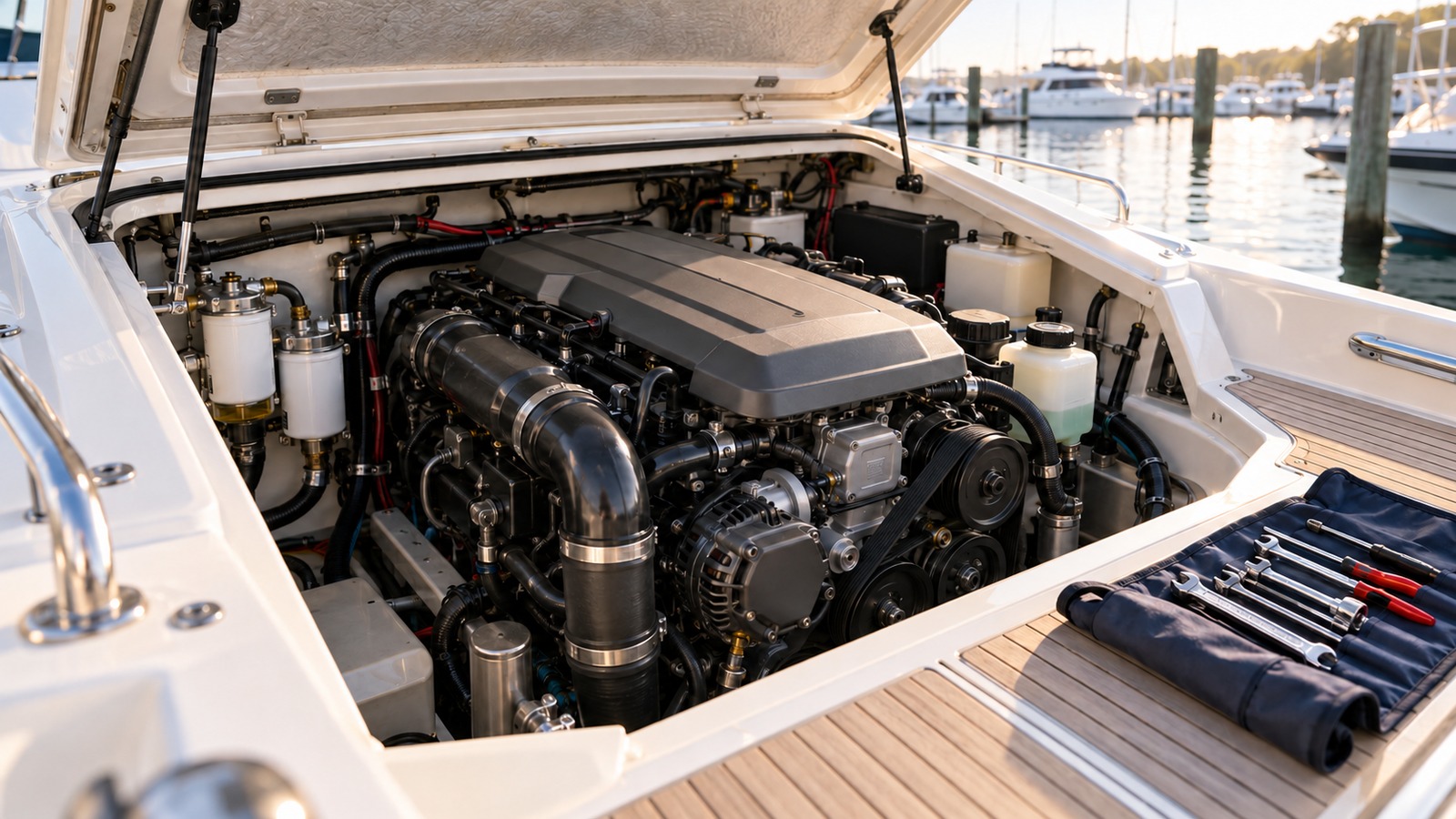
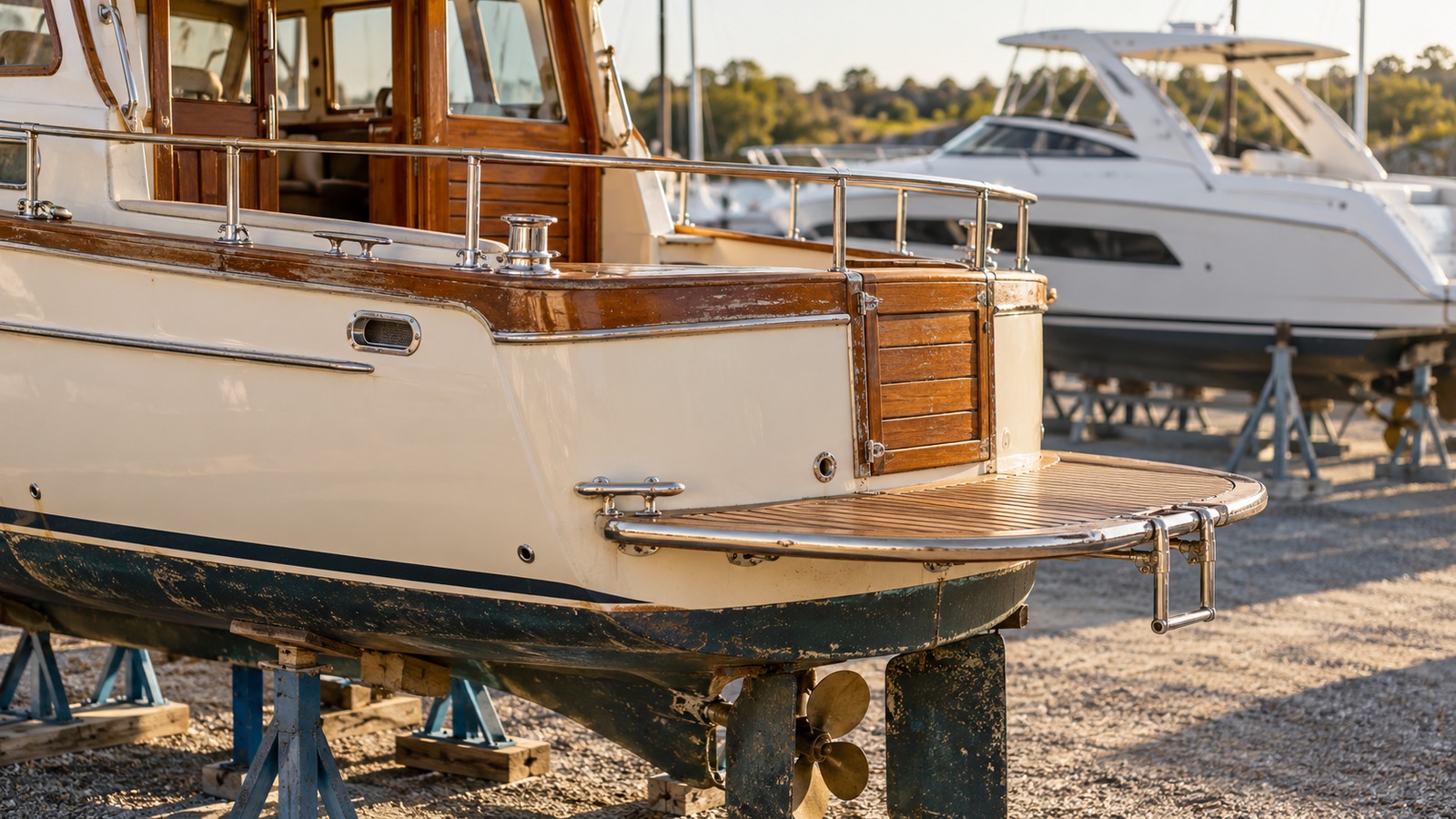
Arrange an appropriate independent inspection and sea trial, with specialist machinery or other checks where needed. Establish the scope in writing because a general survey does not necessarily include every system test or invasive inspection. Ask how haul-out, access, and trial costs are handled. A clean cockpit and fresh cushions do not establish structural condition, engine health, or the quality of previous installations. Use the findings to identify both immediate safety work and likely near-term maintenance.
Separate an identified defect from uncertainty. A known repair can be priced through a realistic quote, while an inaccessible or untested system may require further investigation before the cost is understood. Do not treat the absence of a diagnosis as evidence that the system is sound. Ask the surveyor or specialist what can be concluded and what remains outside the inspection. Some uncertainty may be acceptable, but its financial consequences should fit the reserve you will retain.
Turn the findings into an acquisition allowance before comparing totals. Include catch-up servicing, expired equipment, defective pumps, trailer work, and other documented needs that the purchase price does not resolve. A seller’s promise to fix something should become a clear written term if it is part of the agreement. The BoatUS boat-buying guide recommends written purchase terms and attention to survey, sea-trial, financing, and insurance contingencies. Those steps help you evaluate the actual candidate rather than the attractive asking price.
Read Warranty Coverage as a Contract
A new-boat warranty can reduce responsibility for qualifying defects, but coverage, duration, exclusions, service arrangements, and component warranties vary. It does not make fuel, storage, insurance, routine servicing, or every future failure free. Ask who handles a claim and whether transport or other costs remain with the owner. Check the delivery and service process in your location before assigning a financial value to the promise.
A used boat may have remaining transferable coverage, a dealer warranty, a service contract, or no relevant protection. Verify the actual document, transfer conditions, and covered components. Do not assume that an informal statement that the engine is still under warranty covers the entire boat. Put the confirmed arrangement into the comparison and retain a reserve for uncovered expenses. Predictability has value, but it needs to be based on terms you can use.
Model Resale Without Inventing a Universal Depreciation Rate
Estimate future proceeds conservatively using the candidate’s market, age, specification, condition, and your ownership horizon. Asking prices can provide context but are not completed sales. Allow for sale preparation, brokerage where applicable, transport, and the possibility that a quick sale requires a different price. A new boat may experience a substantial change between retail acquisition and later resale, while a used boat can also lose value or become difficult to sell. Avoid applying one percentage to every hull as if condition and the market do not matter. Use several plausible proceeds figures so you can see how sensitive the result is to an uncertain future sale.
Follow a Transparent Five-Year Comparison
Consider two invented candidates that meet the same boating needs. Assume the new boat costs $60,000 and the used boat costs $35,000. Over five years, allocate $17,000 in ownership spending to the new boat and $22,000 to the used boat, including the used candidate’s planned catch-up work. Assume $2,000 in relevant transaction expenses for each and future sale proceeds of $40,000 for the new boat and $25,000 for the used boat. All figures are hypothetical modeling inputs. They are not quotes, market averages, or predictions.
For the new boat, $60,000 plus $17,000 plus $2,000 minus $40,000 equals a modeled five-year cost of $39,000. For the used boat, $35,000 plus $22,000 plus $2,000 minus $25,000 equals $34,000. Under those assumptions, the used option costs $5,000 less over the period. The result comes from the full set of inputs rather than the $25,000 purchase-price gap alone. Insurance, maintenance, and resale assumptions have already narrowed the difference substantially.
This example excludes financing and the opportunity cost of cash so the basic ownership arithmetic is clear. Add those consistently if they matter to your decision. Do not include loan principal as an extra expense on top of an acquisition price already counted in full. Instead, distinguish the economic comparison from the separate schedule of cash needed for down payments and installments. Mixing those views can make either candidate appear artificially expensive.
Test the Used Boat’s Repair Uncertainty
Now add an unplanned $9,000 expense to the used candidate while holding the other hypothetical inputs unchanged. Its modeled total becomes $43,000, exceeding the new boat’s $39,000 scenario by $4,000. This does not predict that a particular used boat will need that repair. It identifies how much uncertainty the apparent saving can absorb. Work through plausible system-specific risks with the survey and repair evidence available. If the lower purchase price leaves enough reserve for a bad year, that may support the used choice. If it consumes all your cash before essential work begins, the same purchase can be financially fragile.
Check the New Boat’s Uncertainty Too
A new vessel can also encounter commissioning issues, service delays, equipment problems, and resale outcomes different from the estimate. Model a less favorable sale price or additional uncovered expense instead of assigning all uncertainty to the used candidate. A warranty claim can take time even when the defect qualifies for coverage. Consider whether the local dealer and service network can support the boat during your intended season. The comparison should reflect realistic access to help, not simply a belief that new equipment cannot cause inconvenience.
Keep the cost of additional complexity visible. A new candidate with more systems may create higher service requirements than a simpler used boat, while a lightly equipped used candidate may need expensive additions to meet your needs. Make those differences explicit. The useful distinction is the actual boat and its ownership program, rather than newness as a substitute for an equipment inventory.
Compare Financing on the Actual Offers
Lenders may treat vessel age, value, condition, and borrower details differently, so obtain terms for each candidate. Compare rate, amount financed, term, fees, and the projected balance when you intend to sell. A lower payment can result from a longer term rather than a lower total cost. The used candidate’s lower price does not guarantee lower borrowing cost under every available offer. Keep underwriting or insurance requirements that must be satisfied before closing in the acquisition plan. If financing is essential, an attractive boat that cannot obtain acceptable terms is not a complete purchase option.
Value Your Time Without Hiding the Financial Tradeoff
Some owners enjoy restoration and can perform suitable tasks competently. Others want limited maintenance work and professional support. Be honest about the tools, workspace, time, and skills you actually have. Owner labor may reduce paid invoices but does not make every project effortless or safe. A repair that consumes the season can reduce the value of a boat intended for family outings. Consider both the cash estimate and the likely time before the vessel is ready for the intended use.
Do not assume that a project boat will become inexpensive merely because its repairs are spread over several years. Storage and financing can continue while work remains unfinished, and exposed or incomplete systems may create additional costs. Price the path to a usable boat before committing. If the project is the hobby you want, evaluate it on that basis rather than comparing it with a ready-to-use vessel as though they provide the same immediate benefit.
Include the Practical Route to Service and Sale
Check whether qualified local providers support the candidate’s engines and systems. A repair estimate from a distant specialist may not include moving the boat there. Obtain realistic access and scheduling information before assuming the cheaper vessel can be kept ready for use.
Compare access costs explicitly. If one candidate can be serviced at its storage site while another requires hauling and transport, enter those additional charges beside the repair quotation. Confirm the yard’s scheduling as well: a lower invoice offers less practical value if the work cannot be completed during the season you intend to use the boat.
Consider the eventual selling process with the same care. Storage and insurance can continue while a boat waits for a buyer. Allow for the local season, likely preparation work, and the possibility that your preferred sale date does not match the market’s timing.
Choose the Candidate That Survives the Full Comparison
Prepare one consistent record for each candidate: acquisition cost, inspection findings, required work, annual ownership allowances, financing, conservative sale proceeds, and the reserve remaining afterward. Test at least one unfavorable scenario for each. The lower-cost choice is the one supported by those actual inputs over the period you intend to own it. A used boat can save money when its price, condition, and repair exposure align. A new boat can justify its higher entry cost when the full ownership arrangement better fits your needs. Let the documented comparison determine the answer for these boats, rather than relying on a universal claim about age.