Spend Where a Buyer Can Verify the Improvement
A prospective buyer notices a clean cockpit, but the inspection quickly moves to questions about leaks, machinery, systems, and service records. The most useful preparation addresses what could stop the boat from being a credible purchase. That can mean repairing an unreliable pump or documenting overdue engine work before buying a new entertainment system. There is no universal upgrade that guarantees a dollar-for-dollar increase in sale price. Value depends on the boat, its condition, local buyers, workmanship, and the cost of completing the work. Treat presale spending as a decision about net proceeds and sale readiness. Start with a condition assessment, distinguish essential repairs from optional improvements, and choose work that a buyer can understand and verify without inheriting a fresh unfinished project.
A: No. Buyer preferences, workmanship, vessel condition, and the market affect the outcome.
A: Correct the cause of moisture before covering the affected space.
A: It documents the stated work rather than guaranteeing every component.
A: Assess the existing machinery, installation cost, and model-specific market before committing.
A: It can remove a practical obstacle a buyer would otherwise need to investigate or price.
A: Check whether the likely buyer benefit justifies the completed cost.
A: Its serviceability and documentation are part of a towable package.
A: An accurately described condition and appropriate terms may support that path.
A: Use current honest images after the intended preparation is complete.
A: Complete the justified scope and decline extras without a clear sale purpose.
Inspect the Boat as a Buyer Would
Walk through the boat from the boarding point to the machinery spaces and list what you can actually observe. Include difficult hatches, damaged upholstery, wet lockers, unreliable switches, missing equipment, and service items with uncertain histories. Keep cosmetic defects separate from structural, mechanical, and safety concerns. A small visible defect can have a simple remedy, while a hidden moisture problem can require diagnosis before any sensible budget is possible. Ask a qualified marine professional to assess issues beyond your competence rather than assigning a hopeful repair allowance.
Review comparable boats with similar size, age, power, and condition. Asking prices provide context but do not establish what the boats ultimately sell for. If using a broker, ask which deficiencies commonly interrupt surveys or negotiations for this model and buyer group. The aim is to identify the work that helps the vessel compete credibly. An upgrade chosen for your personal taste may have little relevance to the person considering this particular boat.
Set Priorities Before Testing the Net Proceeds
Use three spending tiers. First address defects that prevent a sound, honestly represented sale: structural concerns, active leaks, unreliable machinery, and unsafe systems. Next complete ordinary presentation work, including cleaning and repairs that restore normal use. Treat discretionary electronics and personalized additions as the last tier, funded only when the likely buyer benefit warrants the cost. This is a sale-readiness order, not a measured return-on-investment ranking. Estimate the completed cost of a proposed job, including diagnosis, removal, installation, finishing, yard access, and any follow-up work. Then ask whether the plausible improvement in sale outcome justifies that cost and the delay. A hypothetical $3,000 improvement that produces only $1,500 in additional proceeds does not create a $1,500 profit. It reduces proceeds by $1,500 before other effects. The calculation does not mean essential safety defects should be ignored. It means you must distinguish work required for a sound sale from speculative spending intended to increase the price. Set a total preparation budget and decide which tasks must be completed before optional items receive funds.
Address Structural and Water-Ingress Problems First
Water stains, soft areas, persistent bilge water, and recurring leaks can raise questions about the vessel’s condition. Determine the cause before refinishing the visible surface. A new panel over an unresolved leak leaves the underlying problem and makes the presentation less trustworthy. Have suitable specialists assess structural or moisture-related concerns, and obtain a repair scope that identifies what is being corrected. Retain photographs and invoices so the work can be explained to a prospective buyer.
Be realistic about the sale path if the repair is substantial. Completing a professionally documented job may be appropriate, while another owner may choose a clearly described project sale with a price reflecting the condition. Concealing the issue behind fresh cosmetic work is not a sound preparation strategy. Discuss disclosure and transaction obligations with the relevant qualified professional. The practical objective is an accurate description of the boat and a buyer who understands the condition being offered.
Make Mechanical Readiness Visible Through Records
Bring scheduled servicing up to date where appropriate and diagnose running issues before relying on a sea trial to reveal them. An engine that starts correctly, reaches its intended operating condition, and has a documented maintenance history gives a buyer more useful information than polished engine covers alone. Have work performed according to the equipment’s instructions by someone competent for the task. Identify any remaining issue accurately rather than promising that a fresh service proves every component is perfect.
Organize the records by system and date. Include engine and drive work, cooling-system attention, battery replacements, and other relevant maintenance. Make it easy to match invoices with the equipment aboard. A concise, understandable file helps the buyer distinguish recent work from unsupported claims. It also prevents the value of legitimate maintenance from disappearing into a vague statement that everything has always been looked after.
A complete repower deserves its own financial analysis. It can be expensive, may require associated rigging or structural work, and changes the boat’s specification. Do not assume its full cost will be recovered simply because the old engine has high hours. Obtain a professional assessment of the existing machinery, realistic installation quotes, and market advice for the model. The better presale decision may be a correctly priced boat with accurately described machinery rather than an ambitious upgrade shortly before sale.
Repair Basic Systems Before Adding More Features
Reliable bilge equipment, lighting, steering, electrical connections, and plumbing contribute to a boat that can be inspected and operated sensibly. A dead accessory or intermittent switch can be a small fault, but an accumulation of unresolved faults makes it harder for a buyer to estimate what ownership will involve. Diagnose each problem rather than installing a replacement over damaged wiring or a leaking connection. Keep required safety equipment and its condition part of the readiness review. Use suitable marine components and qualified installation where needed. Adding another feature to an unreliable foundation can create extra questions instead of improving the sale.
Refresh Upholstery Where Damage Interrupts Use
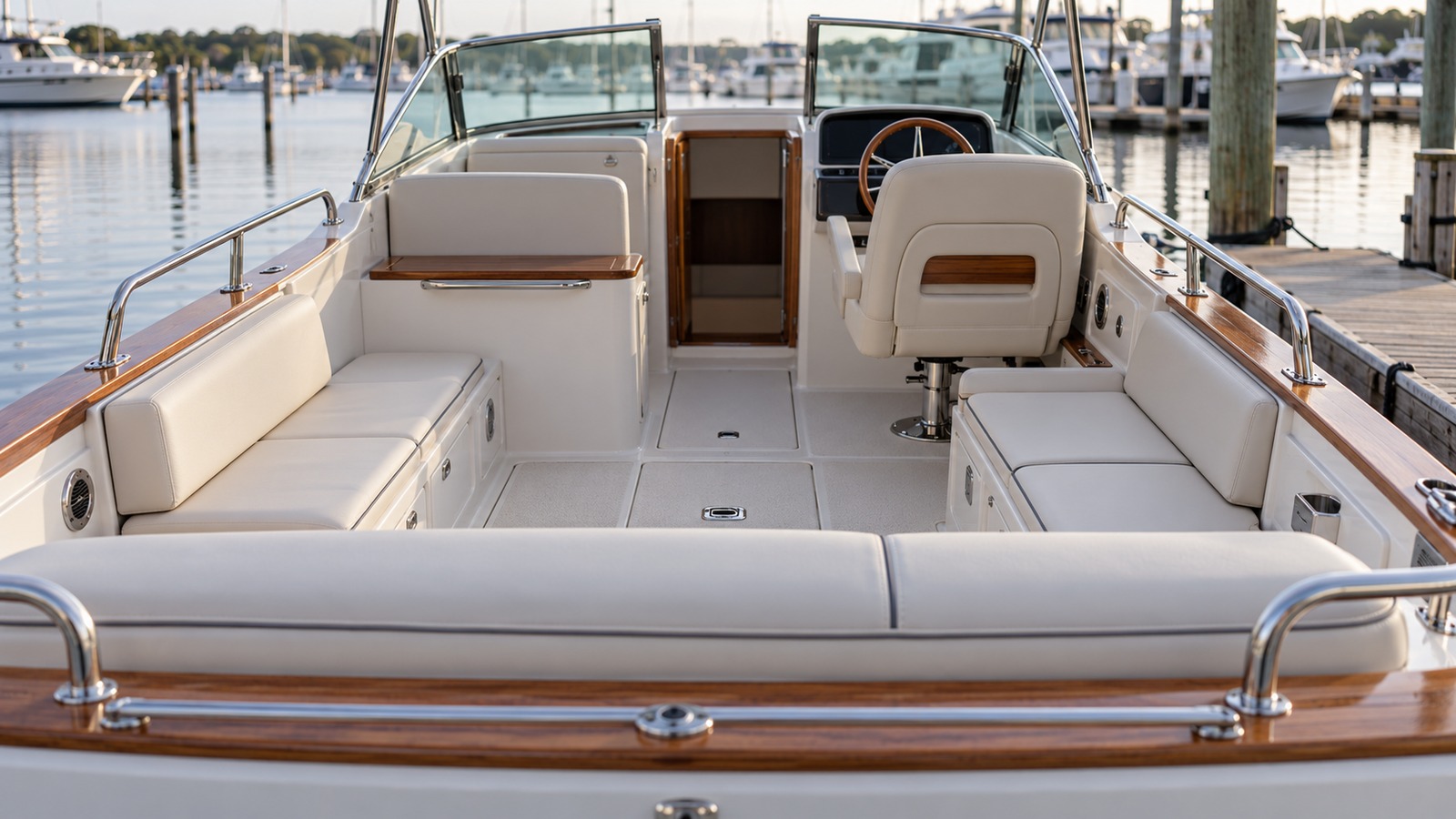
Torn seating, failed stitching, damaged foam, and cushions that no longer fit can make an otherwise useful cockpit feel neglected. Price repair against replacement and choose a scope proportionate to the boat’s market position. A targeted professional repair may be more sensible than a complete redesign. Use materials suited to the marine environment and preserve access to lockers, drains, and equipment. Neutral choices often make it easier for a buyer to picture using the boat, but buyer preferences vary.
Do not hide an underlying moisture problem under new cushions. Inspect the bases and surrounding areas, dry the space, and correct the cause of persistent dampness before finishing. Keep photographs of the work where they help explain what was repaired. Fit and workmanship matter as much as new material. Loose, poorly supported cushions can undermine the practical benefit of a visually fresh cockpit.
Restore Surfaces Carefully and Proportionately
Cleaning, appropriate polishing, and repairing small finish defects can improve presentation without changing the boat’s character. Use methods suitable for the actual surface and its condition. Aggressive treatment can damage gelcoat, coatings, nonslip areas, seals, or fittings. If the finish needs substantial correction, ask a qualified specialist to explain the scope and realistic result before committing. Clean storage spaces and accessible machinery areas as well as the exterior. The aim is to reveal maintained condition, not create a misleading appearance that disappears when the buyer opens a hatch. Resolve odors by identifying their source rather than masking them with fragrance.
Choose Electronics Work Around Function and Compatibility
Repairing an unusable essential display or making an existing navigation installation reliable can support the boat’s intended use. A major electronics replacement is a different investment. Buyers may prefer their own ecosystem, screen layout, or chart package, so a newly installed expensive system may not return its full cost. Ask whether the current installation works safely and whether the target market expects a functional minimum that it no longer meets. Price that problem before selecting the largest available screen.
Check compatibility, power supply, mounting, network requirements, and the quality of the finished installation. Avoid leaving unused cutouts, unsupported cables, or inaccessible fuses as the legacy of an upgrade. Keep manuals and receipts, and explain what subscriptions or services transfer with the equipment where applicable. Confirm those terms with the provider rather than assuming every digital benefit follows the hardware to a new owner. A smaller complete job is easier to assess than an impressive screen surrounded by unfinished work.
Give the Trailer Its Own Condition Review
If the boat is sold with a trailer, inspect the package rather than treating the trailer as a free accessory. Tires, bearings, lights, brakes where fitted, supports, winch components, and corrosion can affect whether the buyer can move the boat safely. Use the manufacturer’s guidance and professional service for work beyond your skills. Confirm the trailer’s suitability for the actual loaded boat and the relevant documentation for the transaction. A buyer planning to tow home needs credible information about this part of the purchase too. Budget trailer repairs separately so they do not disappear inside a cosmetic boat allowance.
Prefer Finished, Reversible Improvements to Personal Experiments
Useful storage, repaired deck hardware, improved access, and tidy replacements can support ordinary use when properly designed and installed. Large personalized changes can narrow the audience or leave questions about structure, loading, and workmanship. Before drilling new holes or changing the layout, consider whether restoring the original function would serve the sale better. If an improvement is easily reversible, retain the original components and document the installation. Avoid creating an additional project that must be explained during every viewing.
Check the complete effect on the vessel. Added equipment can change electrical demand, weight distribution, access, and maintenance requirements. A convenient new fitting is less useful if it blocks an inspection hatch or creates a trip point. Evaluate the finished arrangement from the perspective of someone who will operate and service the boat after purchase. The improvement should be understandable without a long explanation of temporary workarounds.
Make the Handover File Part of the Preparation
Collect manuals, service records, relevant receipts, equipment details, and the ownership documents needed for the sale. Check identifiers and describe included equipment accurately in the listing and agreement. Keep a clear record of known outstanding work. A tidy file does not guarantee condition, but it helps a buyer investigate efficiently and reduces confusion about what is included. The BoatUS boat-buying guide emphasizes clear written transaction terms. Apply that principle by making the equipment inventory and agreed work consistent across the listing, viewing discussion, and final documents.
Finish the Work Before Photographing the Result
Photograph the boat after repairs, cleaning, and reassembly are complete. Show the spaces buyers need to evaluate, using honest views of the actual vessel. Keep photographs current if the condition or included equipment changes. Do not describe an installation as complete while panels remain open and wiring is unfinished. A buyer should be able to move from the listing to the viewing without discovering that the attractive presentation depended on excluding important areas from view.
Before listing, repeat the initial walkthrough and compare it with the budget and repair record. Verify that completed jobs function, that invoices are available, and that remaining issues are described accurately. Stop spending when additional work no longer has a clear purpose in the sale. The improvements that contribute most are those that address this boat’s genuine obstacles, support safe and ordinary use, and produce a finished condition a buyer can assess. That disciplined preparation is more dependable than trying to recover the cost of every new accessory through a higher asking price.