Improve the Part of Boating That Keeps Getting in Your Way
The best upgrade often begins with an ordinary annoyance: a difficult step aboard, a locker nobody can reach, a phone that runs flat, or a cockpit that becomes uncomfortable by midday. Start by describing that problem before choosing equipment. A useful change should make your real outings safer, easier, or more enjoyable without adding demands the boat cannot support. This guide considers practical improvements for recreational owners rather than ranking products by price or promising every installation will increase resale value. Vessel design, existing condition, operating waters, and crew needs determine what belongs near the top of your list. First bring essential maintenance up to date, then select improvements whose benefit you can explain through the way you actually use the boat.
A: Frequency and consequence matter more than price.
A: Restore essential condition before discretionary work.
A: Diagnosis should establish the actual cause.
A: Equipment still requires knowledge and practice.
A: Capacity and safe loading remain separate limits.
A: It joins the boat's maintenance routine.
A: Ask for the complete finished and tested job.
A: Test the task that motivated the purchase.
A: Support and repair access also affect usefulness.
A: Review completed results and remaining operating needs.
Walk Through a Complete Outing Before Shopping
Follow the trip from loading at home through boarding, departure, time afloat, return, cleaning, and storage. Write down the points where people struggle or a workaround repeatedly consumes attention. Perhaps the cooler blocks access to a line, the swim ladder is awkward to reach, or a service hatch requires unloading half the boat. Those observations describe useful requirements. They also help distinguish a genuine need from an attractive item that solves a problem you do not have. Ask regular passengers what would improve their experience, because the operator may not notice the difficulty somebody else faces every time they step aboard.
Use several outings as evidence before deciding. A problem caused by an unfamiliar routine may improve through better stowage or instruction rather than a purchase. Conversely, the same difficulty appearing on every trip deserves attention. Photograph the space and record dimensions while the boat is safely secured. Consider how the proposed change works when people wear bulky clothing, carry bags, or move in wet conditions. The useful design is the one that works in the real setting, including the less convenient parts of the season.
Rank the list by consequence and frequency. Correcting a loose fitting or unreliable essential system comes before adding comfort equipment. Among discretionary projects, a modest change used on every outing can be more valuable than an expensive feature used twice a year. For example, a family whose cooler blocks the boarding route on every outing should first relocate or secure the existing cooler and test the clear route. If that solves the problem, a new storage module has no demonstrated benefit. If boarding is still awkward because the approved ladder is damaged, repair that access problem before buying decorative lighting. Compare a shade upgrade only after the movement and access issues are resolved. Assign each proposed job a clear outcome and budget. If the benefit cannot be stated without repeating a sales description, postpone the purchase until you understand the need better. That discipline keeps the upgrade program connected to ownership rather than becoming an endless collection of accessories.
Make Boarding and Movement Easier
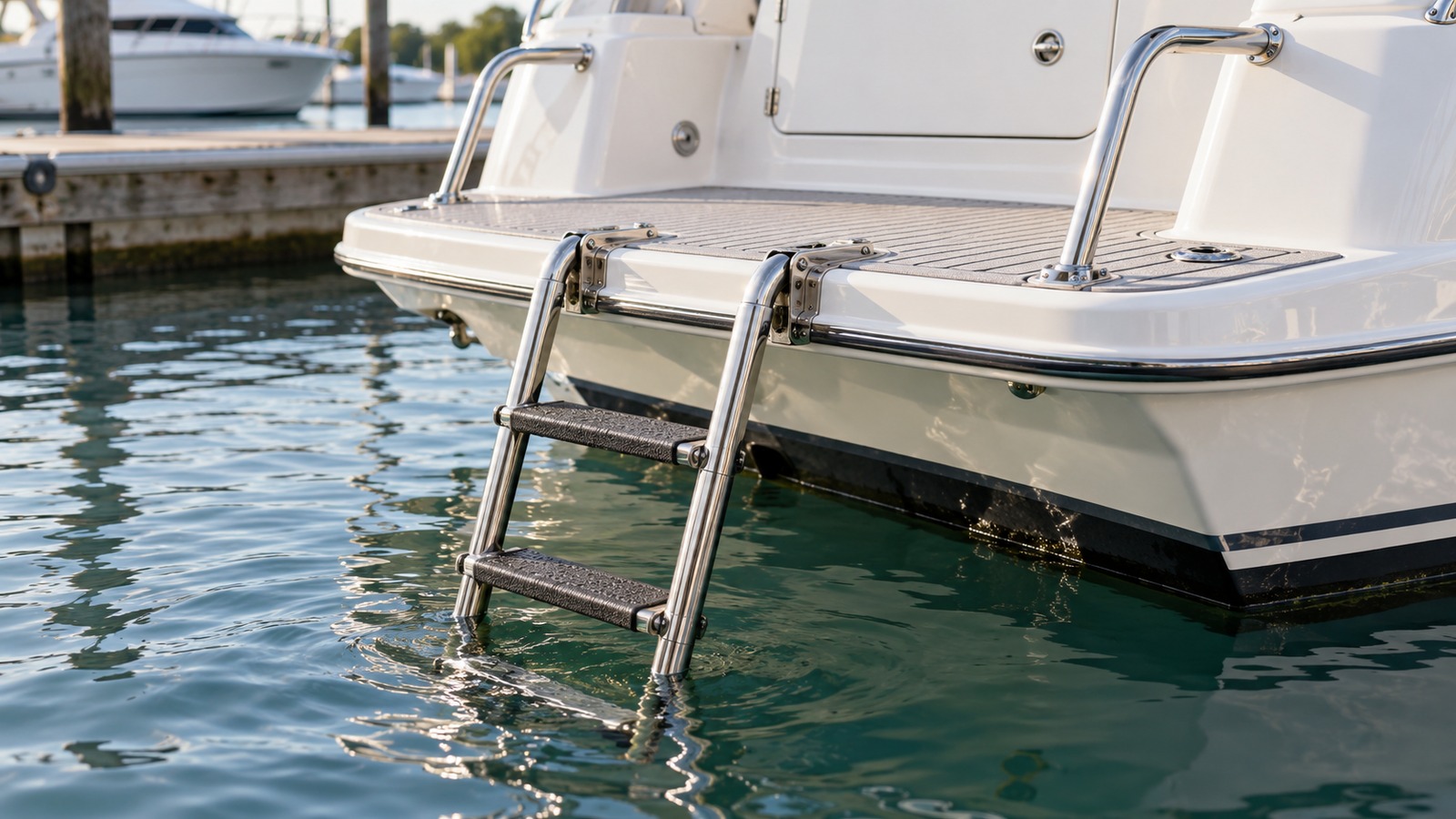
Assess the route from dock to cockpit and from the water back aboard. Useful improvements may include an appropriate boarding ladder, sound handholds, repaired steps, or renewed nonslip surfaces. Compatibility matters: a ladder needs suitable structure, safe placement, and enough usable reach for the intended task. A grab rail must support its expected loads through a proper installation. Do not attach safety-related equipment to a convenient thin panel without assessing the backing and load path. Ask a qualified installer to evaluate modifications beyond your competence, especially when the work changes structure or requires new hull or deck penetrations.
Think about people rather than dimensions alone. A person climbing from the water may be tired and wearing clothing that makes the task harder. A passenger boarding at a fixed pier may face a different gap as water level changes. Keep the route clear of sharp edges, swinging hardware, and loose gear. Test the completed arrangement in controlled conditions with appropriate supervision. An upgrade that looks tidy in a photograph still needs to function for the people who will use it. Maintain access to emergency equipment throughout the change.
Improve Power Reliability Before Adding Electrical Loads
Begin with the condition and capacity of the existing electrical system. Batteries, connections, charging equipment, protection, and wiring must suit the vessel and installed loads. A battery monitor can provide useful information when correctly chosen, installed, and configured, but it does not repair a failing battery or corroded connection. Describe the problem precisely to a competent marine electrician. Repeated low-voltage warnings, starting difficulty, or unexplained discharge deserve diagnosis before another gadget is added to the circuit. Keep the upgrade within a complete electrical plan rather than treating each accessory as an isolated installation.
List the equipment you intend to run and the time it normally operates. Charging phones is a different demand from adding refrigeration or a powerful entertainment system. Check charging sources, battery chemistry, protection, ventilation requirements, and the manufacturer’s instructions for the actual components. A change of battery chemistry can require wider changes than replacing a box in the existing tray. Obtain an itemized installation scope that explains those dependencies. The cheapest individual component may not produce the least expensive safe system once compatible charging and protection are included.
Keep essential functions and discretionary loads understandable. Labeling and documentation should help a future technician identify circuits without guessing, and cable runs should preserve access for inspection. Ask for an updated diagram and operating explanation when the installation is completed. Confirm how the system behaves when shore power disappears or a charging source fails. The practical benefit of an electrical upgrade is dependable service with known limits. It is reduced if the owner cannot tell what is drawing power or which switch isolates the added equipment.
Choose Navigation and Communication Improvements Around the Route
Electronics should match the waters, visibility, and support needs of your boating program. Assess chart coverage, daylight readability, controls, mounting, electrical supply, and the availability of a usable backup before comparing screen sizes. A reliable communication arrangement also needs suitable installation, equipment familiarity, and practice using the appropriate procedures. Do not assume that another display creates independent redundancy if both depend on the same battery or source of position data. Learn the equipment before relying on it in unfamiliar water. The BoatUS Foundation study guide provides a broader training framework for equipment use and boating responsibilities; practical instruction helps connect that knowledge with your vessel’s actual controls.
Include mounting and the operator’s attention in the decision, not just the feature list. A display that is difficult to reach or read can invite distraction at exactly the wrong moment. Review the placement from normal steering positions and check that it does not hide the view ahead. Learn menus and alerts while the boat is secure, then practice their use in simple conditions. Keep routine tasks short enough that lookout remains effective. Equipment choices are most useful when they support a clear operating routine and leave the crew able to recognize when the electronics disagree with observations.
Add Comfort Without Creating New Obstacles
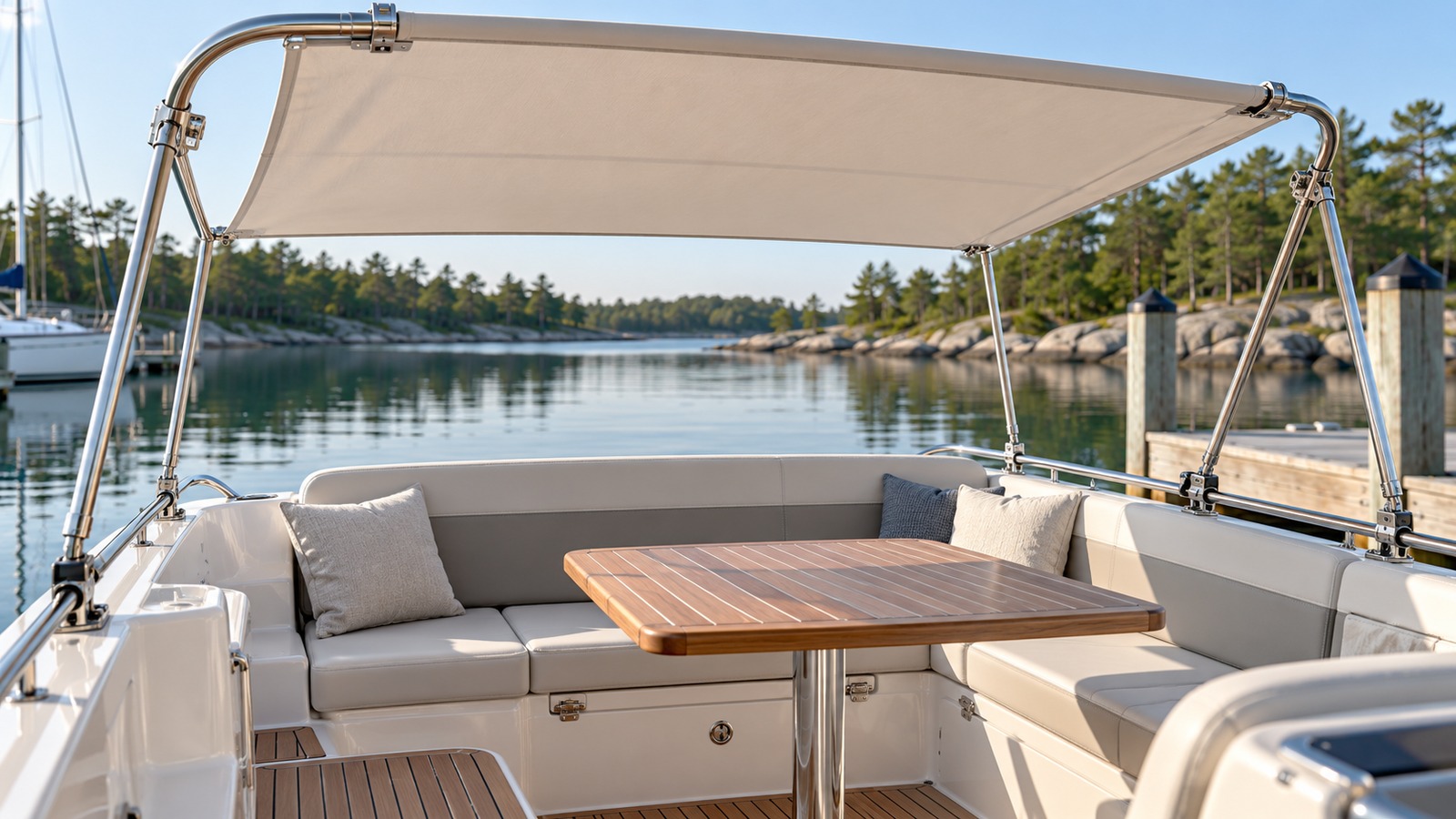
Shade can make a cockpit much more usable during long sunny outings. Check how a proposed top attaches, what conditions it is designed for, and whether it obstructs the operator’s view, boarding, or line handling. A cover intended for use at rest may have different limits from one designed for travel. Follow the maker’s instructions rather than assuming every canvas arrangement can remain deployed at speed. Consider stowage as part of the purchase, because loose poles and fabric can occupy the very space the improvement was meant to make more comfortable.
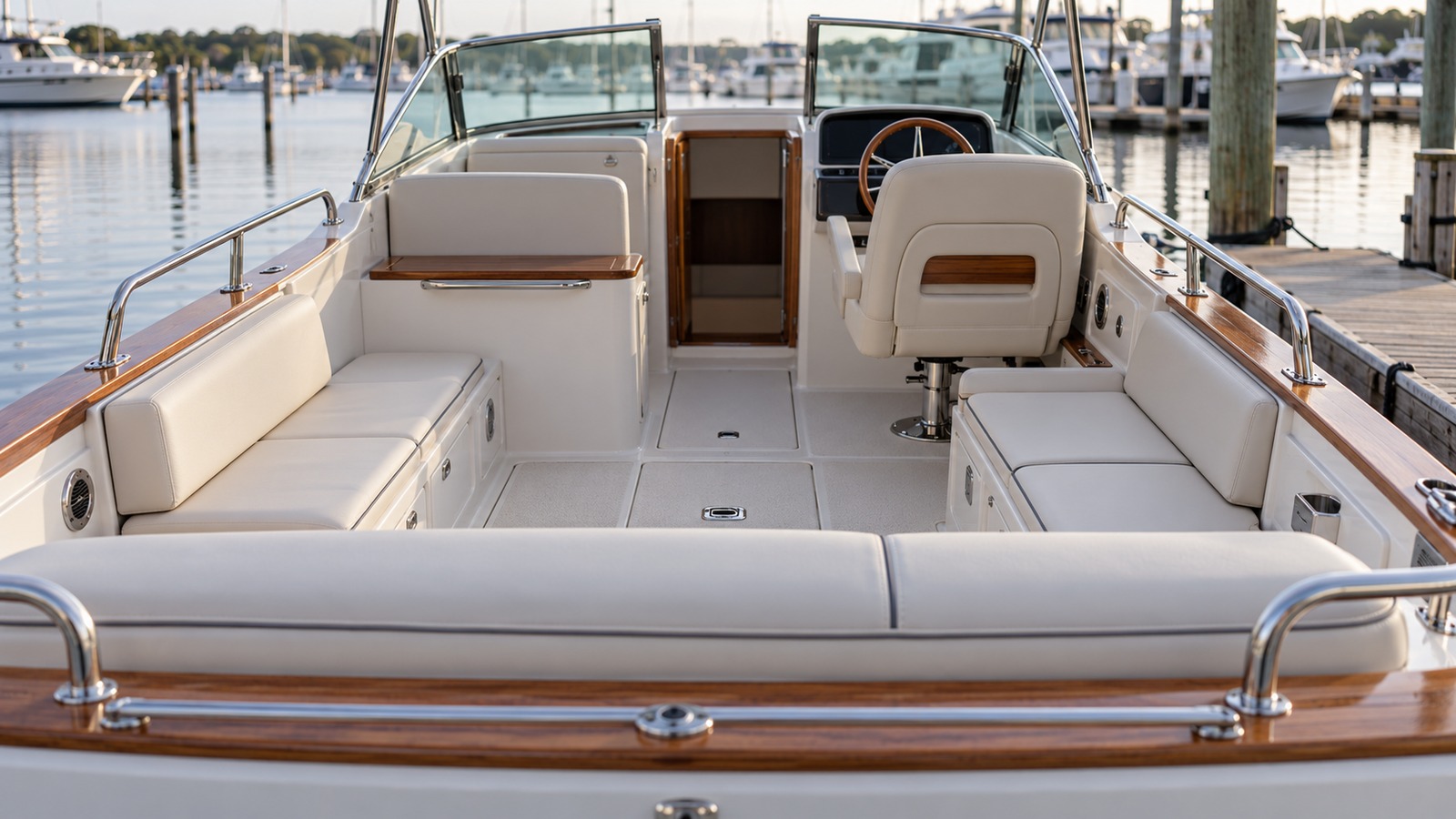
Seating changes deserve similar care. Repairing worn cushions or improving support can help regular passengers, but the finished arrangement must retain secure mounting and access to equipment. Do not add seats or invite more passengers merely because more cushions fit. The vessel’s capacity and safe loading remain separate constraints. Evaluate sightlines and the way people move between positions. A comfortable seat that blocks a hatch, drain, or escape route creates a poor overall result even if the upholstery is excellent.
Storage improvements work best when they give existing gear a secure, accessible home. Use measured spaces and account for the size of the object while it is being removed, rather than only while packed away. Keep heavy items appropriately restrained and avoid concentrating weight where it compromises the vessel’s intended loading. A drawer or tray should not interfere with steering, wiring, plumbing, or inspection access behind its mounting surface. Check what is hidden before drilling. Many apparent storage problems can be reduced by carrying fewer duplicate or rarely used items.
Lighting can improve useful visibility inside lockers or cabins, but brightness alone is not the goal. Avoid glare at the helm and interference with required navigation lights or the operator’s ability to see outside. Select suitable fixtures, protection, wiring, and controls for the location. Consider whether the light is needed underway or only while safely secured. Test it after dark in controlled conditions before assuming the improvement works as intended. Good installation places light on the task without creating another distraction or an ambiguous external signal.
Budget for the Whole Installed Improvement
Request a complete price that includes removal, installation, wiring, finishing, required accessories, transport, and any testing. Ask what the quote excludes and what could change once the space is opened. Some projects require yard access or specialist work beyond the main installer. Keep those dependencies visible before approving the purchase. A low equipment price is only one part of the decision. The improvement should fit the full budget while leaving funds for maintenance and the ordinary costs of using the boat.
Include future costs and effort. Software subscriptions, consumables, replacement covers, servicing, and periodic inspection can continue long after installation. Ask how parts and support can be obtained in your area. A custom solution may be elegant but difficult to repair away from its original builder. Favor an arrangement you can operate, inspect, and maintain. Keep manuals, invoices, diagrams, and settings with the boat’s records. Those documents help the benefit survive a change of technician or a long interval between uses.
Install in Stages and Verify the Benefit
Complete one well-defined project before combining several changes that affect the same area or system. Establish a baseline first, then test the finished work through the use that motivated it. For a boarding improvement, that means a controlled boarding check. For power monitoring, compare operation with the installer’s explanation and investigate unexpected readings. For storage, load the intended gear and check the nearby access routes. A staged approach makes faults easier to identify and prevents several unfinished jobs from making the boat less usable than before.
After the first few outings, ask whether the original difficulty has actually improved. A different routine may be needed to obtain the benefit, or a small adjustment may reveal a better result. Do not keep adding accessories to avoid addressing a poor installation. Bring concerns back to the installer while the details and documentation are fresh. Continue checking fasteners, seals, wiring, and moving parts according to the equipment guidance. An upgrade becomes part of the boat’s maintenance responsibilities as soon as it is installed.
Retain the longer view when deciding what comes next. Improved access, dependable systems, and useful comfort can make regular boating more rewarding without transforming the vessel into something it was not designed to be. Choose the next project from observed needs and completed results. Leave space in the budget and aboard for ordinary operation. The strongest upgrade plan is a sequence of justified improvements that work together, with clear limits and a boat that remains easy to understand.