Make the Boat Yours While Keeping the Next Owner’s Options Open
Customization works best when it improves your use of the boat without leaving somebody else a hard-to-understand alteration. A removable shade, well-fitted storage insert, or carefully chosen cushion can express your preferences while preserving the vessel’s basic functions. Structural changes, unusual layouts, and complex systems deserve a different level of assessment. Resale value depends on condition, market demand, workmanship, and the buyer’s needs, so no design choice guarantees a particular future price. The practical aim is to enjoy the boat while keeping the work safe, complete, documented, and understandable. Begin by identifying what you want to change, how long you expect to own the vessel, and how readily that change could be removed or adapted when your plans evolve.
A: Removable equipment still needs appropriate secure attachment.
A: Structure and hidden systems require assessment.
A: Future proceeds depend on the actual market.
A: They preserve useful options for later changes.
A: Condition and workmanship also shape the outcome.
A: Retain the routes required for maintenance.
A: A sound design, clear controls, and updated diagrams.
A: Record hidden details before the work closes.
A: Use accurate specific information and supporting records.
A: Tested function, finished work, and documented operating limits.
Write a Use Brief Before Choosing a Look
Describe the activity that the existing arrangement makes difficult. A family may need better shade at rest, an angler may need secure tackle storage, and a weekend cruiser may need a more usable sleeping space. Those are clearer starting points than wanting a boat that feels more modern. Record the people involved, the conditions in which they use the space, and the equipment that must remain accessible. Keep essential maintenance separate from the design wish list. A new finish cannot resolve dampness or a weak mounting surface beneath it.
Decide how the proposed change will be judged. If it is intended to improve boarding, test boarding; if it creates storage, check how the gear is loaded and removed. A visual mock-up or removable trial can reveal problems before permanent work begins. Use ordinary outings to test assumptions where that can be done safely. The boat’s movement, wet surfaces, and confined routes make a static sketch incomplete. An idea that works in a living room can obstruct necessary access in a cockpit.
Include the ownership horizon in the brief. A highly personal choice may be worth its cost for many years of enjoyment even if a buyer will not pay extra for it. That is a valid personal-use decision when the safety and financial implications are understood. Problems arise when spending is justified by an unsupported claim that resale will recover it all. Keep enjoyment value and expected sale proceeds separate. This helps you choose a scope you can afford without depending on a future buyer sharing your tastes.
Start With Parts That Can Be Removed Cleanly
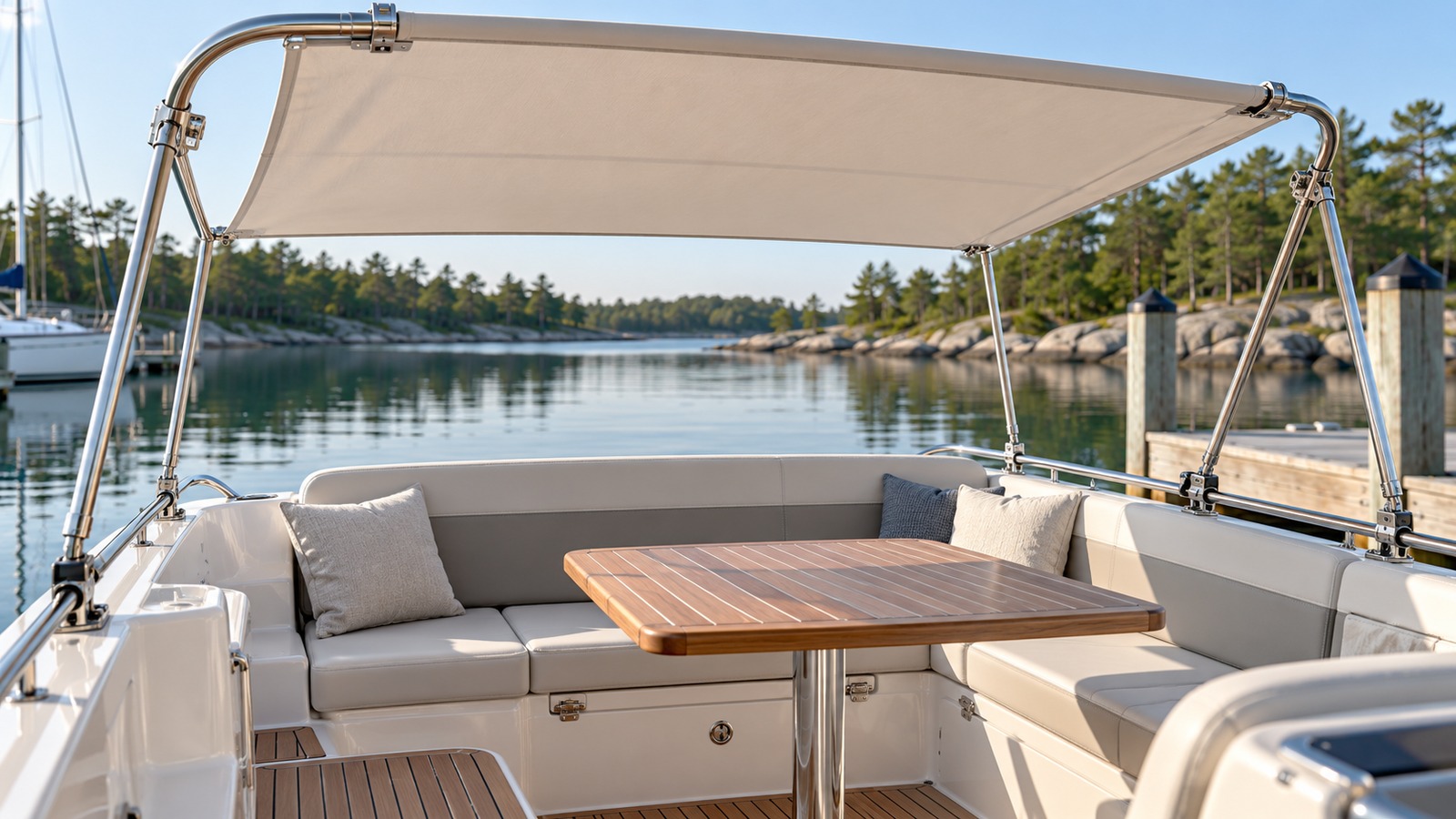
Removable cushions, covers, storage organizers, and suitable clamp-mounted equipment can let you experiment without cutting the boat apart. Check that the attachment method is appropriate for its loads and location. Removable does not mean loosely fitted or safe to leave unsecured underway. A storage insert still needs to remain in place when the vessel moves. A clamp must not damage a rail or interfere with its intended function. Follow the equipment maker’s instructions and consider whether the installation needs professional assessment.
Compare two ways to gain cockpit storage. A correctly secured removable organizer may let you try the location and restore the original arrangement without altering structure. Cutting a new recess into a molded seat changes the boat permanently and may affect support, drainage, or hidden services. Those are different projects even if both hold the same tackle. Test the removable arrangement first, then seek boat-specific design advice if the permanent version still offers a worthwhile benefit. Keep original parts when they are serviceable and practical to store. Label them by location and retain their fixings so restoration does not become a guessing exercise. Photograph the original arrangement before starting. If a later buyer prefers the standard setup, you can explain what is available and how the change was made. That option can be useful even when you never reverse the work yourself. It also encourages a cleaner installation because the original surfaces remain part of the plan.
Assess Permanent Changes as Boat Modifications
Cutting a bulkhead, moving heavy equipment, changing a tank, or altering a major seating structure involves more than decorating. The work may affect strength, loading, stability, access, and the way systems operate. Consult appropriately qualified marine professionals before proceeding. An attractive result does not establish that the design is sound. The responsible scope identifies the affected structure, the expected loads, installation details, and how the completed work will be checked. Keep those decisions with the project record rather than relying on a verbal explanation that disappears when the installer leaves.
Consider penetrations carefully. New holes in decks or the hull can introduce leak paths, and fastening into cored or thin materials needs appropriate methods. Check what lies behind every proposed cut or fixing location. Wiring, fuel components, plumbing, and control runs may occupy spaces that appear empty from the cabin side. A small mounting job can become a much larger repair if it damages a hidden system. Obtain competent advice where the construction or sealing detail is uncertain.
Weight deserves attention even when each added item seems modest. Several batteries, appliances, storage units, or decorative features can accumulate into a material change. Their location matters as well as their total mass. Do not assume that unused floor space represents spare capacity. Keep the vessel’s loading limits and intended arrangement central to the design. A professional assessment is especially important when a proposal moves substantial weight high in the boat or changes its balance.
Verify any insurance, financing, or other relevant requirements before major work begins. Describe the actual alteration and ask whether documentation or approval is needed. Keep the response with the scope. If the modification changes the vessel’s stated characteristics, update the relevant records accurately. Do not assume that a workshop invoice alone resolves every consequence. The goal is a finished boat whose physical arrangement and supporting documents tell the same story.
Use Materials and Colors That Suit Their Job
Select surfaces for water exposure, sunlight, cleaning, grip, and the stresses of the location. A material used successfully indoors may fail quickly aboard or become slippery when wet. Follow appropriate installation and care instructions rather than choosing by appearance alone. Ask how the new finish interacts with nearby seals, fasteners, and drainage. Samples viewed aboard can reveal color and glare effects that a showroom misses. Practical suitability supports both daily use and a future buyer’s confidence in the work.
Keep expensive fixed choices restrained if broad resale appeal is important to you. Highly personal expression can be concentrated in removable textiles or accessories while permanent surfaces remain easier to adapt. This is a design strategy rather than a guarantee about what all buyers prefer. Different boat types attract different audiences. Consider the vessel’s original character and the expectations of likely owners. A coherent modest change can look more intentional than mixing several fashionable styles across a small interior.
Avoid covering a problem instead of solving it. New lining over damp material, fresh paint over corrosion, or a decorative panel over inaccessible wiring leaves work for the next owner. Diagnose the cause and document the repair before finishing the visible surface. Buyers and surveyors may need to inspect those areas later. A customization that prevents examination can create uncertainty even when the owner believes everything behind it is sound. Preserve the access needed to show the boat’s condition.
Keep Systems Simple Enough to Hand Over
Electrical and electronic customization should follow a complete design rather than a sequence of improvised additions. Establish power demand, charging, protection, compatibility, and the environmental requirements of the components. Use qualified installation where needed. A neatly mounted display does not prove the cable, fuse, and power arrangement are appropriate. Ask for a diagram and an explanation of normal operation, isolation, and fault indications. Keep essential controls recognizable instead of turning routine use into a collection of unexplained switches and personal workarounds.
Preserve the Routes Needed to Operate and Service the Boat
Check every alteration with drawers, lockers, doors, and hatches open as well as closed. A storage unit may fit beautifully until it prevents access to a pump or blocks a service panel. Make room for the person and tools needed for maintenance, not merely for the equipment itself. Keep drains, ventilation paths, exits, and the helm’s sightlines clear. Evaluate how people move through the space in ordinary boating conditions. The most impressive new feature is a poor trade if it makes a basic task harder.
Choose fitting locations through real movement trials. Sit at the helm, step aboard, handle a line, and move gear through the area while the boat is safely secured. Check for sharp edges and catches that can snag clothing. Consider both the regular crew and someone unfamiliar with the layout. A future buyer should be able to see how the boat works without repeated warnings about where not to stand. That clarity is a useful design goal even if you never sell.
Document the Work While It Is Still Open
Photograph installation stages before panels and linings hide the details. Save the design brief, component information, invoices, diagrams, and relevant professional findings. Identify the materials and methods used where that information will help later service. A concise record can make a thoughtful customization easier to assess. It also supports troubleshooting during your ownership. Do not wait until a buyer requests evidence to discover that the installer is unavailable and the only photograph shows the finished cushion or cover.
Record what remains original and what changed. Include operating limits, service needs, and any retained standard parts. Keep manuals with the equipment inventory and update the file when a later revision is made. Describing the alteration accurately is more useful than using broad claims such as completely upgraded. A buyer may value a specific documented improvement while discounting an unclear list of features. The handover record should help someone continue maintaining the boat rather than merely advertise the amount spent.
Test the finished project under appropriate controlled conditions before treating it as complete. Verify attachment, function, access, and the effect on neighboring systems. Discuss problems with the installer promptly and keep the resolution with the records. If the intended benefit has not appeared, correct the design or installation rather than adding another accessory to compensate. Completion includes a usable boat and a clear explanation, not only a paid final invoice.
Review Personal Value and Sale Value Separately
When the boat eventually goes to market, assess its current condition and comparable alternatives rather than adding every customization invoice to the asking price. Some work restores an expected function; some supports your own enjoyment; some may appeal to a particular buyer. Those categories do not all translate into extra proceeds. The BoatUS buyer guide emphasizes clear purchase terms and investigation of the actual vessel. Make that process easier with accurate descriptions, finished workmanship, and evidence of the work. Thoughtful customization leaves the next owner useful choices while giving you a boat better suited to the years you spend aboard.
Before listing a customized vessel, decide whether each personal item stays aboard, is removed cleanly, or is offered separately. Inspect any restored mounting area and complete the finishing work before photographs are taken. Make the inventory explicit so a buyer does not assume a feature shown in an older picture is included. If original components accompany the boat, explain their condition and what would be needed to reinstall them. Avoid promising a return to the factory arrangement without checking that the parts and fixings are complete. A clear inventory and a fully finished presentation make it easier for a buyer to evaluate the actual purchase, while letting you retain the items that genuinely belong to your next boating plan.