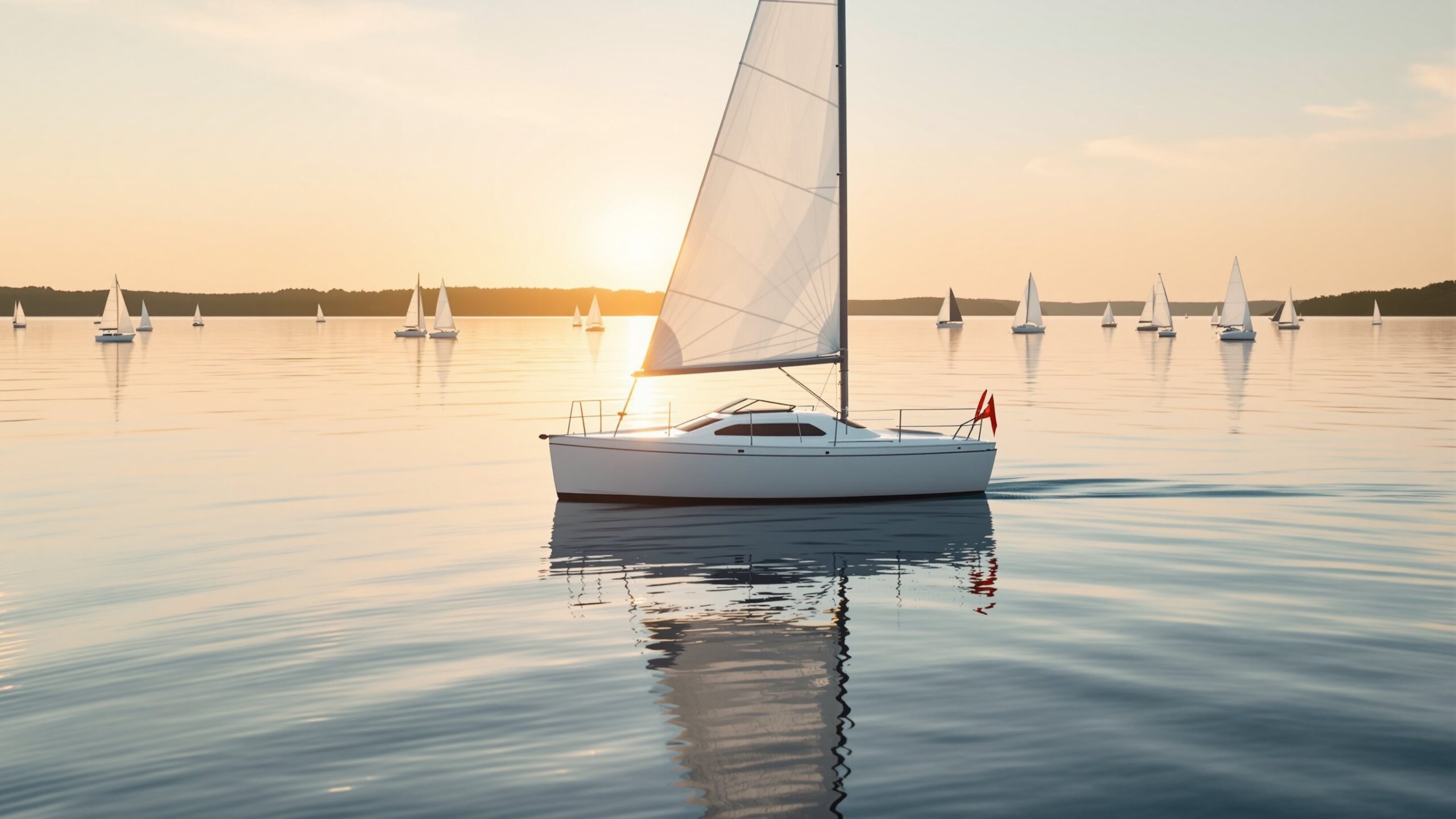
Sailing has a way of capturing the imagination like few other pursuits. It’s a blend of freedom, skill, and connection to nature—where the wind becomes your engine and the horizon your destination. But before you feel that first perfect glide across the water, there’s one crucial decision to make: choosing the right beginner sailboat. The truth is, your first sailboat will shape your entire learning experience. Pick wisely, and you’ll build confidence quickly. Choose poorly, and even the most beautiful day on the water can become frustrating. This complete buying guide will walk you through everything you need to know—from boat types and features to specific beginner-friendly models—so you can start your sailing journey the right way.
A: Many beginners do well with small dinghies, daysailers, or keelboats between about 14 and 25 feet.
A: Used is often smarter for beginners because it lowers cost while you learn what features matter most.
A: Dinghies teach fast feedback and boat handling; keelboats offer more stability and comfort.
A: Plan for registration, storage, insurance, safety gear, maintenance, sails, trailer work, and repairs.
A: Lessons are strongly recommended because they help you choose wisely and sail more safely.
A: A simple fiberglass daysailer with minimal systems is usually one of the easiest options.
A: Yes, many small sailboats are designed for singlehanded sailing, but practice in calm conditions first.
A: Check the hull, deck softness, rigging, sails, rudder, keel, trailer, hardware, and signs of leaks.
A: Yes, if you want lower storage costs, easier transport, and access to multiple sailing locations.
A: Stability, simple controls, easy rigging, forgiving handling, available parts, and a strong learning community.
Why Your First Sailboat Matters
Learning to sail is as much about feel as it is about knowledge. The way a boat responds to wind, balance, and movement teaches you lessons that no book or video can replicate. That’s why beginners are often encouraged to start with smaller, simpler boats that allow them to experience cause and effect in real time.
A good beginner sailboat should be forgiving. It should tolerate mistakes, respond predictably, and help you understand how wind interacts with sails and hull. Boats that are too large or complex can overwhelm new sailors with too many controls and systems.
Many experienced sailors echo a simple philosophy: start small, learn deeply, and move up gradually. In fact, smaller boats often accelerate learning because they demand hands-on control and immediate feedback.
Types of Sailboats for Beginners
Before diving into specific models, it’s essential to understand the main categories of sailboats suitable for beginners. Each type offers a different learning experience and suits different goals.
Dinghies: The Pure Learning Platform
Dinghies are small, lightweight sailboats, usually between 8 and 15 feet long. They typically feature a simple rig—often just one sail—and no fixed keel. Instead, they use a centerboard or daggerboard. These boats are incredibly responsive, making them ideal for learning basic sailing skills. If you make a mistake, you’ll know instantly—and you’ll learn how to correct it just as quickly. They can even capsize and be righted easily, which is part of the learning process. Dinghies are widely considered one of the best entry points into sailing because of their simplicity and maneuverability.
Daysailers and Small Keelboats: Stability and Comfort
If you prefer a more relaxed introduction, daysailers and small keelboats offer greater stability. These boats typically range from 16 to 25 feet and often include a small cockpit and sometimes a basic cabin.
Unlike dinghies, keelboats have a fixed ballast keel that keeps them upright. This makes them less likely to capsize and more forgiving in choppy conditions.
For beginners who want to sail with family or friends—or who are nervous about tipping—this category provides a comfortable middle ground.
Pocket Cruisers: Small Boats with Big Capabilities
Pocket cruisers are compact sailboats (usually under 30 feet) designed for short trips and overnight stays. They include small cabins with sleeping space, a galley, and sometimes a bathroom. These boats are ideal if your goal is to explore coastal waters or spend weekends on the water. They combine beginner-friendly handling with just enough comfort to extend your adventures. They’re also often trailerable, making them practical and cost-effective for new sailors.
Key Features to Look for in a Beginner Sailboat
Choosing the right sailboat isn’t just about size or style—it’s about how well the boat supports your learning journey. Here are the most important features to consider.
Simplicity of Rigging
A beginner sailboat should have a straightforward rigging system. Boats with a single sail or minimal controls allow you to focus on the fundamentals: wind direction, sail trim, and steering.
Complex systems with multiple sails, winches, and lines can be overwhelming early on.
Stability and Forgiveness
Stability is one of the most important characteristics for beginners. A boat with a low center of gravity and a forgiving design will help you stay upright and build confidence, even in variable conditions.
Manageable Size
Smaller boats are easier to handle, transport, and maintain. Many experts recommend starting with boats under 20 feet for pure learning, or under 25 feet for those wanting more comfort.
Boats around 20 feet strike a great balance, offering enough space without becoming difficult to control.
Durability
As a beginner, you will make mistakes—bumping docks, grounding in shallow water, or mishandling lines. A durable boat made from fiberglass or rotomolded materials will withstand these learning moments.
Ease of Transport and Storage
Trailerable boats give you flexibility. You can sail in different locations, avoid marina fees, and store the boat at home. This is especially valuable for beginners still exploring where and how they like to sail.
Best Sailboats for Beginners
Now that you understand the basics, let’s explore some of the most popular and proven beginner sailboats.
The Sunfish: Simplicity at Its Finest
The Sunfish is one of the most iconic beginner sailboats ever built. Its lightweight design and single sail make it incredibly easy to learn. It’s perfect for solo sailors or pairs, and its simplicity allows beginners to focus entirely on mastering wind and balance. Its portability also means you can easily transport it to lakes or coastal waters.
The Laser: Precision and Skill Building
The Laser is a step up in performance while still remaining beginner-friendly. It’s widely used in sailing schools and even Olympic competition. This boat teaches precision. It responds quickly to adjustments, helping beginners develop strong instincts and control.
The Flying Junior: Learn with a Partner
Designed for two sailors, the Flying Junior (FJ) is ideal for learning teamwork. It introduces concepts like weight distribution and coordinated sail handling.
It’s a favorite in sailing programs because it balances stability with responsiveness, making it both educational and fun.
The Hobie Cat: Fast and Fun
For those drawn to speed, the Hobie Cat offers an exciting introduction. As a catamaran, it features two hulls, providing stability and impressive performance. While slightly more complex than dinghies, it delivers a thrilling experience that keeps many beginners hooked on sailing.
Catalina 22: A Beginner-Friendly Cruiser
The Catalina 22 is one of the most popular small cruising sailboats ever built. It offers a cabin, sleeping space, and the ability to handle longer trips.
Despite its added features, it remains manageable and forgiving, making it a great transition from basic learning to real-world sailing.
Beneteau First 18 SE: Modern and Versatile
For those seeking a modern design, the Beneteau First 18 SE combines ease of handling with the ability to stay overnight. Its compact cabin allows beginners to experience short cruising adventures without committing to a large, complex boat.
New vs. Used Sailboats: What Beginners Should Know
One of the biggest decisions you’ll face is whether to buy new or used. Both options have advantages.
New boats come with warranties, modern materials, and fewer maintenance concerns. However, they are significantly more expensive.
Used boats, on the other hand, offer incredible value. Many beginner sailboats—like the Sunfish or Catalina 22—are widely available on the secondhand market at affordable prices.
The key is inspection. Look for signs of hull damage, worn rigging, or water intrusion. A professional survey can help ensure you’re making a sound investment.
Budgeting for Your First Sailboat
Buying a sailboat involves more than just the purchase price. Beginners should consider the full cost of ownership.
This includes maintenance, storage or marina fees, insurance, and equipment. Even small boats require regular upkeep, from cleaning to replacing worn lines and sails.
A realistic budget will help you avoid surprises and ensure you can enjoy sailing without financial stress.
Where and How You’ll Sail
Your sailing environment plays a huge role in choosing the right boat.
If you’ll be sailing on small lakes, a dinghy or small daysailer is perfect. These boats are easy to launch and retrieve, and they thrive in calm conditions.
For coastal sailing or larger bodies of water, a more stable keelboat or pocket cruiser is a better choice. These boats handle waves and wind more comfortably, giving you a safer and more enjoyable experience.
Learning Curve: What to Expect
Sailing is a skill that builds over time. Your first few outings will likely involve trial and error—but that’s part of the journey.
Many beginners find that smaller boats accelerate learning because they require constant attention and adjustment. Every gust of wind becomes a lesson, and every maneuver builds confidence.
As your skills grow, you may find yourself ready to move up to a larger or more specialized boat.
Common Mistakes Beginners Should Avoid
One of the most common mistakes is buying too large a boat too soon. While the idea of a spacious cruiser is appealing, larger boats come with more complexity, cost, and responsibility.
Another mistake is overlooking maintenance and storage costs. A “cheap” boat can quickly become expensive if it requires significant repairs.
Finally, many beginners underestimate the importance of trying different boats. Renting or taking lessons on various models can help you discover what suits your style before committing to a purchase.
The Joy of Progression
Sailing is a journey, not a destination. Your first boat is just the beginning. Many sailors start with a simple dinghy, then progress to a daysailer, and eventually move into cruising yachts. Each step builds on the last, expanding your skills and confidence. What matters most is getting started. The wind doesn’t care how experienced you are—it rewards curiosity, patience, and a willingness to learn.
Choosing Your Perfect First Sailboat
The best sailboat for beginners is not necessarily the biggest, fastest, or most expensive. It’s the one that matches your goals, skill level, and environment.
Look for a boat that is simple, stable, durable, and manageable. Start small, learn deeply, and give yourself room to grow.
Whether you choose a Sunfish for solo adventures, a Flying Junior for shared learning, or a Catalina 22 for weekend cruising, the right boat will open the door to a lifelong passion.
Sailing isn’t just about reaching a destination—it’s about discovering the rhythm of wind and water, and finding your place within it.