Prepare for the Drift Before You Approach the Dock
A familiar berth can feel unfamiliar when a breeze presses against the cabin and pushes the bow away from your intended path. The useful response starts outside the tight part of the marina. Watch how the boat drifts, decide whether the assigned berth still makes sense, and arrange the crew and equipment for the wind you actually have. These tips focus on preparation and approach choices for recreational powerboats, rather than prescribing one maneuver for every hull and propulsion system. A light open boat, a high-sided cruiser, and a twin-engine vessel will respond differently. Hands-on instruction aboard your own boat remains the best way to establish handling limits. On a windy arrival, the work done before the final turn often determines how much correction will be needed afterward.
A: Safe limits depend on the boat, berth, gusts, propulsion, and operator's demonstrated ability.
A: Uneven windage and underwater resistance can make the two ends respond differently.
A: Its effectiveness and operating limits vary, so it cannot replace a workable approach.
A: Complete safe equipment changes beforehand rather than creating a distracting deck task in confined water.
A: Plan effective fender coverage and control the closing speed before contact.
A: The useful handoff window may be shorter and the first attachment needs deliberate planning.
A: Helpers should receive and secure lines without being asked to absorb dangerous momentum.
A: Specific observations help separate handling behavior from equipment and crew-preparation problems.
A: The complete mooring arrangement still needs inspection under wind load.
A: Choose a safe wait, another berth, or experienced assistance that fits the local situation.
Assess Wind and Drift Before Committing to a Berth
A forecast wind speed describes only part of the docking problem. Gusts can briefly increase the force on the cabin and change the timing of a careful approach. Buildings and rows of boats may shelter one part of the marina while leaving another exposed. A turn around a breakwater can suddenly put the boat broadside to stronger wind. Look at flags, water texture, and the way nearby vessels lie against their lines. Compare those observations with the forecast rather than assuming conditions at the marina entrance apply throughout the fairway.
Choose the timing of the arrival with those variations in mind. Waiting for a brief lull can be helpful when the overall conditions are manageable and there is safe space to wait. Repeated strong gusts that remove control are a different problem. They may justify a sheltered berth, an experienced operator, or delaying the attempt. The purpose of observing gusts is to choose a workable situation, not to rush through a narrow gap before the next one arrives.
Where traffic and depth permit, spend a short period outside the confined approach watching the vessel’s movement relative to fixed references. Use a chartplotter track as a supplement, while recognizing that displayed heading and course over ground mean different things. The bow can point at the dock while the hull travels diagonally across the water. Current may push the underwater hull in another direction from the wind acting on the cabin. Make the observation with the controls and awareness needed to remain safely clear of hazards. A drift trial is useful only when it does not create a new close-quarters situation. Bring that actual movement estimate into the docking plan before assigning a first line or selecting the approach side.
Recognize the Windage Your Boat Presents
Windage is the area exposed to the wind and the way that area affects the vessel’s movement. A tall cabin, enclosed cockpit, or bulky equipment above the rail can make a boat respond strongly to a crosswind. The effect may be uneven because the bow and stern do not present identical shapes. A light bow can fall off rapidly while the heavier stern remains comparatively steady. That behavior can be especially noticeable after propulsion is reduced. Learn it in a controlled lesson rather than discovering it between neighboring hulls.
Secure loose covers and remove only items that the manufacturer and conditions allow you to remove safely. Do not begin dismantling canvas while maneuvering in a busy fairway. Keep the operator’s sightlines open without creating unsecured fabric, flying objects, or an unsafe deck task. A crew member occupied with a flapping enclosure cannot also act as a reliable clearance observer. Boat preparation should simplify the arrival rather than introduce another emergency.
Be realistic about the available propulsion. A bow thruster or joystick can assist within its operating limits, but neither cancels strong wind automatically. Check instructions, duty cycles, and any equipment warnings before relying on them. If the boat’s response remains uncertain, obtain instruction and practice in a suitable setting. Familiar controls are valuable only when the operator understands what they can and cannot accomplish under load.
Passengers can alter sightlines and the operator’s access even though moving them is not a reliable way to counter windage. Seat them where the vessel’s instructions and conditions permit, and avoid sudden movement across the cockpit during the approach. Keep the control area reserved for operating the boat.
Ask for the Berth That Matches Today’s Conditions
Call the marina while there is still time to choose a different arrival. Describe your boat, propulsion arrangement, approximate size, and the wind direction you are observing. Ask about an open alongside berth, a sheltered face dock, or a location where an attendant can receive a line without stretching over a large gap. Confirm depth and traffic restrictions as well as physical space. A berth that worked in calm weather may be awkward when a crosswind pushes the boat toward an exposed corner.
Find out where help will stand and what assistance is actually available. Someone waiting on the dock may be able to secure a line but cannot safely absorb the momentum of a boat arriving too quickly. Explain which line you intend to pass and where it should be secured. Avoid treating a marina employee’s presence as proof that any approach will work. The operator remains responsible for deciding whether the situation is within the boat and crew’s capabilities.
Fender for the Likely Contact Surface
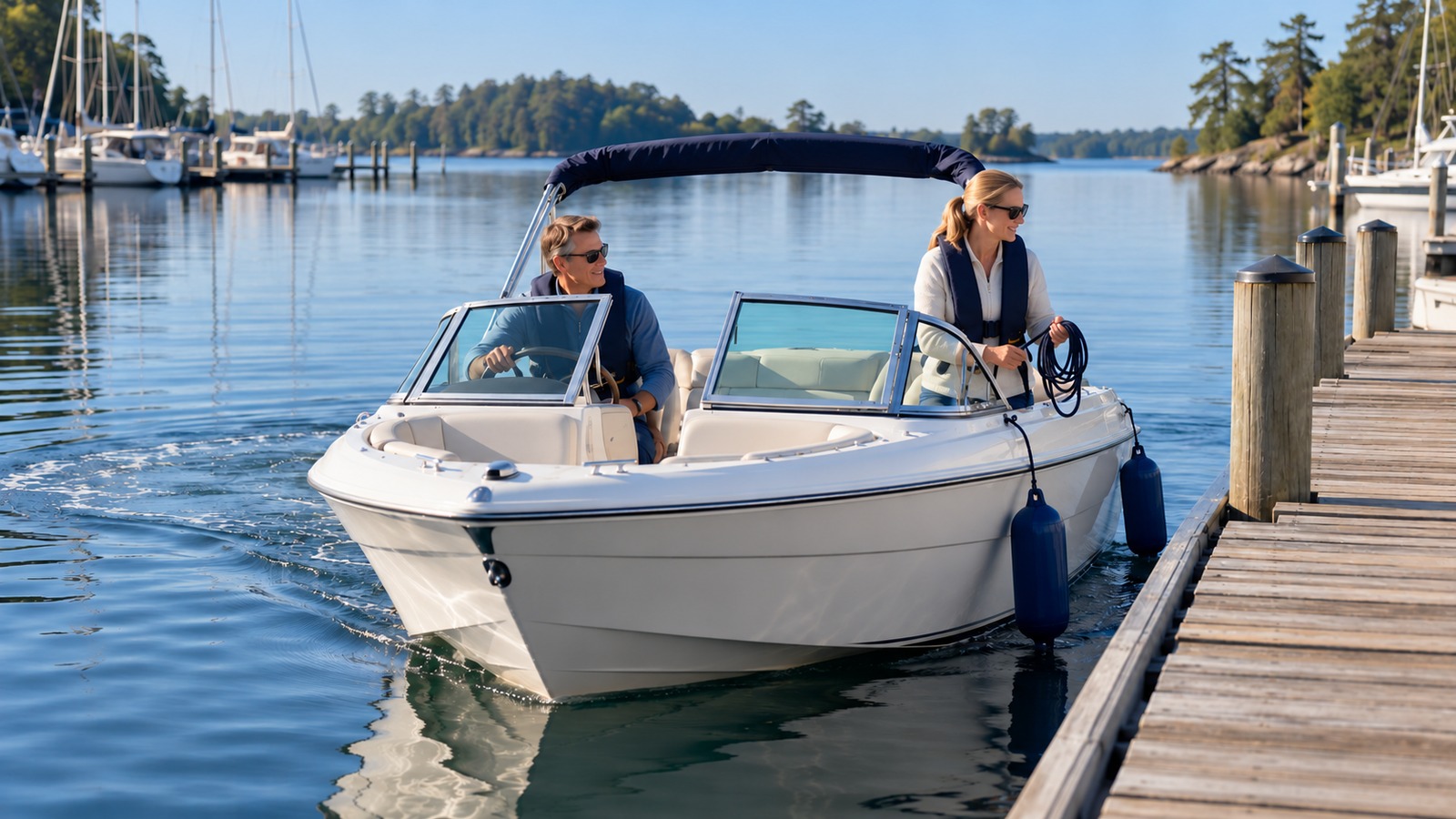
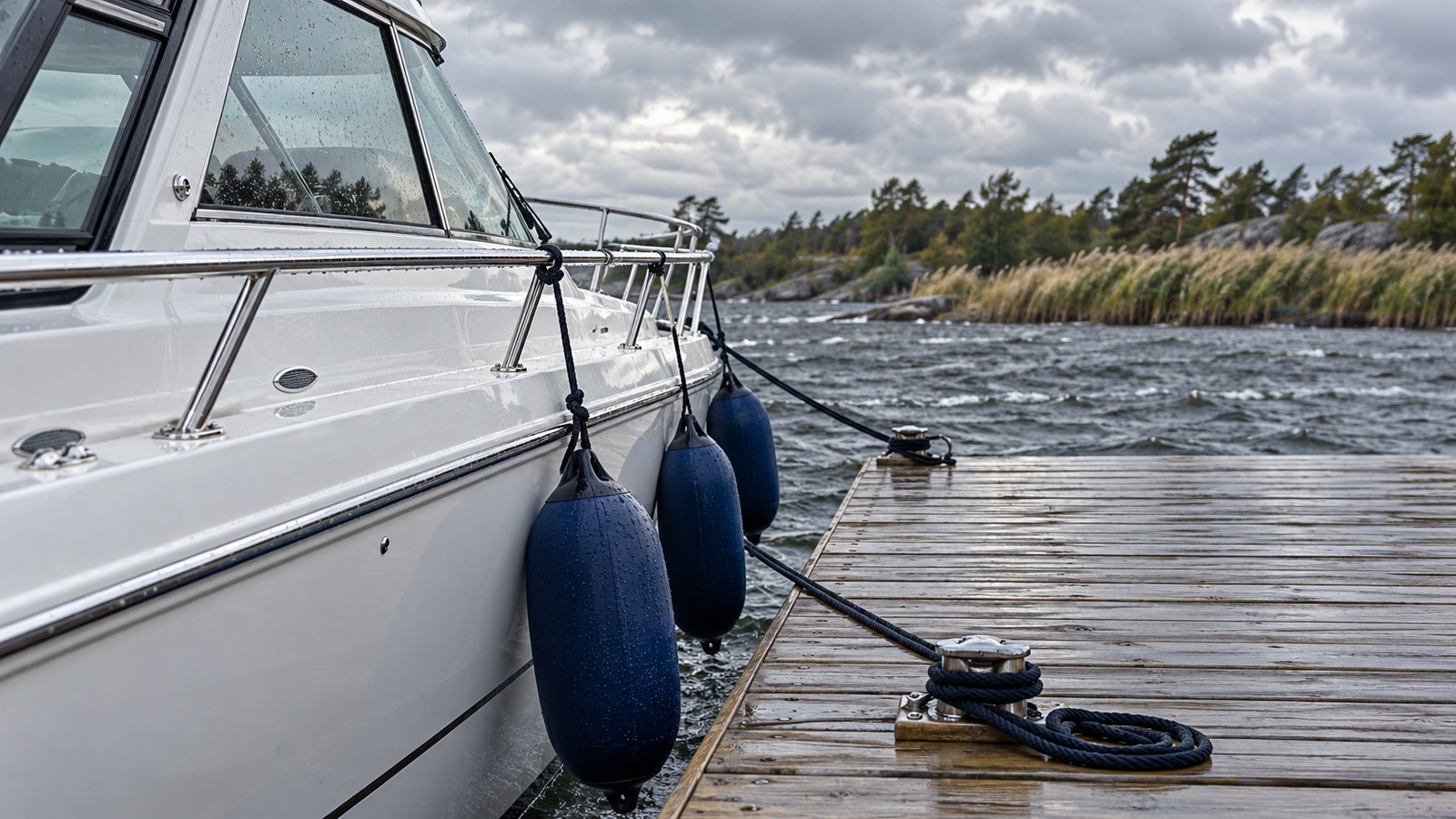
Imagine where the wind would carry the hull if you briefly stopped making corrections. That likely contact area deserves particular attention when arranging protection. A crosswind pressing the boat against a dock may expose a different part of the hull from a calm parallel arrival. Check the height and spacing of fenders against the actual dock, pilings, and projecting hardware. Protect suitable hull surfaces without obstructing the line handler or boarding route. Avoid tying fenders to lightweight fittings that cannot support the intended loads. Proper fenders can manage gentle contact, but they are not a substitute for reducing the boat’s closing speed.
Give the Crew a Wind-Specific Job
A general request to “help with docking” often produces several people reaching in different directions. Brief one person on the first planned line and another on watching the part of the boat most vulnerable to the wind. Explain that a missed handoff means reporting the miss, not jumping after the dock. Choose short calls that identify the problem clearly, such as “bow moving off” or “stern two feet.” Everyone should know who has authority at the controls. Competing shouted instructions make a fast-changing situation harder to understand.
Keep hands, feet, and boat hooks out of the role of emergency brakes. A person can be crushed between a hull and dock even when the movement appears slow. Wear suitable flotation and keep spare line clear of moving machinery and propellers. If the wind makes a safe handoff impossible, the plan needs to change. A crew member leaning dangerously beyond the rail is a signal to withdraw, rather than evidence of useful determination.
Brief the second attempt before it becomes necessary. Tell handlers that “going around” means stop reaching, bring loose lines aboard, and watch clearance while the operator withdraws. Identify a safe place to reorganize the deck outside the approach. That preparation prevents a missed line from becoming a trailing rope or a passenger stranded ashore. It also gives the crew permission to report trouble early without feeling that they have ruined the arrival.
Use the Wind Direction to Choose the Setup
When the wind pushes toward an open alongside dock, a controlled near-parallel setup may let it help close the final distance. That requires adequate fenders, very low closing speed, and room to avoid exposed corners. When the wind pushes away, the boat can separate from the dock before a line is made fast. The first useful attachment and the time available for a handoff therefore change. A wind blowing along the dock introduces a different fore-and-aft problem. These are planning distinctions, rather than a single sequence of wheel and throttle commands for every vessel. The BOATERexam docking guidance emphasizes assessing wind and current before the approach; apply that principle through instruction tailored to your actual boat.
Preserve Steering Response Without Building Excess Speed
Simply going slower does not solve every windy arrival. Some propulsion systems need directed thrust or water flow for useful steering, while the wind continues acting when the boat is in neutral. The practical aim is controlled movement with the least speed and power that work for your vessel in that setting. Learn the response through supervised practice. Do not copy a throttle setting from another boat, because displacement, propeller characteristics, and windage change the result. Excess momentum can quickly eliminate the space needed for an escape.
Make corrections early enough that the boat has time to respond. Large late inputs often create a second problem, particularly when the stern swings toward another object as the bow turns away. Watch the hull’s path and keep checking your available water. Follow the manufacturer’s shifting procedures rather than rapidly alternating direction in frustration. If increasing power is becoming the only way to preserve the plan, reassess whether the plan is still appropriate. A reset can restore both space and attention.
Set a Clear Limit Before the Final Approach
Decide what will cause you to abort before pressure makes the decision harder. Possible triggers include unexpected traffic, loss of a clear exit, a gust that turns the boat beyond your control, or an unavailable first cleat. The limit should be observable and practical for this berth. “I will somehow make it work” is not a useful instruction to yourself or the crew. Keep a safe alternative such as waiting outside, requesting another berth, or asking for an experienced operator. There is no universal wind-speed threshold that proves a particular novice, boat, and marina combination is safe. The honest limit is the point where you can no longer maintain predictable control with adequate clearance.
Recheck the Mooring After the Wind Loads the Lines
The arrival is not finished just because the first line reaches a cleat. Once the boat is fully secured, watch how the wind loads the bow, stern, and spring lines. Look for chafe, a fender being squeezed out of position, or hardware receiving an awkward sideways load. Allow for tide and water-level changes appropriate to the berth. Check the boarding gap and keep the route free of rope coils. A hurried temporary arrangement may need substantial adjustment before it is suitable for an unattended boat.
Wind can also make departure difficult, so consider how the boat will leave before committing to a long stay. An exposed berth that is manageable with an attendant present may be awkward when assistance is unavailable. Discuss any planned spring-line departure or other specialized maneuver with an instructor before using it. Keep that learning separate from an improvised response to worsening weather. Good preparation covers the stay and departure as well as the first moment alongside.
Turn Each Arrival Into Useful Handling Knowledge
After the boat is secure, describe what happened in specific terms. Record the wind direction relative to the dock, where the bow drifted, how early the crew could pass a line, and which preparation helped. Distinguish equipment problems from handling problems so the next practice session has a clear purpose. A misplaced fender calls for a different correction from unfamiliar reverse response. Repeat the exercise in manageable conditions before increasing the challenge. Over time, those observations give you a dependable sense of when a windy arrival is reasonable and when a different berth is the better choice.