A Calm Arrival Begins Before the Final Turn
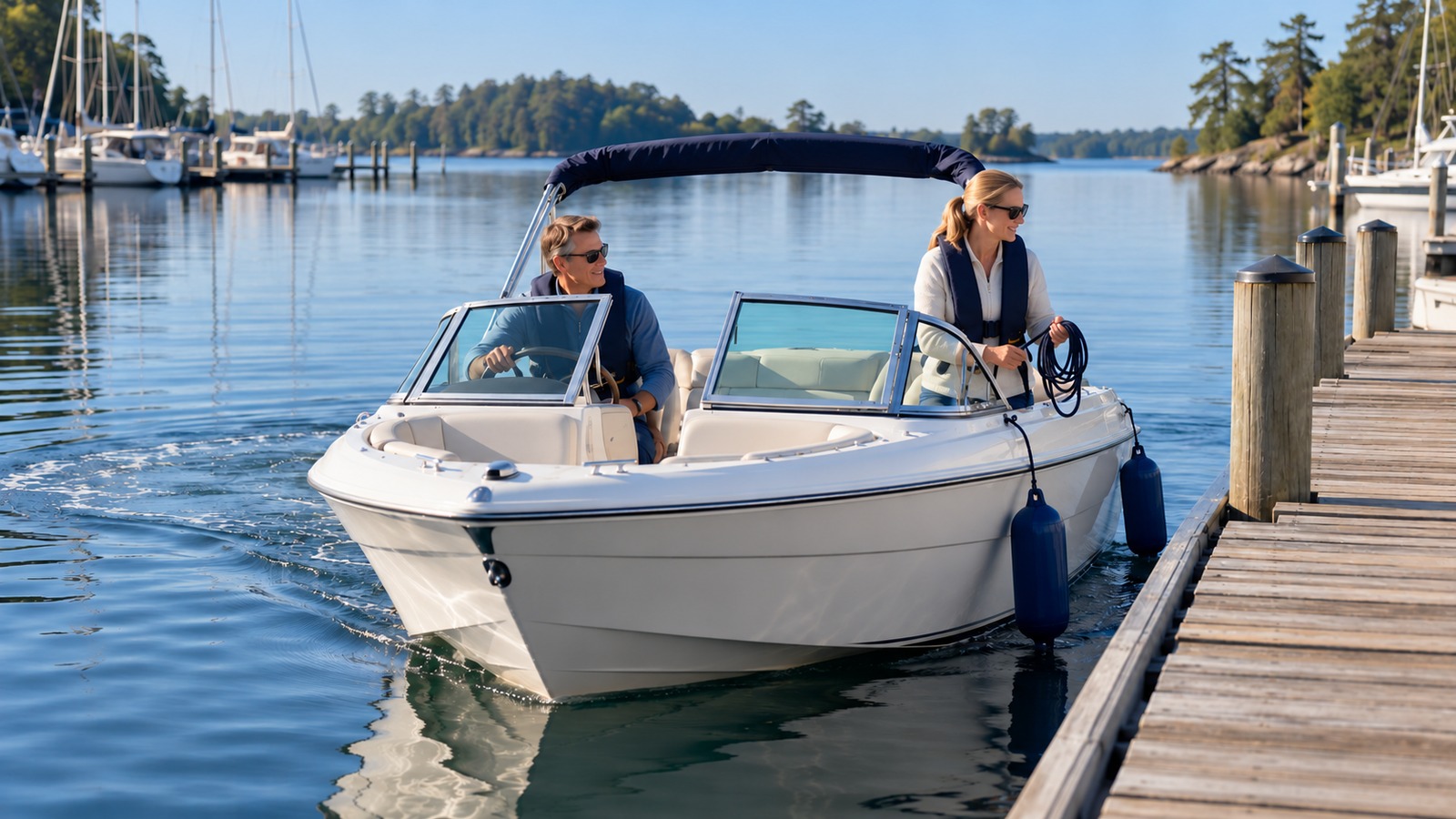
The dock looks much smaller when you are steering toward it for the first time. People are watching, the boat keeps moving after you reduce power, and a helpful passenger may already be reaching for a piling. A successful arrival begins by slowing that sequence down. Choose a protected place to practice, study the wind and current, prepare the equipment, and give your crew a simple plan before entering close quarters. This guide follows a small recreational powerboat approaching an open alongside berth in mild conditions. Your boat’s steering, propulsion, freeboard, and docking arrangement will change the details, so practice with a qualified instructor aboard whenever possible. The aim is a controlled approach that leaves room to stop, withdraw, and start again.
A: An open alongside berth in mild conditions usually offers more room for early practice.
A: No. Momentum, wind, and current continue moving it after propulsion disengages.
A: Wait for a stable boat and a safe step rather than relying on a jump.
A: Choose the line that safely controls the most urgent movement in that berth.
A: The suitable angle changes with boat handling, berth shape, wind, and current.
A: The hull rotates during a turn, so stern movement must be monitored separately from the bow.
A: Keep limbs clear of the gap and use correctly placed fenders.
A: Obtain a clear confirmation that the line is made fast to suitable hardware.
A: Withdraw early whenever speed, angle, traffic, or crew readiness no longer supports the approach.
A: Hands-on instruction is needed to learn the controls and handling of your actual vessel.
Choose a Berth That Gives You Room to Learn
Make the first docking lesson easier by choosing the location deliberately. An open length of dock with sound cleats, adequate water depth, little traffic, and clear water beyond the approach gives you options. A narrow slip beside expensive neighboring boats gives you far fewer. Call the marina before arrival to confirm which side will be alongside, where the berth is located, and whether someone can receive a line. Check that the berth actually fits the boat’s length, beam, draft, and boarding arrangement. A space that appears empty may belong to another vessel or have an underwater obstruction.
Look at conditions from outside the fairway before committing. Wind moves the exposed hull and cabin, while current acts on the submerged portion of the boat. Those forces can point in different directions. Flags, water moving past pilings, and the movement of nearby boats provide clues, but your own boat’s drift is especially useful. If conditions exceed your ability, ask for a different berth or wait somewhere safe. Learning includes recognizing when the available space and conditions do not support a sensible attempt.
Brief Everyone Before Hands Reach for Lines
Assign each person one clear job while you are still in open water. One crew member might handle the first line, another watch clearance on the opposite side, and the operator concentrate on boat control. Explain the intended approach and identify the first cleat you want to use. Agree on a short call such as “stop” for an immediate concern and “go around” for abandoning the attempt. Passengers who have no docking task should remain seated and keep the operator’s view clear. Nobody should improvise a leap ashore or try to stop the boat with an arm or leg. Wear suitable flotation, keep fingers away from loaded lines, and make sure children and pets are supervised throughout the arrival.
Rig Fenders and Lines While You Still Have Space
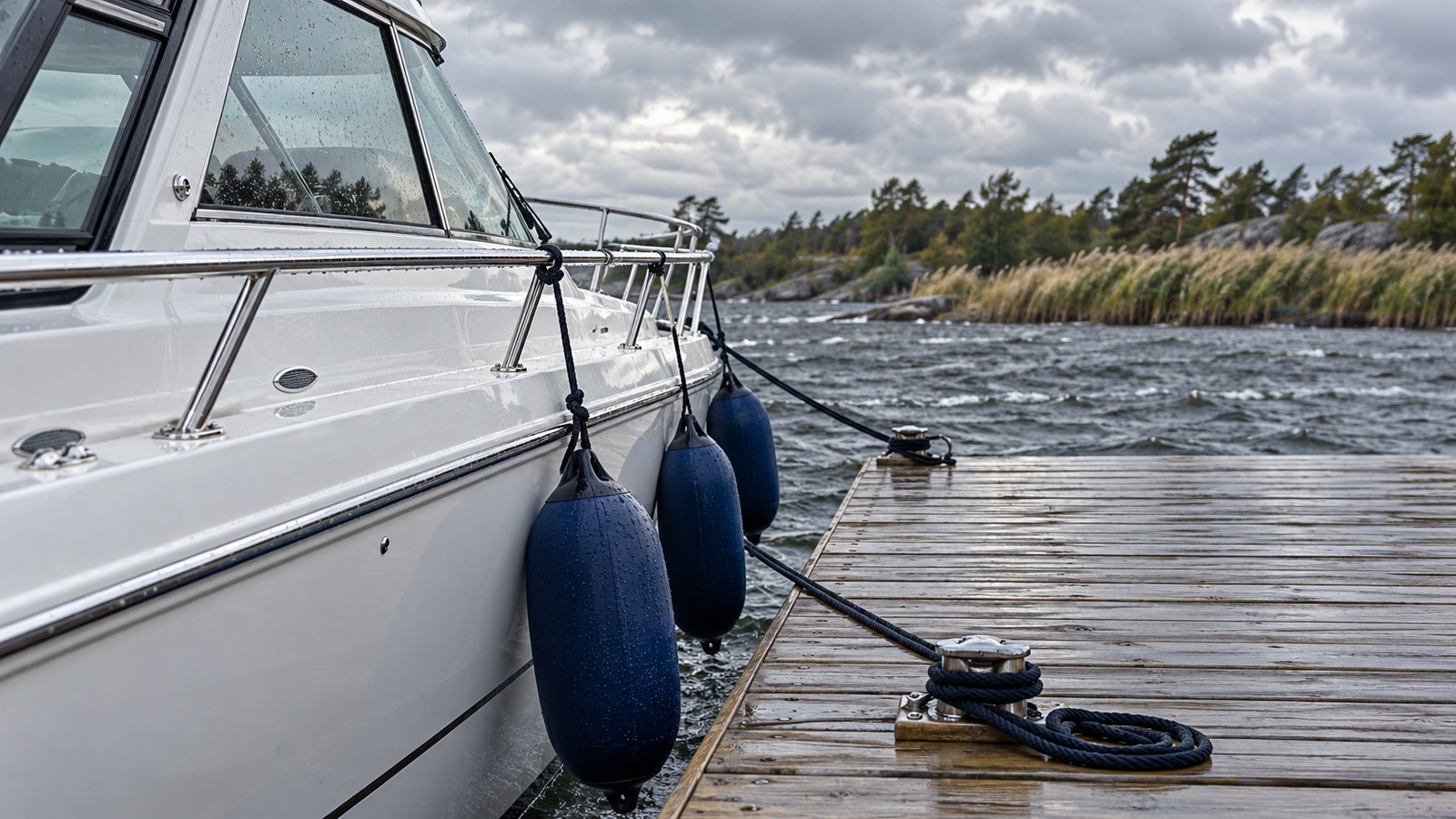
Position fenders on the docking side before entering the tight approach. Their height should match the surface that could touch the hull. A floating dock may require a different arrangement from a tall fixed pier or a row of pilings. Check that each fender is secured to a suitable attachment point and will stay between the boat and the contact surface as the hull moves. A fender hanging too high can roll onto the deck, while one too low may never protect the hull. Keep a boat hook accessible for light positioning work without treating it as a tool for absorbing the boat’s momentum.
Attach bow, stern, and appropriate spring lines to the boat’s cleats in advance. Lead the working ends outside rails and around obstructions so they can reach the dock without trapping a person or snagging equipment. Coil spare length where it cannot fall into the water or reach the propeller. A line around a propeller can instantly turn an awkward arrival into a disabled boat. Before proceeding, check both sides of the boat for dangling lines, loose equipment, and fenders on the wrong side.
Do not assume every handhold is a suitable load point. Rails, light fittings, and canvas frames may be damaged if used to restrain the boat. Inspect the deck cleats and dock hardware you intend to use. If a dock attendant is helping, tell them which line you are passing and ask them to make it fast to appropriate hardware. The operator should know when a line is merely in someone’s hand and when it is actually secured.
Learn What Neutral and Reverse Really Do
A boat has no road-style brake, and shifting to neutral does not cancel its momentum. Steering response also depends on the propulsion arrangement. An outboard or sterndrive directs thrust when you turn the drive, while an inboard rudder often needs water flow to develop useful steering force. Twin engines, jet drives, and joystick systems behave differently again. Before practicing at a dock, learn the owner’s manual procedures and experiment in clear, deep water at idle speed. Observe how long the boat coasts, how it turns in neutral, and how gently applied reverse affects its direction.
Use the lowest speed that still allows you to maintain control in the actual conditions. That is a judgment about this boat in this place, rather than a universal speed setting. Brief shifts into gear can be useful on many powerboats, but rapid or forceful shifting is poor technique and may damage equipment. Follow the manufacturer’s instructions for shifting, allow the mechanism to engage, and avoid adding power to compensate for confusion. If the boat is moving too quickly before the final approach, reset outside the berth.
Set Up the Approach Before Entering the Gap
For an open alongside berth in mild conditions, begin with a modest approach angle that leaves room to bring the boat parallel. The appropriate angle depends on wind, current, available space, and the boat’s handling. Approaching against the dominant force often improves control because you can regulate forward progress with gentle propulsion, but the dock layout may prevent that option. Watch the boat’s path across the water as well as the direction its bow points. A boat can point neatly toward a cleat while drifting sideways toward a neighboring vessel. Choose an escape route before you reach the point where turning away becomes difficult, and keep checking whether that route remains open.
Bring the Boat Alongside Without Chasing the Dock
Reduce closing speed early enough that only small corrections remain. As the bow reaches the chosen area, bring the boat toward parallel using the steering and propulsion response you practiced. Remember that the stern moves sideways during a turn, so clearance at the bow does not guarantee clearance aft. Keep scanning the whole hull, especially the stern and the side away from your attention. Avoid staring at one cleat until everything else disappears from your awareness. A spotter’s clear distance calls can help, provided the operator understands which part of the boat the distance describes.
If a gentle reverse input is needed to reduce forward motion, apply it with room remaining and watch the result. Reverse may introduce sideways movement, and a crosswind can continue pushing the bow while the boat slows. Do not add a large burst of throttle simply because the gap feels uncomfortable. If the boat is no longer approaching under control, use the prepared exit while it is still available. Contact should be light enough for properly positioned fenders to manage, without asking people or dock equipment to arrest substantial momentum.
Secure the First Line Deliberately
Choose the first line during the approach briefing by identifying the movement it must restrain; there is no single line order for every berth. The first line should address the movement that is creating the greatest immediate risk. On an uncomplicated arrival, a suitable spring line may help limit fore-and-aft movement, while bow or stern lines control separation at their respective ends. The correct choice depends on the berth geometry and conditions. An inexperienced crew should not attempt an unfamiliar powered spring-line maneuver during a crowded arrival. Practice that technique separately with instruction and suitable cleats. Once the boat is close enough for a safe handoff, pass a prepared line to the person on the dock or place a loop over reachable hardware without leaning dangerously beyond the rail.
Keep communicating after the handoff. A person ashore who is still holding a line has not necessarily secured the boat. Ask for a clear confirmation that it is made fast, then confirm what movement it restrains. Keep slack away from feet and hands, and never wrap a loaded line around your body. The operator should maintain control until the boat is adequately restrained. Shut down propulsion only when doing so is appropriate for the situation and all lines are clear of the drive.
Anyone stepping ashore should wait until the boat is stable and the gap is small enough for an ordinary controlled step. A jump can leave a person stranded between moving surfaces. If the dock is too high, too low, slippery, or damaged, use a safer boarding point. There is no benefit in completing a tidy maneuver by turning the final step into a fall.
Arrange the Boat for the Hours After Arrival
Once the immediate arrival is complete, adjust the full line arrangement. Bow and stern lines limit the boat’s distance from the dock, while opposing spring lines help control movement along it. Lead them to sound hardware with adequate lengths and angles for the particular berth. Allow for changing water level, wakes, and the difference between a floating dock and a fixed pier. Lines pulled excessively tight can damage fittings as the water moves, while excessive slack may let the boat strike the dock or another vessel. Reposition fenders where the boat actually rests rather than where you expected it to rest. Watch the arrangement through several wakes before leaving the boat unattended.
Abort Early and Make the Second Attempt Easier
An aborted approach is an ordinary docking decision. Use it when a gust changes the situation, the first line cannot be passed, another boat blocks the fairway, or your speed and angle no longer make sense. Tell the crew you are going around so nobody keeps reaching for hardware. Check that all lines are aboard and clear of the propeller. Then withdraw using the space and maneuver you identified beforehand, watching the stern and nearby traffic. Avoid backing blindly or assuming that the water behind you remains empty.
Once clear, identify one specific cause rather than repeating the same approach faster. Perhaps the fenders were too high, the turn started too late, or the wind pushed the bow farther than expected. Adjust that element and brief the crew again. If you cannot identify a safe correction, seek dock assistance or professional instruction. Repeated attempts in worsening conditions rarely produce useful practice. A different berth or a pause can be the most effective change you make.
Build Familiarity One Manageable Arrival at a Time
Practice short sessions in favorable conditions and stop before fatigue erodes concentration. Start with an open alongside berth, then add new challenges gradually with appropriate guidance. Keep a simple record of wind direction, current, approach choice, and what the boat actually did. Over time those observations become a useful handling reference for your own vessel. Review the BOATERexam docking and mooring guidance alongside hands-on instruction. A dependable routine comes from noticing the boat’s response, preparing the crew, and preserving space for another attempt.