Year-Round Living Is Possible, but Not Automatic
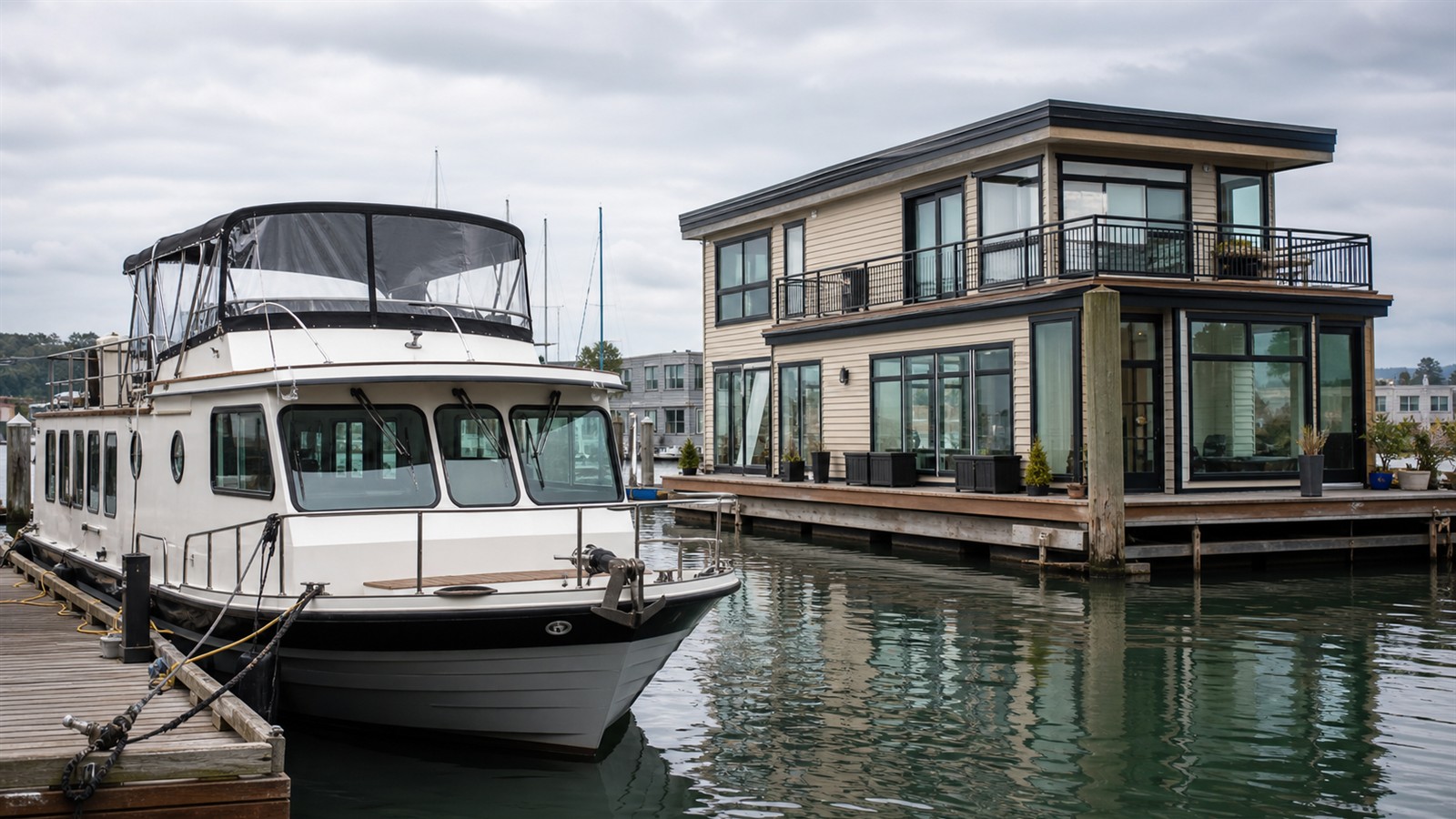
You can live on a houseboat year-round in many places, but the answer depends on more than personal toughness. The boat must be suitable for the climate, the marina or waterway must allow full-time occupancy, and the onboard systems must handle heat, moisture, power, water, waste, storms, and safety through every season. Summer houseboat living can feel easy and romantic; winter exposes weak insulation, poor wiring, marginal heaters, frozen hoses, condensation, and dock access problems. The people who succeed year-round are not necessarily the ones with the fanciest boats. They are the ones who confirm the rules, prepare early, keep systems simple, and treat the houseboat as both a home and a vessel.
A: Yes, with suitable insulation, safe heat, shore power, and moisture control.
A: No. Many limit or prohibit full-time occupancy, especially outside established liveaboard communities.
A: In cold regions, winter is usually hardest because of freezing, condensation, heating, and dock safety.
A: Yes. Moisture control is central to comfort and long-term interior condition.
A: Yes, if you plan reliable internet, power, heat, lighting, and a dry workspace.
A: Confirm legal year-round moorage before spending money on the boat itself.
Start with Legal Moorage
The first requirement is permission. Some marinas welcome liveaboards, some allow only a limited number, and others prohibit full-time occupancy entirely. A slip that is fine for weekend use may not be approved for a permanent resident. Local regulations can also affect anchoring, sewage, parking, mail, and emergency access.
Before buying or moving aboard, ask the marina whether year-round liveaboard status is available, transferable, and documented. Confirm winter water service, electrical limits, pump-out access, gate access, parking, and rules for heaters, de-icers, and exterior storage.
Winter Changes Everything
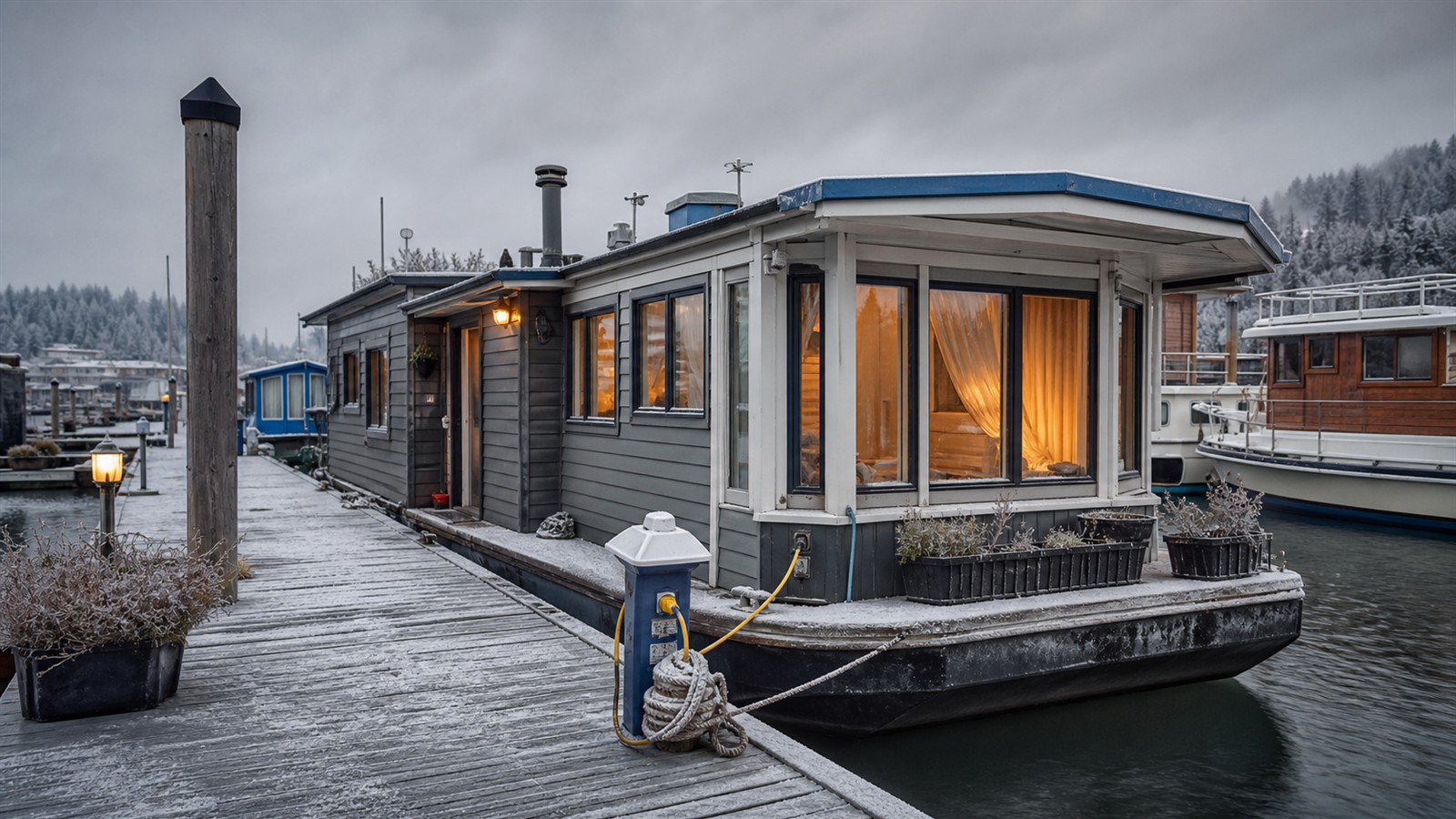
Cold weather is the biggest test in many regions. Boats lose heat through windows, decks, hulls, and poorly insulated cabins. Water hoses can freeze, dock surfaces become slippery, and condensation forms when warm interior air meets cold surfaces. A boat that feels roomy in summer can feel damp and cramped during a long storm cycle.
Successful winter liveaboards plan heat, ventilation, and water protection together. More heat without ventilation can create moisture problems. More insulation without airflow can trap dampness. The goal is a balanced system that keeps people warm and the boat dry.
Heating and Electrical Capacity
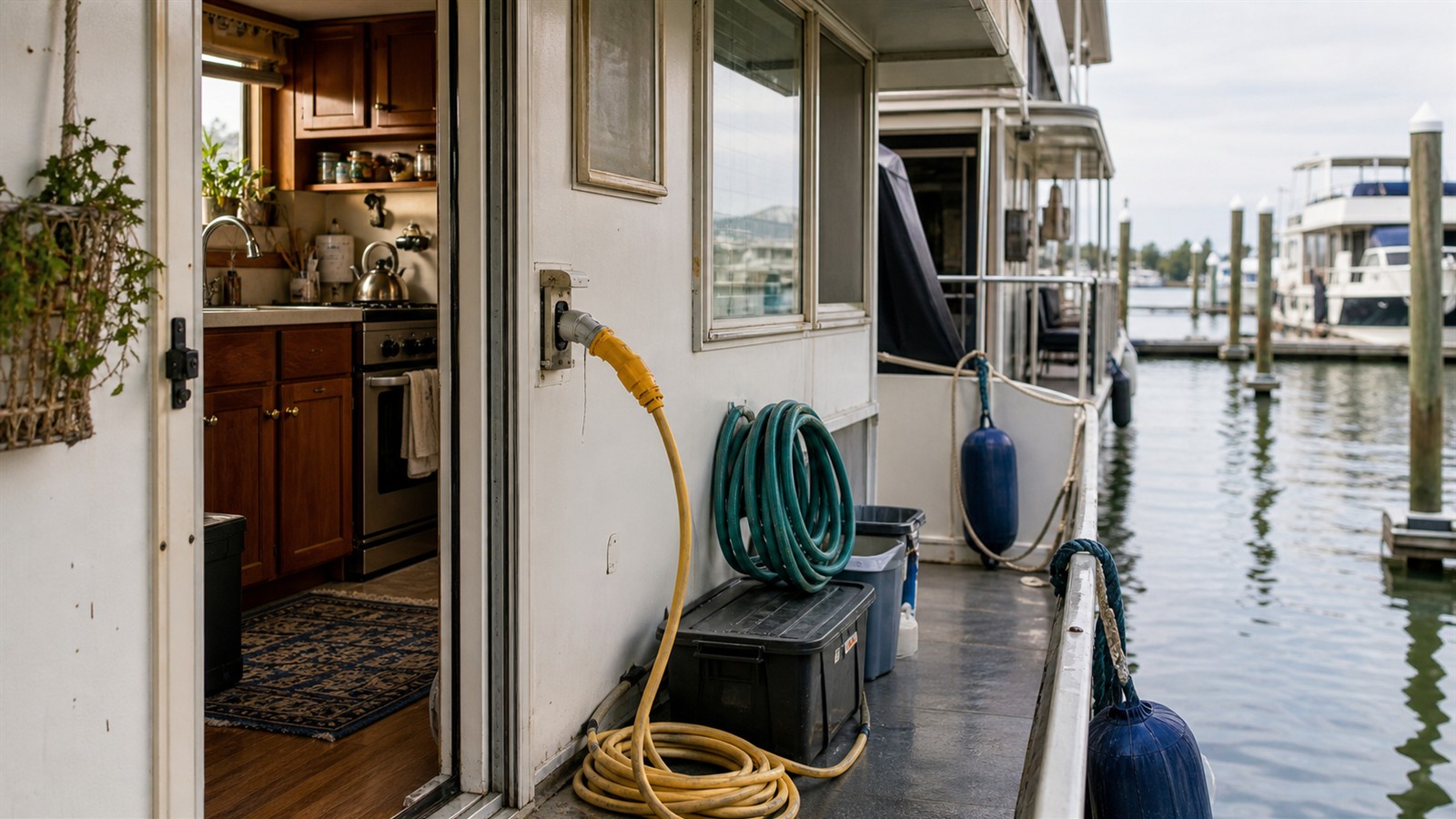
Heating options include electric heaters, diesel heaters, propane systems, reverse-cycle marine HVAC, wood stoves where allowed, or combinations of these. Each option has safety and power implications. Electric heat is convenient at the dock but can overload weak shore-power systems. Fuel-burning heaters need proper installation, ventilation, and carbon monoxide monitoring.
Never improvise with unsafe household equipment. Marine environments are damp, confined, and unforgiving. Use properly rated cords, safe circuits, working alarms, and marina-approved systems.
Water, Waste, and Daily Utilities
Year-round living requires reliable water and waste plans. Some marinas shut off dock water in winter, forcing residents to fill tanks manually. Pump-out service may be limited by weather. Holding tanks, hoses, valves, and pumps need freeze protection. Graywater rules vary by location and must be followed carefully.
Internet, laundry, showers, trash, and package delivery also matter. A winter liveaboard who works remotely needs redundancy for power and connectivity, not just a scenic view.
Moisture Control
Condensation is one of the defining challenges of full-time houseboat life. Cooking, showering, breathing, wet clothes, and cold surfaces all add moisture. Without ventilation and dehumidification, mildew can appear behind cushions, inside lockers, and along window frames.
Use vents, fans, dehumidifiers, moisture absorbers, and regular inspections. Keep bedding and stored clothing away from cold walls when possible. Small habits, such as wiping windows and airing out cabinets, prevent bigger problems.
Storms and Dock Safety
Year-round residents need storm routines. Lines, fenders, cleats, shore cords, and dock attachments should be inspected before bad weather. Wind and wakes can strain hardware. Snow or ice can add weight where designers did not expect it. Access ramps may become steep or slippery as water levels change.
Keep flashlights, traction aids, spare lines, gloves, and emergency contacts ready. Know how to shut off water, power, fuel, and pumps quickly. A houseboat is home, but it still lives in a dynamic environment.
Social and Practical Realities
Year-round marina life can be friendly and supportive, especially among other liveaboards. It can also feel quiet in off-season months when recreational boaters disappear. Some people love the solitude; others miss neighborhood conveniences.
Think through parking, groceries, pets, guests, medical access, and late-night emergencies. The dock is part of the home, and the marina becomes part of daily logistics.
Who Should Try It
Year-round houseboat living suits people who are observant, practical, and comfortable with seasonal routines. It does not require expert mechanical skill at the start, but it does require willingness to learn. Owners must notice changes, respond early, and respect weather.
If you can secure legal moorage, choose a suitable boat, budget for maintenance, and prepare for winter before it arrives, living aboard all year can be deeply rewarding. The secret is preparation. Floating homes punish assumptions, but they reward attention.