Choosing by Budget and Daily Routine
The best houseboat for full-time living is not always the biggest, newest, or most photogenic option at the dock. It is the boat that fits your budget, your marina, your climate, your maintenance ability, and the way you actually live from Monday morning through winter storms. A full-time liveaboard needs dependable utilities, dry spaces, safe electrical systems, workable storage, good ventilation, and a layout that still feels comfortable after the novelty fades. Budget matters, but condition and moorage matter more. A modest, well-kept boat in an approved liveaboard slip can be a better home than a larger bargain boat with leaks, uncertain insurance, and no legal place to stay.
A: The right size depends on slip availability, budget, climate, and storage needs, but mid-sized boats are often easiest for beginners.
A: They can be, if they are dry, insurable, surveyed, and accepted by a liveaboard marina.
A: Not usually. Bigger boats increase slip fees, utilities, cleaning, and repair costs.
A: Legal moorage, heat, insulation, moisture control, safe power, and reliable water/waste systems.
A: Yes in the right climate and marina, but winter, wind, and flotation condition need close review.
A: A maintained, surveyed, mid-sized liveaboard with simple systems and confirmed moorage.
Entry Budget: Older Cruising Houseboats
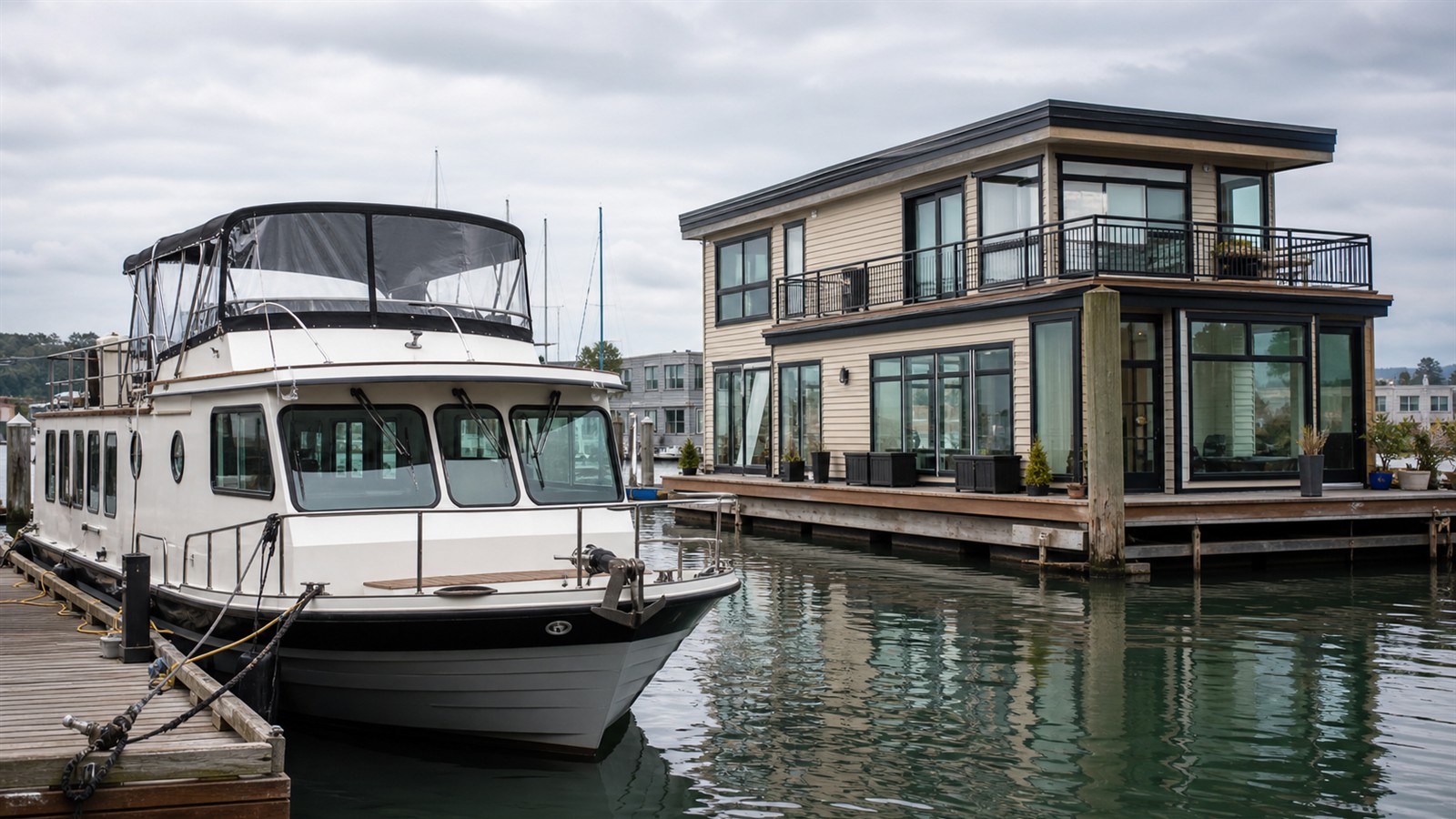
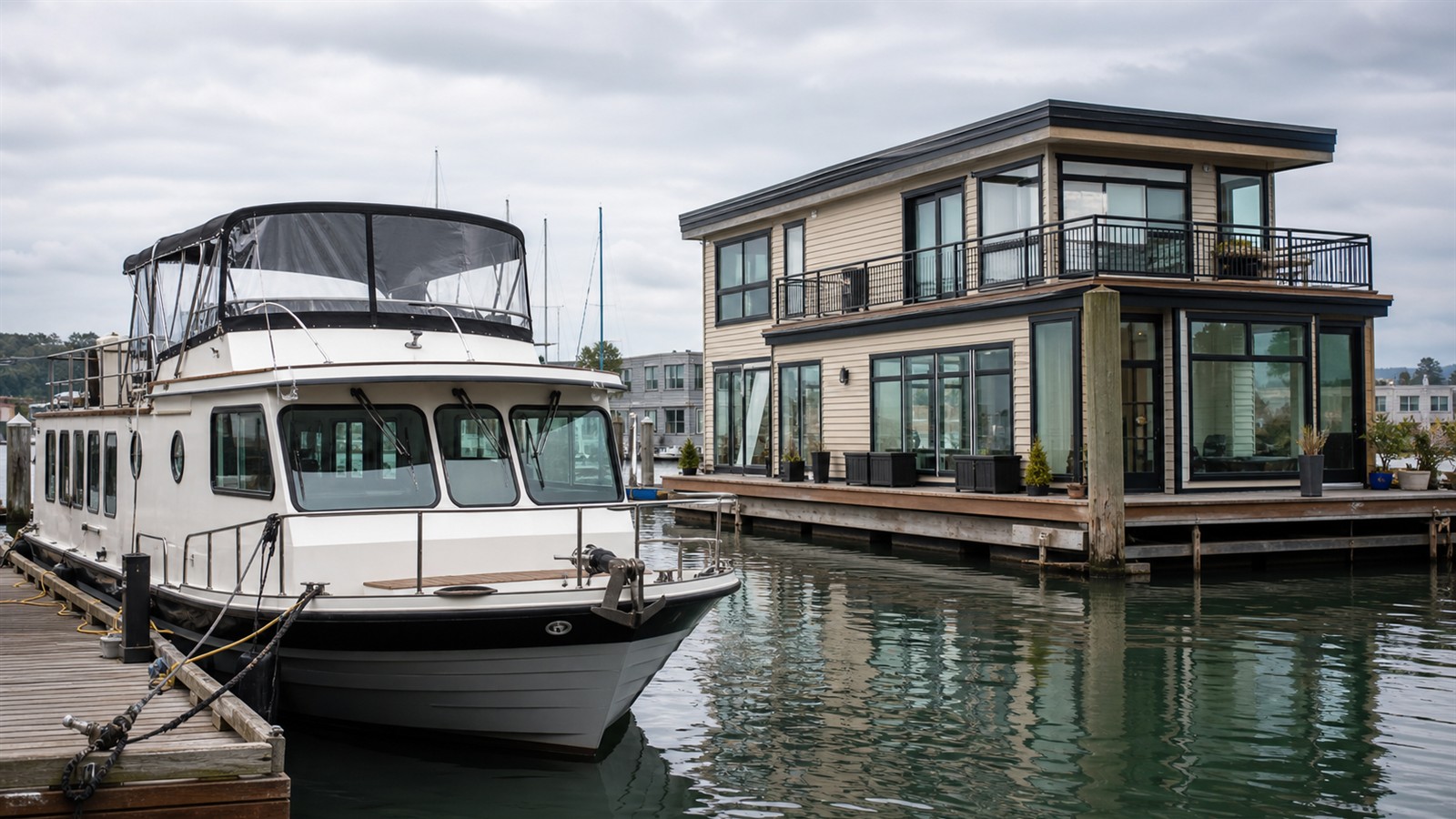
Older cruising houseboats can be the most approachable path into full-time living. They often have basic cabins, compact galleys, small heads, simple engines, and enough deck space for everyday dock life. For a single person or couple, a clean older cruiser can work well if the hull is sound and the systems are understandable.
The risk is deferred maintenance. Roof leaks, aging wiring, tired fuel systems, weak batteries, and soft decks can erase the savings quickly. Entry-budget buyers should prioritize survey results, marina acceptance, and dryness over cosmetic style.
Modest Budget: Pontoon-Style Houseboats
Pontoon-style houseboats are common on lakes and protected inland waterways. They can offer surprising interior space for the money, and their simple layouts appeal to buyers who want a cabin-like feel without a complicated engine room. Many are easy to enjoy in warm climates and seasonal communities.
For full-time use, pay close attention to insulation, wind exposure, flotation condition, and winter practicality. A pontoon houseboat that is delightful in July may be difficult in February unless it was built and moored for year-round occupancy.
Middle Budget: Purpose-Built Liveaboards
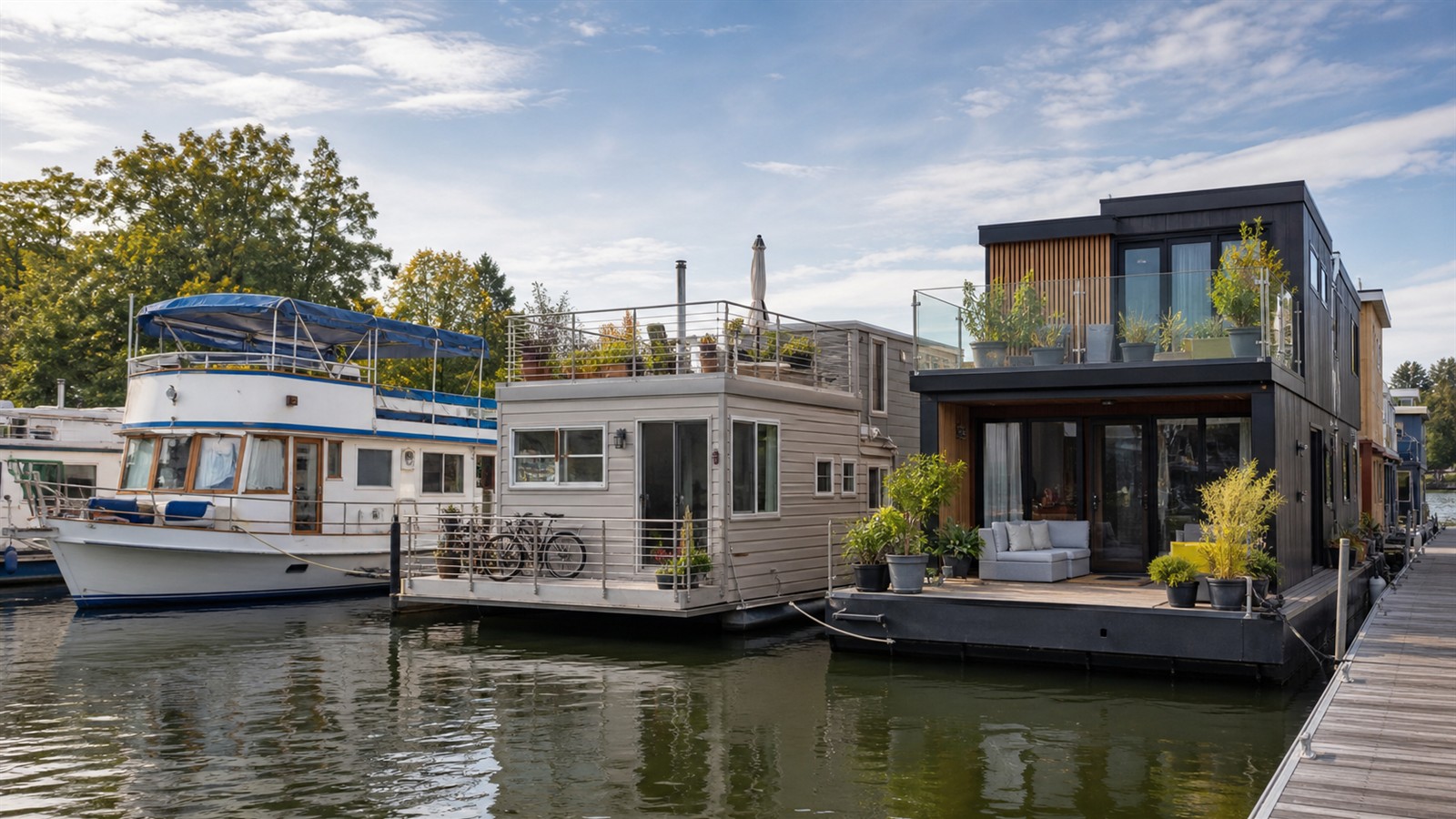
Purpose-built liveaboard houseboats are often the sweet spot. They may not be luxurious, but they usually combine workable interiors with marine systems designed for actual residence. Look for good headroom, reliable shore power, proper plumbing, safe propane or electric systems, ventilation, storage, and accessible mechanical areas.
This category rewards patient shopping. A boat that has been lived on responsibly may come with practical upgrades: better batteries, improved heaters, newer pumps, sealed decks, labeled wiring, and proven marina approval. Those upgrades are more valuable than decorative finishes.
Higher Budget: Modern Floating Residences
Modern floating residences or upscale houseboats can provide larger rooms, better windows, residential finishes, stronger utility connections, and more comfortable long-term layouts. They suit buyers who want waterfront living but do not necessarily want to cruise often. In established communities, they can feel more like compact homes than boats.
The tradeoff is reduced flexibility. Financing, moorage agreements, association rules, and transfer rights become central. Buyers should study the float, utility connections, community documents, and long-term fee structure as carefully as the interior.
Best for Remote Workers
Remote workers should favor quiet slips, reliable internet options, stable power, heating and cooling capacity, and a layout with a real desk area. A beautiful boat with poor cellular signal can become frustrating fast. Noise from dock traffic, generators, halyards, or marina work can also affect daily productivity.
A good remote-work houseboat has practical lighting, dry storage for electronics, ventilation, and enough separation between sleeping and working areas to keep the home from feeling like one cramped room.
Best for Couples
Couples need more than a romantic deck. Look for a layout that allows two people to cook, move, store clothing, and decompress without constant negotiation. A separate sleeping area, usable galley, comfortable seating, and outdoor space all matter.
Privacy also matters. Some marinas place boats close together, and windows that look perfect in listing photos may need shades or curtains in real dock life.
Best for Cold Climates
Cold-climate liveaboards need insulation, safe heat, winter water plans, moisture control, and marina permission for year-round occupancy. A boat with thin walls and marginal electrical service can be miserable when temperatures drop. Heating should be safe, redundant, and affordable.
Look for protected slips, de-icing support, reliable shore power, storm exposure, and a proven winter history. A seller who has already lived through winters aboard can answer questions a fair-weather listing cannot.
The Best Pick Overall
For most first-time full-time liveaboards, the best choice is a mid-sized, purpose-built houseboat with documented maintenance, legal liveaboard moorage, simple systems, and no major survey surprises. It may not be the flashiest boat, but it gives beginners the highest chance of enjoying the lifestyle without being overwhelmed.
Buy the boat that lets you live well, sleep dry, stay insured, and keep money available for repairs. That is the version of full-time floating life that lasts.