What a Houseboat Really Is
A houseboat is a home built to spend its life on water, but the word covers a wider range of vessels than many first-time buyers expect. Some houseboats are true boats with engines, helms, fuel systems, navigation lights, and the ability to move under their own power. Others are floating residences that rarely leave a dock and depend on shore power, marina utilities, and permanent moorage. For beginners, the easiest way to understand the category is to think about purpose: a houseboat is designed around daily living first, with boating capability ranging from full mobility to almost none. That mix of home and vessel is what makes the lifestyle appealing, but it also means buyers must evaluate comfort, safety, maintenance, insurance, docking rules, and local liveaboard regulations together.
A: Yes, if the boat is simple, the marina allows liveaboards, and the buyer is ready for routine maintenance.
A: No. Some are movable vessels, while others are stationary floating residences.
A: Sometimes, but moorage, insurance, repairs, utilities, and surveys can narrow the difference.
A: A marine survey is strongly recommended before purchase, especially on older or converted boats.
A: Only where local rules allow it, and it requires more self-sufficient power, water, waste, and safety planning.
A: Buying the boat before confirming legal liveaboard moorage and realistic monthly costs.
How Houseboats Differ from Regular Boats
Most recreational boats are arranged around movement, speed, fishing, cruising, or entertaining for a few hours at a time. A houseboat reverses that priority. The interior matters as much as the hull, because the boat must support cooking, sleeping, bathing, storage, heating, cooling, and ordinary downtime. A good houseboat feels less like a weekend toy and more like a compact apartment that happens to float.
That focus changes almost every design decision. Wider beams create more interior volume, large windows bring light into salon spaces, flat decks make outdoor living easier, and utility connections become central to daily comfort. Even a movable houseboat usually trades speed and offshore performance for stability, room, and easy access around the dock.
Common Houseboat Styles
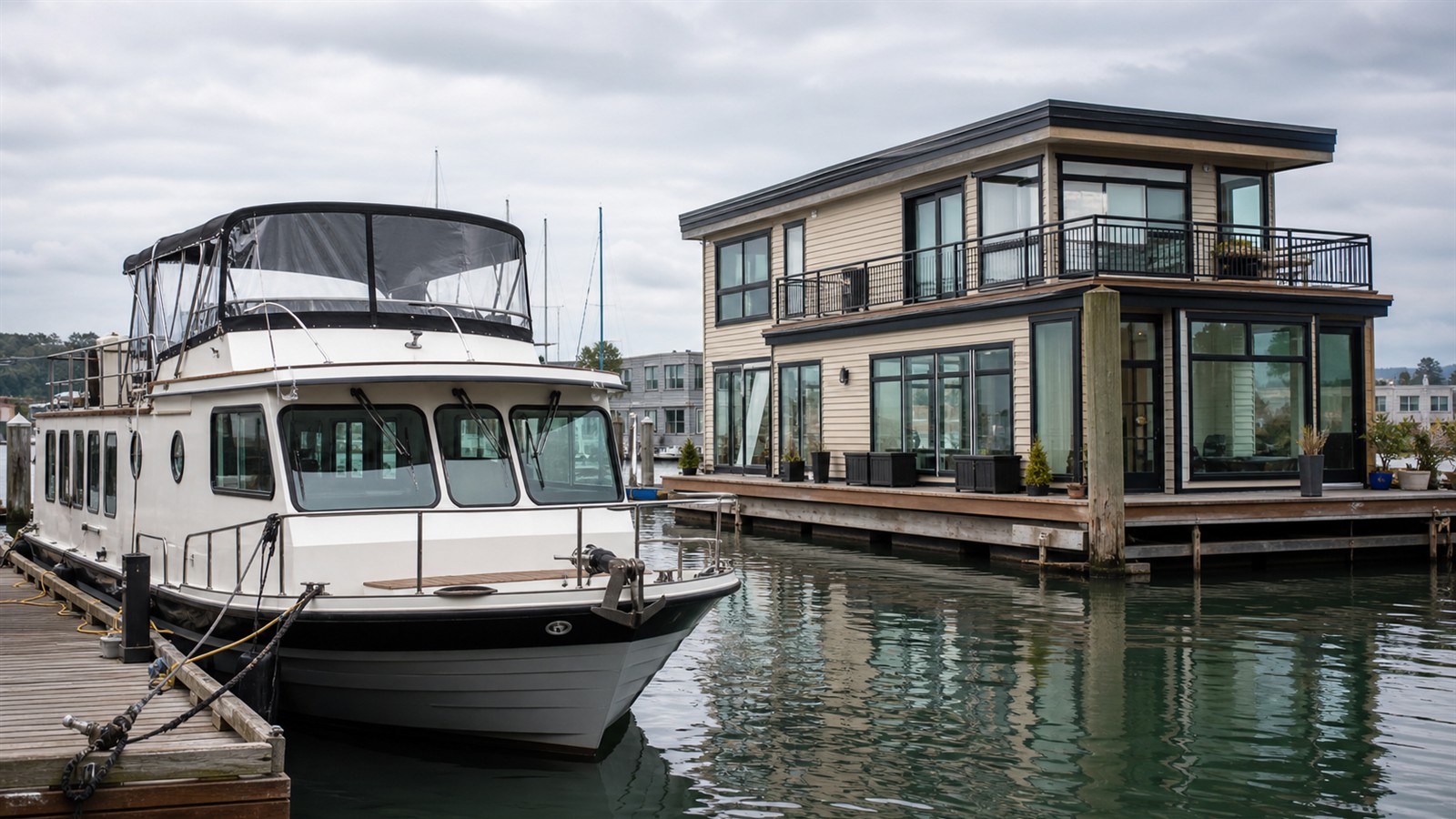
Beginner shoppers usually encounter three broad styles. Cruising houseboats have engines and can move between marinas, coves, and anchorages. Pontoon-style houseboats use aluminum tubes or similar flotation and are often simpler, lighter, and easier to operate on sheltered lakes. Floating-home-style houseboats look more residential and may be built on a barge-like platform, but many are not intended for regular travel.
There are also converted vessels, including old trawlers, barges, and workboats adapted for liveaboard use. These can be charming and sturdy, but they require careful surveys because age, wiring, plumbing, corrosion, and undocumented modifications can turn a bargain into an expensive project.
Living Systems Beginners Need to Understand
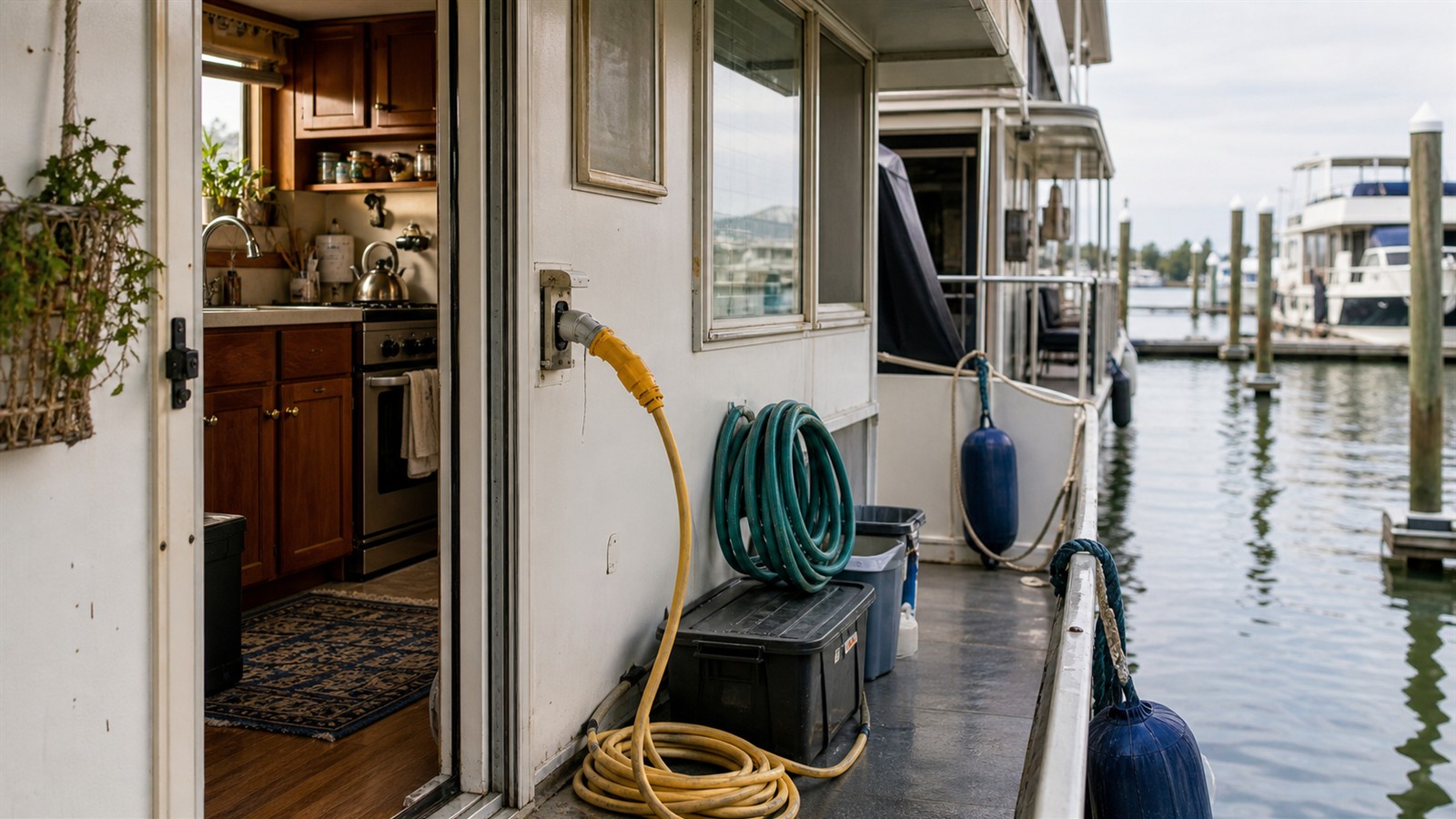
Houseboat comfort depends on systems that land-based renters often never think about. Fresh water may come from a dock hose, an onboard tank, or a combination of both. Waste may go into a holding tank that needs pump-out service, a marina sewer connection, or a composting setup where allowed. Electricity can come from shore power, batteries, solar, a generator, or an inverter system.
Heating and cooling deserve special attention. A marina slip with stable shore power can support familiar appliances, while an anchored or frequently moving boat must balance comfort against battery capacity, generator noise, ventilation, and fuel use. The more independent you want the boat to be, the more carefully you need to plan energy and water.
Moorage and Liveaboard Rules
The houseboat itself is only half the decision. Where it can legally sit is often the bigger challenge. Marinas may limit liveaboards, require separate approval, charge higher fees, or maintain waitlists. Some waterways restrict overnight occupancy, discharge systems, anchoring duration, or residential use. A boat that seems perfect on paper can become impractical if there is no legal place to keep it.
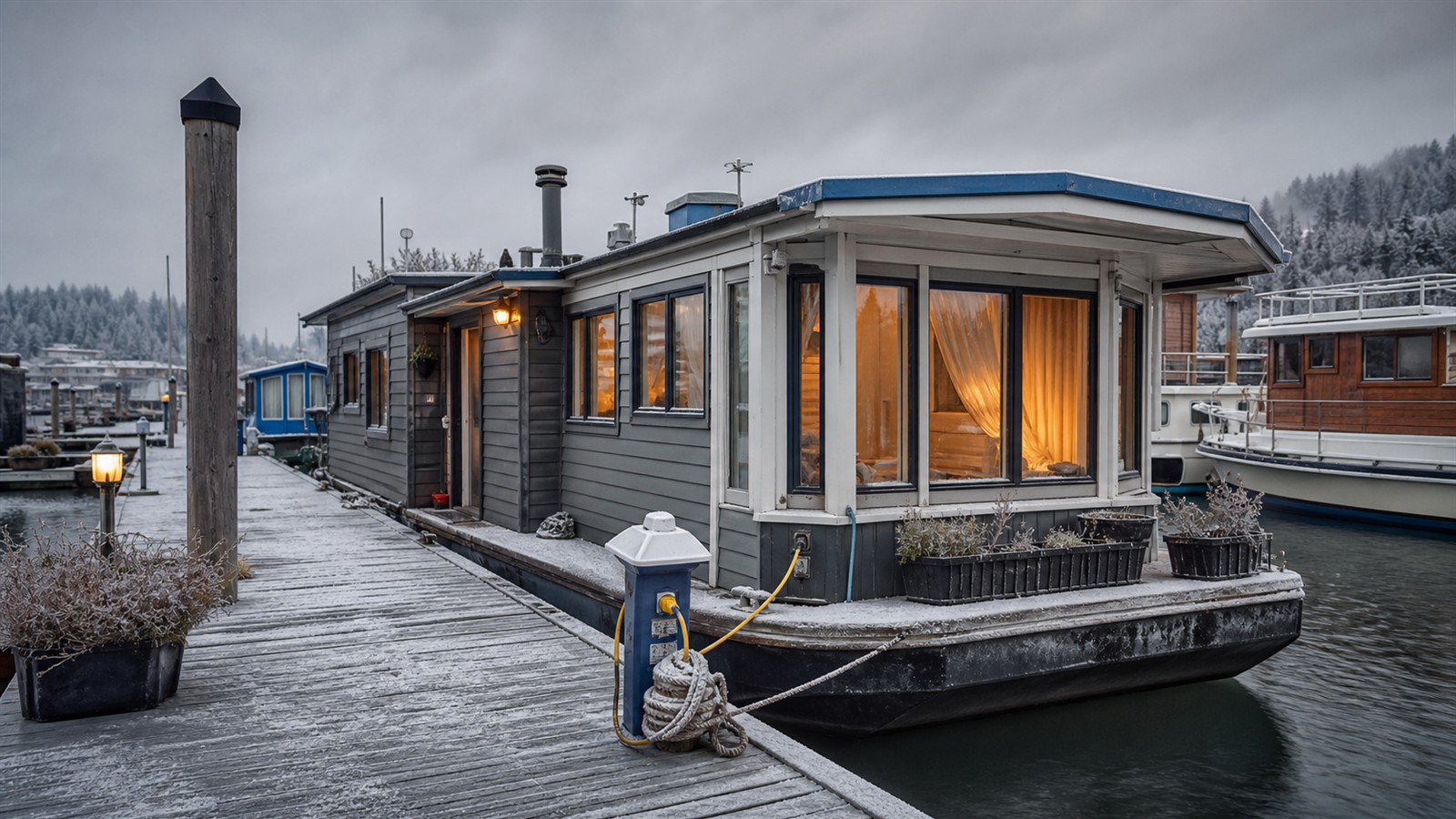
Before buying, talk directly with marinas and local authorities. Ask whether liveaboard status is allowed, whether the slip fits the boat dimensions, what insurance is required, how utilities are billed, and whether winter occupancy is permitted. Get answers in writing when possible.
Costs Beyond the Purchase Price
Houseboat budgets should include moorage, insurance, utilities, fuel, pump-outs, maintenance, haul-outs, surveys, registration or documentation, safety gear, and repairs. Older boats may also need immediate upgrades to wiring, plumbing, batteries, bilge pumps, roof sealing, or flotation. A lower purchase price can be attractive, but deferred maintenance often arrives quickly on the water.
Routine upkeep is not optional. Water, sun, freeze cycles, corrosion, and movement work on every surface and fitting. Owners who inspect often, fix leaks early, and keep systems simple usually enjoy the lifestyle more than owners who treat a houseboat like a stationary apartment.
What Daily Life Feels Like
Life aboard can be peaceful, social, and deeply connected to weather. You notice wind shifts, dock sounds, sunrise light, and the small routines of the marina. Many people love that closeness to water, especially if they value a smaller footprint and outdoor time. The tradeoff is that storage is limited, privacy varies by marina, and simple errands may require more planning.
Houseboat living rewards people who are flexible. Laundry, parking, packages, guests, pets, groceries, and winter storms all need practical systems. The lifestyle is not difficult by default, but it is less passive than renting a conventional apartment.
Safety Basics
A beginner houseboat should have working bilge pumps, smoke and carbon monoxide alarms, fire extinguishers, dock lines, fenders, navigation lights if mobile, life jackets, and safe electrical connections. Carbon monoxide deserves special respect around generators, heaters, and nearby boats. Electrical shore cords should be marine-rated, correctly sized, and inspected for heat or wear.
Who a Houseboat Suits Best
Houseboats suit people who want a slower, more hands-on relationship with home. They are especially appealing to boaters, remote workers, retirees, couples downsizing, and anyone drawn to compact waterfront living. They are less ideal for people who need abundant storage, dislike maintenance, or want housing with predictable land-based convenience.
The best first houseboat is usually the one that matches your actual routine rather than your fantasy weekend. Choose the moorage first, confirm the rules, inspect the systems, and buy the simplest boat that supports the way you want to live. Done carefully, houseboat living can be practical, memorable, and surprisingly comfortable.