The Real Monthly Picture
The cost of living on a houseboat in 2026 depends less on one national average and more on a stack of local decisions: the boat you buy, the marina that accepts it, the climate, the condition of its systems, and whether you live dockside or cruise often. A modest paid-off houseboat in a less expensive inland marina can be surprisingly affordable. A newer liveaboard in a desirable coastal city can cost as much as a small apartment once moorage, insurance, utilities, financing, and maintenance are counted. The key is to budget like a boat owner and a homeowner at the same time, because water-based living brings costs from both worlds.
A: It can be, but only when moorage, insurance, utilities, maintenance, and reserves are all realistic.
A: Moorage is usually the largest monthly cost, especially in desirable liveaboard marinas.
A: Yes. Slip fees, insurance, utilities, pump-outs, and maintenance continue after purchase.
A: Only with a careful survey and repair budget; project boats often cost more than expected.
A: Often, but reliable internet, power, heat, and workspace comfort need to be budgeted.
A: Compare total monthly costs plus annual repair reserves, not just slip rent or loan payment.
Moorage
Moorage is usually the anchor expense. Slip fees vary by region, marina quality, boat length, beam, liveaboard approval, parking, utilities, and amenities. Some marinas charge a base slip fee plus a liveaboard surcharge. Others include water or trash but meter electricity separately. Prime waterfront cities can command steep rates, while rural lakes and rivers may be far more approachable.
Ask for the full monthly number, not just the advertised slip rate. A realistic comparison includes liveaboard fees, power, water, pump-out, parking, storage, gate cards, mail service, laundry, and taxes or assessments where applicable.
Purchase Price and Financing
Houseboats range from older project boats to expensive floating residences. A lower purchase price may reduce monthly financing, but it can increase immediate repair risk. Marine lenders may require surveys, larger down payments, shorter loan terms, and proof of insurance. If the boat is older, homemade, unusually constructed, or not mobile, financing choices may narrow.
Cash buyers should still budget as if a payment exists by setting aside a repair reserve. Boats age actively, especially when roofs, decks, plumbing, and electrical systems have been neglected.
Insurance
Insurance costs depend on the boat value, age, construction, moorage, navigation area, liveaboard use, storm exposure, survey findings, and liability requirements. Some marinas require specific coverage limits before approving a slip. Older houseboats can be more expensive to insure, and some carriers may decline them without repairs.
Get quotes before closing. A boat that cannot be insured to marina standards may not be usable as planned, even if the purchase price looks attractive.
Utilities
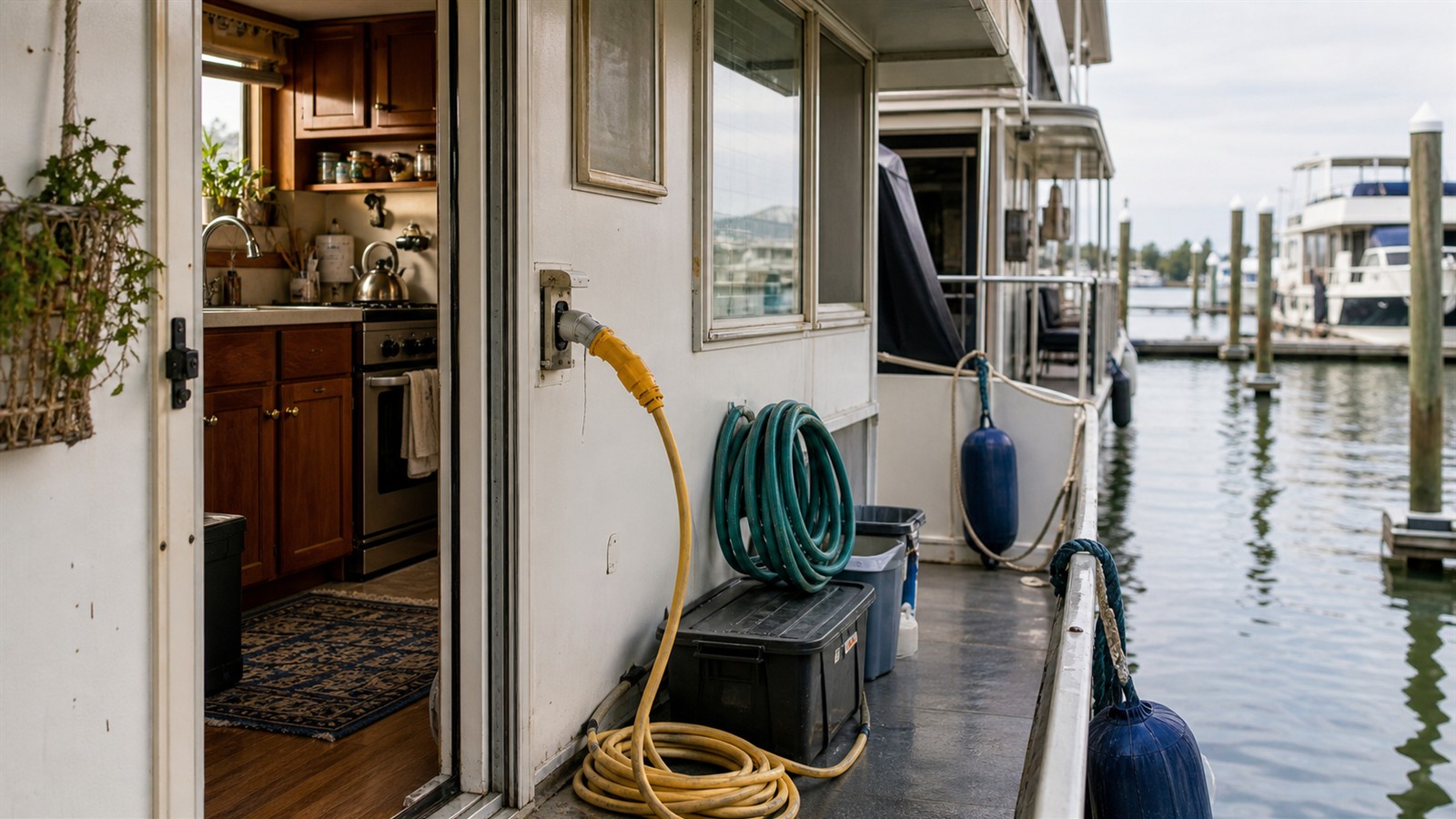
Dockside living often uses shore power, marina water, pump-out service, propane, internet, and sometimes separate heating fuel. Electricity can rise quickly if the boat relies on electric heat, air conditioning, dehumidifiers, water heaters, or older appliances. In cold climates, winter heating and freeze protection can become major seasonal costs.
Internet deserves its own line item for remote workers. Marina Wi-Fi may be weak, so many liveaboards use cellular routers, external antennas, or wired service where available.
Maintenance and Repairs
A practical annual maintenance reserve is essential. Roof sealing, deck coatings, batteries, bilge pumps, plumbing fittings, shore-power cords, bottom inspections, engine service, safety equipment, and appliance replacement all appear eventually. Saltwater, freeze cycles, sun exposure, and constant moisture accelerate wear.
Budgeting only for predictable tasks is risky. A failed water pump, leaking window, soft deck, corroded wire, or tired battery bank can arrive without warning. Owners who keep a reserve sleep better when weather turns ugly.
Surveys, Haul-Outs, and Compliance
Before purchase, a marine survey can cost real money, but it often prevents much larger mistakes. Some boats also need haul-outs, diver inspections, or specialized float evaluations. After purchase, marinas or insurers may require follow-up repairs, updated extinguishers, safe shore-power connections, or proof that propane and electrical systems meet standards.
Groceries, Transportation, and Storage
Ordinary life can cost a little more when the dock is far from parking or services. Owners may rent storage lockers, use dock carts, pay for parking, or drive farther for supplies. Limited onboard storage can discourage bulk buying. Laundry may be coin-operated or off-site.
These are not deal-breaking costs, but they matter because houseboat budgets are often tight. The small monthly extras add up faster than people expect.
A Sensible 2026 Budget Method
Instead of chasing one perfect average, build three columns: fixed monthly costs, variable monthly costs, and annual reserves. Fixed costs include moorage, loan payment, insurance, and internet. Variable costs include electricity, propane, pump-outs, fuel, laundry, and parking. Annual reserves include maintenance, haul-outs, surveys, winter prep, and emergency repairs.
If the total still works after adding a healthy repair reserve, the lifestyle may be financially realistic. If it only works when nothing breaks, the budget is too thin for floating living.