Keep Control by Preserving Time, Space, and a Clear Next Action
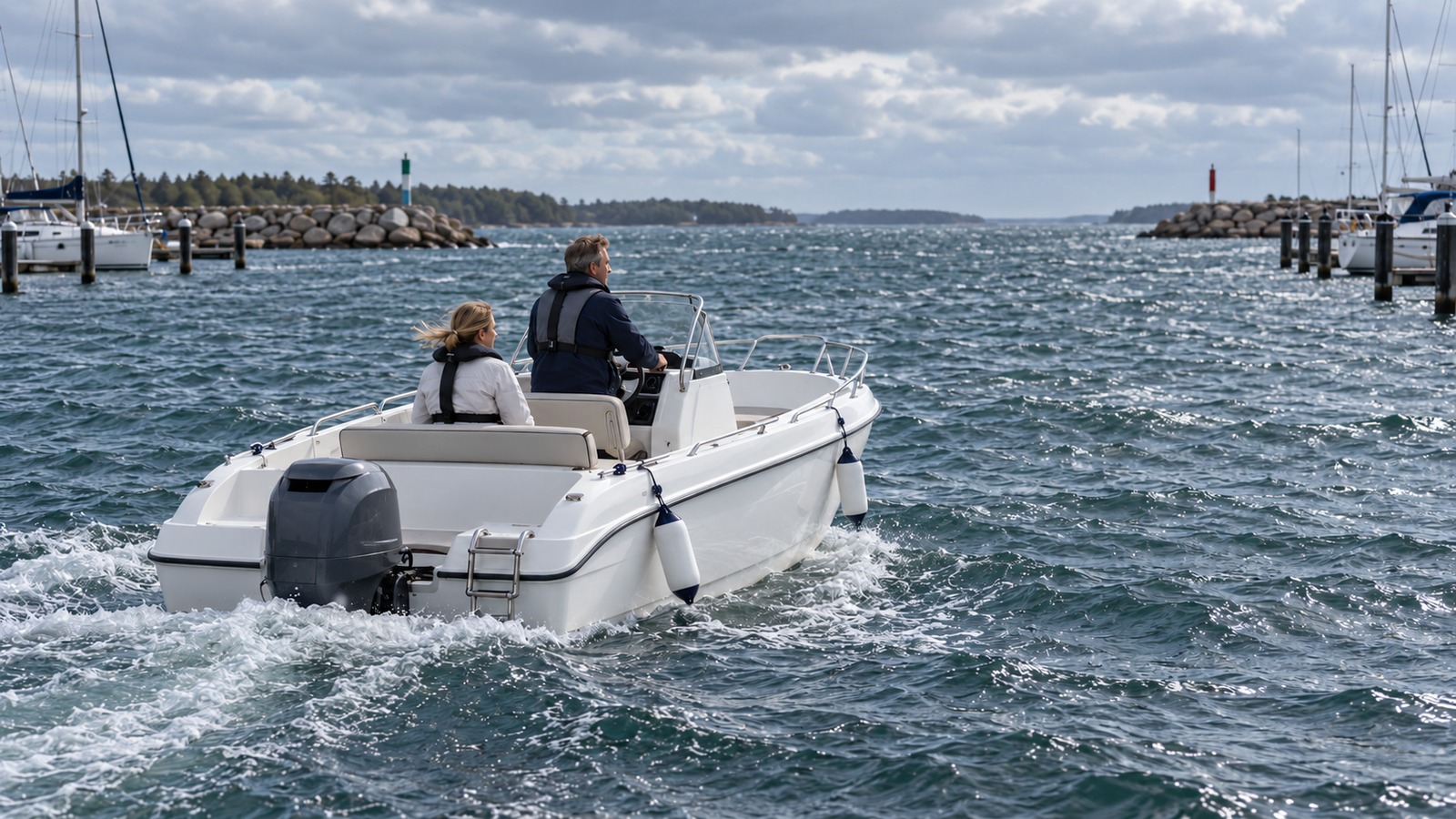
A windy docking attempt often becomes difficult before the hull reaches the dock. The bow stops following the intended path, the stern begins moving toward something else, and larger corrections seem necessary every few seconds. Recognizing that change early is the central skill. A safe approach needs manageable closing speed, useful steering response, clear communication, and somewhere to withdraw if alignment is lost. This guide focuses on those control decisions for recreational powerboats. The appropriate maneuver depends on the vessel, propulsion, berth, wind, and current, so obtain practical instruction aboard your boat. Use sheltered practice to understand its response before relying on unfamiliar throttle, thruster, or line techniques among neighboring vessels in a strong crosswind.
A: Wind and momentum continue acting on the hull.
A: Rotation can reduce clearance at the opposite end.
A: Vessel response and berth geometry change the plan.
A: Report it and follow the controlled reset plan.
A: Its effectiveness and duty limits need checking.
A: It is observable before recovery room disappears.
A: The vessel and space must support that maneuver.
A: Resolve the cause or change conditions and assistance.
A: Inspect the full restraint before leaving the vessel.
A: The specific movement and decision that caused difficulty.
Describe the Boat’s Movement Before Choosing a Correction
Separate where the bow points from where the whole vessel is traveling. Wind can move the hull sideways while the heading looks correct. Current can add another direction of movement through its effect on the submerged hull. Observe the actual track against suitable fixed references while there is clear water and enough control to do so safely. A single glance at a flag does not fully describe the boat’s response. Use the observations to decide whether the intended approach still provides enough space and whether a different berth or direction would be more manageable.
Watch both ends of the hull. Turning the bow away from a dock can move the stern toward it, and correcting the stern may change the bow’s clearance. The boat rotates rather than changing direction like a road vehicle. Learn the behavior through instruction in open water. A spotter can help with specific clearance reports, but the operator still needs to understand which part of the vessel is at risk. An approach that looks safe from the helm can have a different clearance aft.
Identify the movement that matters most at each stage. In one berth it may be forward momentum toward a closed end; in another it may be the bow blowing toward a neighboring vessel. Do not apply power merely to produce visible activity. A correction should have a known purpose and a response you can monitor. If you cannot explain what the next input is intended to do, reduce the demands of the situation and use the prepared exit while it remains available. Space is easier to preserve before the hull becomes trapped.
Understand the Response Available From Your Propulsion
Outboards, sterndrives, inboards, jets, twin engines, and joystick systems do not provide identical low-speed control. Directed thrust, rudder flow, propeller effects, and the boat’s mass can all influence response. Learn the manufacturer’s operating procedures and practice with qualified guidance. Notice what happens when propulsion is reduced, when direction changes, and when a turn begins. The useful lesson is how your vessel behaves under the conditions you can safely test, not a universal wheel position copied from a different boat.
Neutral removes drive but does not remove momentum or wind force. Some steering arrangements also lose useful response when the water flow or thrust they depend on is reduced. This is why simply approaching as slowly as possible without regard to control can be inadequate. The objective is the least speed and power that preserve predictable handling for the actual situation. Avoid creating excess momentum to compensate for a poor setup. If the available control cannot manage the wind within the room provided, the berth is unsuitable for that attempt.
Choose an Approach With an Exit That Stays Usable
Before entering the confined part of the maneuver, identify how you would leave after a missed line or sudden gust. Check the space behind the boat as well as ahead, including traffic that could enter it. The exit should be a maneuver you understand on this vessel. A vague intention to reverse is not enough when the stern can swing or the boat responds poorly in that direction. Ask the marina for a more suitable berth if the assigned arrangement leaves no practical recovery option.
Think about how the exit changes as you advance. The early approach may allow a straightforward withdrawal, while a later position leaves little room for the same action. Recognize that transition before crossing it. Keep the crew informed so nobody tries to complete a line handoff after the operator has decided to go around. Bring loose lines clear of the water and propulsion equipment. A prepared reset keeps the crew, deck, and controls working toward the same outcome.
Request assistance before the situation becomes urgent. A dock attendant can receive a line at an agreed position, but cannot safely make an uncontrolled arrival harmless through strength. Explain what you need and what would cause you to withdraw. An experienced instructor or operator may be a more useful form of help when the boat’s handling remains unfamiliar. Good assistance changes the plan’s practicality. It should not become a reason to accept speed, angle, or wind that the operator cannot manage.
Keep other traffic in the picture throughout. An escape route that was clear at the start may close as another boat enters the fairway. Adjust early rather than assuming the other operator understands your intentions. If necessary, wait in a suitable place outside the maneuvering area. The docking task does not remove the wider responsibilities of lookout and safe movement. A controlled arrival begins with enough room for the actual traffic situation, not only the berth geometry shown on a marina map.
Manage Closing Speed Before Fine Alignment
Control the rate at which the boat approaches hard objects early enough that small changes remain useful. Do not let concern about the wind distract from forward or sideways momentum. A hull moving gently through clear water is a different problem from one rapidly closing a dock corner. Watch fixed references and ask for concise reports where visibility is limited. Fenders are intended to protect suitable contact areas during manageable movement; they are not a reason to accept an impact that passengers or hardware must absorb.
Apply only inputs whose response you understand, with room to observe the result. Follow the manufacturer’s requirements for changing gear and avoid rapid forceful shifts. A large late correction may rotate the boat into another hazard even if it improves the first clearance. If the maneuver has become a sequence of increasingly urgent inputs, reassess the setup rather than searching for one more burst of power. The safe lesson from that pattern is often that the approach should be abandoned earlier next time.
Keep hands and feet out of gaps between boat and dock. A passenger who reaches to push the hull away can be injured even when the movement appears slow. Use appropriate fenders and a suitable line plan instead of asking people to provide the missing control. A boat hook is not a device for stopping substantial momentum. Crew members should report a missed handoff or poor clearance promptly, without attempting a leap or dangerous stretch to save the maneuver.
Compare Wind-Toward and Wind-Away Arrivals
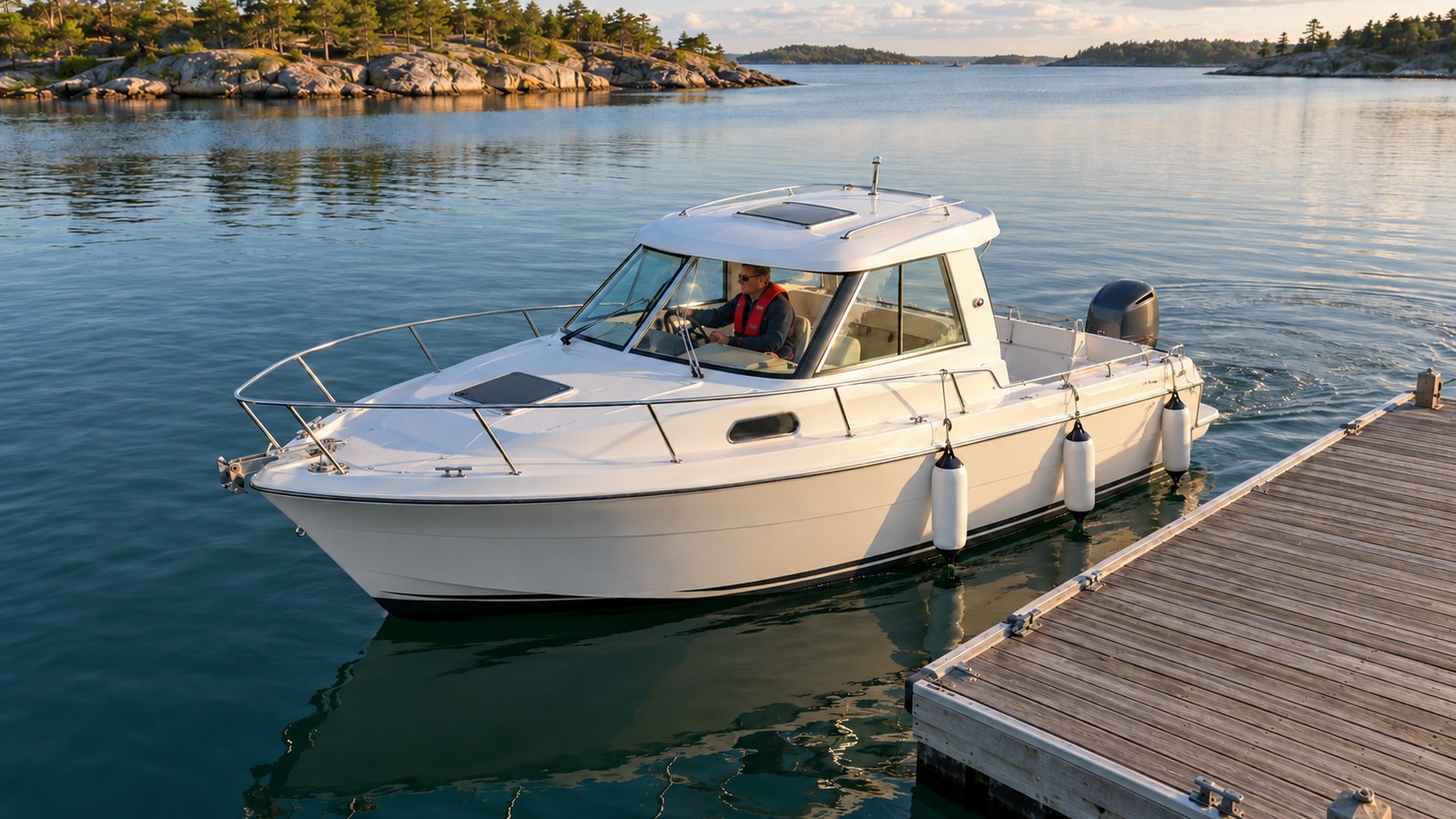
For these two learning scenarios, assume a small powerboat approaching an open alongside berth, mild crosswind, negligible current, suitable fenders, and a crew already familiar with the boat’s low-speed response. There is clear water beyond the approach and no need to squeeze between vessels. These assumptions are essential: a confined slip, strong gusts, or significant current creates a different problem. The Grady-White docking discussion likewise distinguishes conditions rather than prescribing one universal approach.
With wind toward the dock, picture the boat becoming parallel while it still has clearance for a gentle final sideways drift. Reduce forward momentum before that drift carries the hull alongside. The wind is supplying closing movement, so adding more speed toward the dock can remove the margin you need. Watch whether both bow and stern remain protected and aligned. If the bow reaches a corner first or the sideways closing rate becomes unmanageable, use the prepared withdrawal rather than asking a fender or passenger to absorb the error.
With wind away from the dock, the important window is different: once forward motion is checked, the gap may begin opening immediately. Arrange the accessible first-line handoff before the approach and know which movement that line will restrain. Bring the boat to a controlled alongside position using its practiced response; a line should secure that position, not drag an uncontrolled boat across a large gap. If the crew cannot reach without stretching or jumping, announce the missed handoff and reset. Do not invent a powered spring-line maneuver to rescue an unfamiliar setup.
Compare the two attempts by their failure point. Wind toward the berth can turn late alignment into early contact; wind away can remove the safe handoff before restraint is established. In either case, report actual bow and stern clearances instead of merely calling the heading correct. The lesson to practice with an instructor is timing the transition from approach to parallel position and secure restraint. The windy-arrival preparation guide covers the earlier berth, crew, and fender checks; use this comparison to understand the final movement.
| Crosswind | Movement to anticipate | Early reason to reset |
|---|---|---|
| Toward the dock → berth | Sideways closure continues after drive is reduced. | A corner closes before the hull is parallel. |
| Berth → away from dock | The line-handoff gap opens after stopping. | The line cannot be passed from a stable position. |
Use Lines and Thrusters Within Their Actual Limits
A suitable line can restrain a selected movement once correctly led and made fast to sound hardware. Its usefulness depends on the geometry, load, attachment, and available control of the remaining vessel movement. Powered spring-line techniques should be learned with a qualified instructor on appropriate equipment and in suitable conditions. Do not improvise a new arrangement during a crowded windy arrival. Lines can create substantial forces, and a fitting convenient for a handhold may not be designed for that job.
Bow or stern thrusters can assist within their operating limits, but their effectiveness depends on the system and conditions. Learn duty-cycle restrictions, control response, and relevant warnings. Do not plan a critical correction on the assumption that the device will provide unlimited continuous force. If a thruster is unavailable or ineffective, the alternative must still be workable. A control aid is most useful when it supports a sound approach rather than concealing the absence of adequate room or propulsion familiarity.
Set the Reset Trigger Before Pressure Builds
Choose observable conditions that will end the attempt. Examples include losing the planned exit, an uncontrolled bow swing, unavailable line hardware, or a closing speed that no longer supports gentle contact. Tell the crew how the decision will be announced. The operator should not wait until a passenger says the gap is impossible. Preset triggers make it easier to recognize that the plan has changed and act while options remain. They also keep a missed handoff from becoming an invitation for unsafe improvisation.
After withdrawing to a suitable clear area, identify one cause to correct. The turn may have started too late, the observed drift may have been underestimated, or the first line may have been poorly prepared. Make the change and rebrief the crew before trying again. If the cause cannot be resolved confidently, request another berth, wait for more manageable conditions, or obtain experienced help. Repeating an uncontrolled setup faster does not create a reliable method. A useful reset changes the conditions or the plan.
Do not turn repeated attempts into an endurance test. Fatigue and frustration can reduce judgment while wind and traffic continue changing. A pause can restore attention, but sometimes the right conclusion is that this berth is not appropriate today. Choose the available alternative while it remains safe and practical. The objective is a secure boat and an uninjured crew. Completing the originally assigned arrival is only one possible route to that outcome.
Verify the Secured Boat and Learn From the Attempt
Once alongside and adequately restrained, inspect the full mooring arrangement. Check what each line controls, whether fenders remain in position, and how the boat responds to wind and wakes. Allow for relevant water-level changes and chafe. Confirm that the boarding route is safe before anyone steps ashore. An initial successful handoff is not a complete unattended mooring plan. Take the time to arrange the vessel for the stay and consider whether departure may need assistance too.
Review the movement that caused difficulty while the details are fresh. Record the wind relative to the berth, the boat’s drift, the control response, and the point where withdrawal was chosen. Use those facts to plan a focused lesson in manageable conditions. The ability to dock in wind develops through understanding the boat’s motion, maintaining useful space, and changing the plan before control disappears. A deliberate reset is a core part of that competence.