Seamanship Is the Practical Judgment Behind a Well-Run Boat
Seamanship is the knowledge, skill, and judgment used to prepare, handle, navigate, and care for a vessel and the people aboard it. You can see it in a carefully chosen departure time, a clear crew briefing, a properly led line, or a decision to return before conditions deteriorate. The term covers both individual techniques and the way they are combined in real circumstances. It applies to a small recreational boat as well as a large vessel, although the equipment, training, and responsibilities differ. For a beginner, the useful starting point is understanding how decisions connect: the boat’s condition affects the route, the weather affects handling, and the crew’s ability affects what is reasonable to attempt.
A: Its principles also apply to recreational vessels.
A: It connects handling with wider preparation and judgment.
A: Know normal condition and appropriate limits of competence.
A: New conditions still require fresh assessment.
A: Restraint can preserve the safest available option.
A: A boat's effects extend beyond its own crew.
A: Clear roles and understood relevant instructions.
A: Secure and communicate the vessel's remaining condition.
A: Look for demonstrated skills and better decisions.
A: Decisions suited to the vessel, people, place, and conditions.
A Useful Definition Starts With Responsibility
A person operating a boat makes decisions that affect passengers, nearby vessels, people ashore, and the waterway itself. Seamanship describes the practical competence used to carry those responsibilities through a voyage. It includes preparing before departure, noticing changes underway, and leaving the vessel secure afterward. The size of the boat does not remove those tasks. An afternoon outing can still require thought about fuel, weather, depth, traffic, and the ability to request help. Consider an assigned slip that becomes exposed to a crosswind before arrival. Remaining in clear water, reassessing the berth, and requesting assistance connects weather awareness, handling skill, communication, and restraint in one ordinary decision. That is seamanship even if nobody sees a dramatic maneuver. Learning begins by accepting that an enjoyable trip rests on many small decisions made with accurate information and realistic limits.
Technical Skills Give Judgment Something to Work With
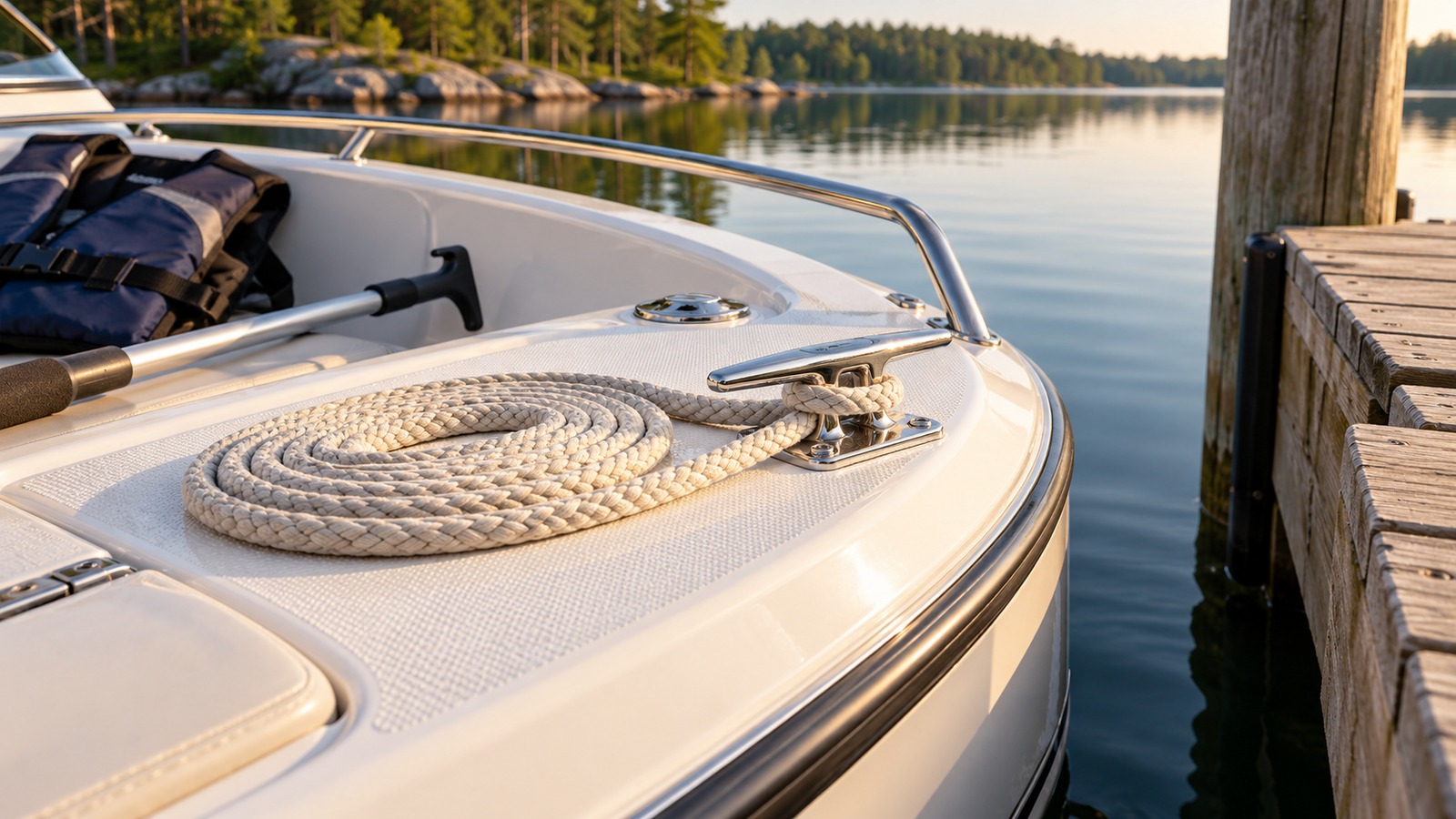
Boat handling, rope work, navigation, anchoring, equipment use, and basic system understanding are recognizable parts of seamanship. Each has techniques that can be taught and practiced. Knowing how your vessel responds to gentle reverse, for example, gives you information for planning an arrival. Understanding what a spring line restrains helps you choose a suitable arrangement at the dock. Those skills become more dependable when their purpose and limits are understood. A maneuver learned as a fixed sequence can become confusing when wind, current, or berth geometry changes.
Training connects the technique with the particular boat. Propulsion arrangements, loading, windage, control layouts, and access differ among vessels. An experienced operator taking over an unfamiliar boat still needs familiarization. A beginner should not interpret another person’s smooth performance as evidence that the same inputs will work on a different hull. Learn the controls and response in appropriate conditions with competent guidance. Keep practice manageable enough to observe what is happening, then build skill through repeated understood results.
Background knowledge supports those lessons. Suitable safety education introduces navigation rules, equipment, environmental responsibilities, and emergency preparation. Practical instruction shows how that information is used aboard. The BoatUS Foundation study guide is one example of an organized framework for recreational boating knowledge. Local requirements and appropriate training should be checked for the actual boat and operating area. A course or certificate can support competence, while continued practice develops the ability to use it under the conditions you encounter.
Navigation and Handling Are Connected Decisions
Navigation establishes position, suitable water, and a route that remains sensible as the voyage develops. Handling controls the boat within that setting. A chart may show a feasible channel, but strong current or limited maneuvering room can make the approach unsuitable for a particular crew. Conversely, excellent throttle control does not tell you whether an unmarked shoal lies ahead. Seamanship connects those questions before the vessel reaches a difficult point. The operator needs both an understood route and the ability to manage the boat through it.
This connection also explains the importance of alternatives. A destination can become impractical because of traffic, weather, berth availability, equipment failure, or crew condition. A prepared operator knows what options remain and when they must be chosen. An alternative is useful only if the boat can still reach and use it. Planning a diversion and then consuming all the fuel or daylight needed to reach it leaves a false sense of security. Keep the wider voyage in view while carrying out the immediate task.
Care of the Vessel Begins Before Trouble Appears
Maintenance and seamanship meet through an understanding of normal condition. A boat owner learns how the vessel usually sounds, handles, charges, drains, and responds to controls. Changes can then be noticed and investigated early. That does not require every owner to carry out specialist repairs. It requires knowing when a symptom needs attention and when the boat should not continue operating. An unexplained warning or persistent leak is information to assess, not an inconvenience to silence while following the original plan.
Preparation gives the vessel a reasonable starting condition for the intended trip. Check the systems and equipment relevant to the boat, follow the manufacturer’s guidance, and address overdue work. Keep service records and useful instructions accessible. Good records support decisions about what is known and what remains uncertain. A recently cleaned engine space can make a new leak easier to notice, while a clear wiring diagram can help a competent technician diagnose a fault. Vessel care supports observation as well as reliability.
Secure stowage and a tidy working deck belong to the same discipline. Loose gear, trailing lines, and blocked hatches create problems when conditions demand attention elsewhere. Organizing equipment is a practical way to reduce competing tasks. It also helps other crew members locate what they need without waiting for the owner. The objective is a boat that can be operated and checked with a clear routine. A vessel full of equipment becomes less useful if important items are buried beneath unrelated gear.
Judgment Works With Uncertainty
Forecasts, charts, equipment indications, and personal observations all have limits. Seamanship involves recognizing those limits and leaving appropriate margins. A precise position display does not make an old survey exact, and a forecast does not guarantee the same conditions in every exposed corner of a route. The practical response is to compare suitable information, seek clarification when needed, and preserve room to change the plan. Uncertainty should influence the decision while alternatives remain available. Pretending it has disappeared because one number looks reassuring weakens the whole plan.
The Crew Is Part of the Boat’s Capability
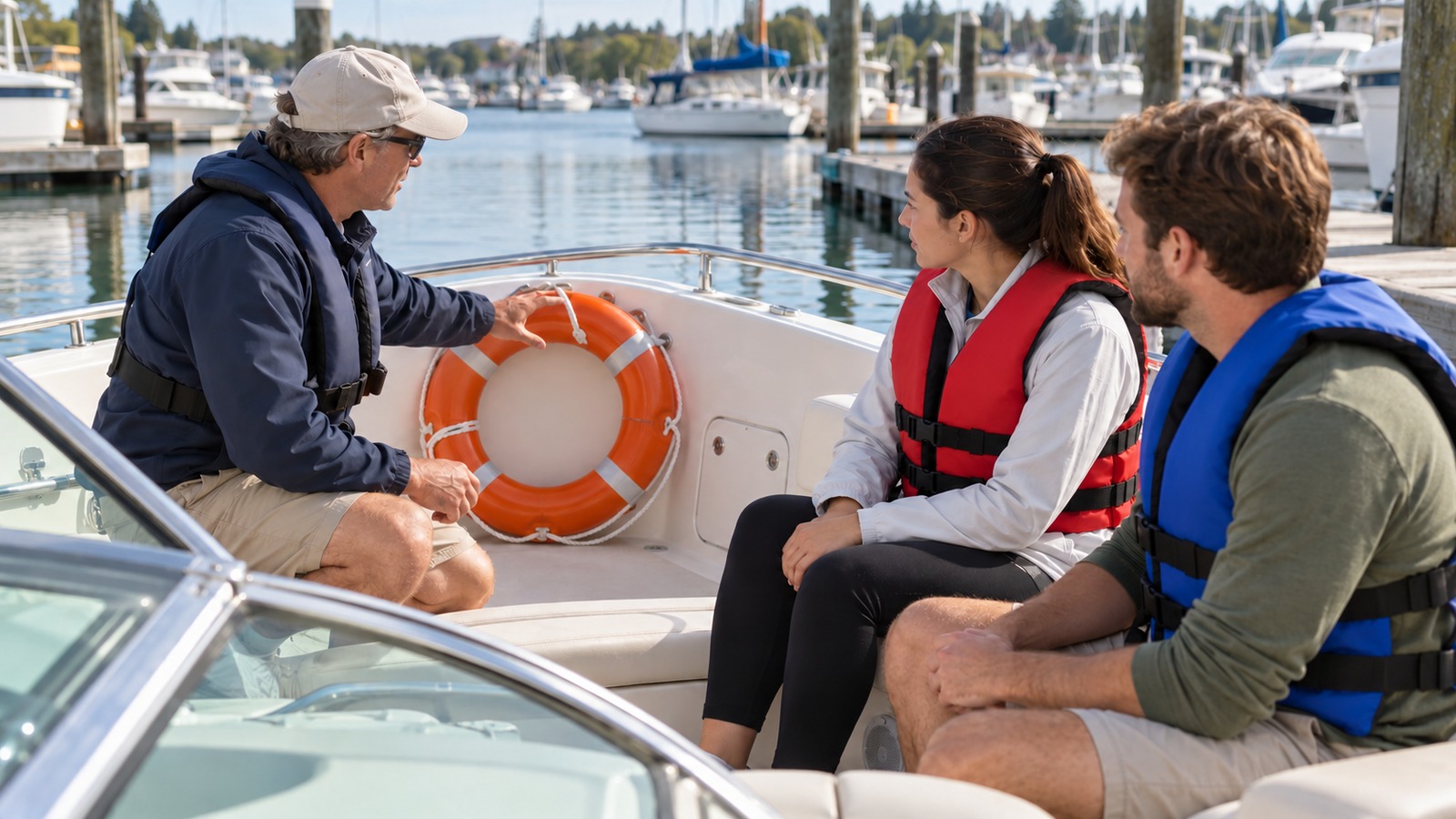
A vessel’s theoretical performance is only one limit. The people aboard must be able to understand roles, move safely, communicate, and cope with the expected conditions. A tired or inexperienced crew may need a simpler plan than the equipment alone suggests. Brief guests in ordinary language and check whether they can carry out the tasks assigned. Do not rely on a person who has never handled a line to improvise a critical attachment during a crowded arrival. Skill includes choosing a task that fits the person and circumstances.
Leadership also affects the information the operator receives. A crew who can report discomfort, uncertainty, or a mistake without being ridiculed is more likely to speak early. That gives the operator time to respond. Clear control authority can coexist with a willingness to listen. Explain how concerns should be raised and repeat essential instructions when the plan changes. Good communication reduces surprises and keeps people from taking conflicting actions. It is part of safe boat operation, not a social extra added after the important technical work.
Rules, Courtesy, and Environmental Care Share the Waterway
Operating rules provide obligations for encounters, speed, equipment, and other aspects of boating. Learn the rules that apply to the actual waters and activity through current official material and instruction. Avoid using a simplified priority slogan as a complete response to a developing situation. Seamanship includes maintaining lookout and assessing risk as circumstances evolve. The operator’s task is to act competently within those obligations while recognizing what other vessels can reasonably do. A rule learned in isolation still needs to be applied to the real encounter.
Courtesy addresses the effects of your boat that others may experience. Wake, noise, congestion, and awkward positioning can create difficulties beyond the helm’s immediate view. Consider how the vessel’s movement affects nearby craft, people on docks, and shoreline users. Leave sensible room and avoid making somebody else’s maneuver harder without necessity. A technically successful departure that creates a damaging wake is a poor overall result. Seamanship asks the operator to understand the boat’s influence on the surrounding waterway.
Environmental care has practical operating choices too. Manage waste appropriately, avoid spills, respect protected areas, and keep anchors and propellers away from sensitive habitat where required. Learn local restrictions before assuming a convenient stopping place can be used. A successful outing should not depend on leaving damage behind. The details vary with the area, so obtain relevant current guidance. General good intentions are more useful when translated into a specific route, equipment arrangement, and routine for the places you actually visit.
These responsibilities continue when the boat is left at the berth. Secure it appropriately, check lines and fenders, and consider changing water levels and forecast conditions. Keep the boarding route clear and deal with leaks or equipment problems before leaving them to the next person. The voyage does not end at the moment the engine stops. A well-run vessel is handed over or left in an understood condition, with any unresolved issue communicated accurately.
Experience Becomes Skill Through Reflection
Time afloat creates opportunities to learn, but the lessons need to be understood. After an outing, identify specific observations and compare them with the plan. If a maneuver felt rushed, ask whether the cause was poor preparation, unsuitable conditions, late control inputs, or unclear crew roles. A broad label such as bad docking hides the useful detail. Qualified feedback can help separate a genuine handling limitation from a misunderstanding. Use the finding to choose the next practice task or repair rather than merely promising to try harder.
Experience can also create overconfidence if familiar success is treated as proof that every new situation will work. A different boat, crew, waterway, or weather pattern deserves fresh assessment. Keep learning and update background knowledge as equipment and local information change. The most useful experienced operator can explain limits and choose suitable conditions. That example helps beginners understand that restraint is part of competence. Good judgment is visible in the decision not to add a challenge that the available margins cannot support.
Recognize Good Seamanship in Ordinary Situations
Now consider a depth reading that falls unexpectedly while the plotted position still appears reassuring. Good seamanship means recognizing the disagreement, controlling the boat appropriately, and checking the chart, datum, tide, sounder settings, and surroundings while a manageable alternative remains. Continuing because the planned line looks correct confuses a plan with evidence. The useful habit is to explain what changed and what information would resolve it. The same reasoning applies to fuel use, passenger wellbeing, and an unfamiliar machinery sound: observations should be allowed to change the voyage.
Build Your Own Standard of Competence
Choose appropriate education, practical instruction, and a vessel-specific familiarization process. Learn essential tasks in conditions that allow understanding, then increase demand gradually. Keep a record of what you can demonstrate and where further help is needed. Avoid judging competence by the quantity of equipment aboard or the confidence of the person speaking. A useful standard is whether the boat and crew can carry out the intended outing with understood methods, suitable margins, and a workable response when circumstances change.
Seamanship remains a continuing responsibility throughout ownership. It connects care of the vessel, observation of the water, practical skill, and consideration for people. Beginners can develop it from the first outing by preparing carefully, reporting uncertainty honestly, and using instruction to improve specific tasks. More demanding voyages need deeper knowledge and practice, but the underlying habits remain recognizable. A well-run boat reflects decisions that fit the actual vessel, crew, place, and day.