Why the Difference Matters
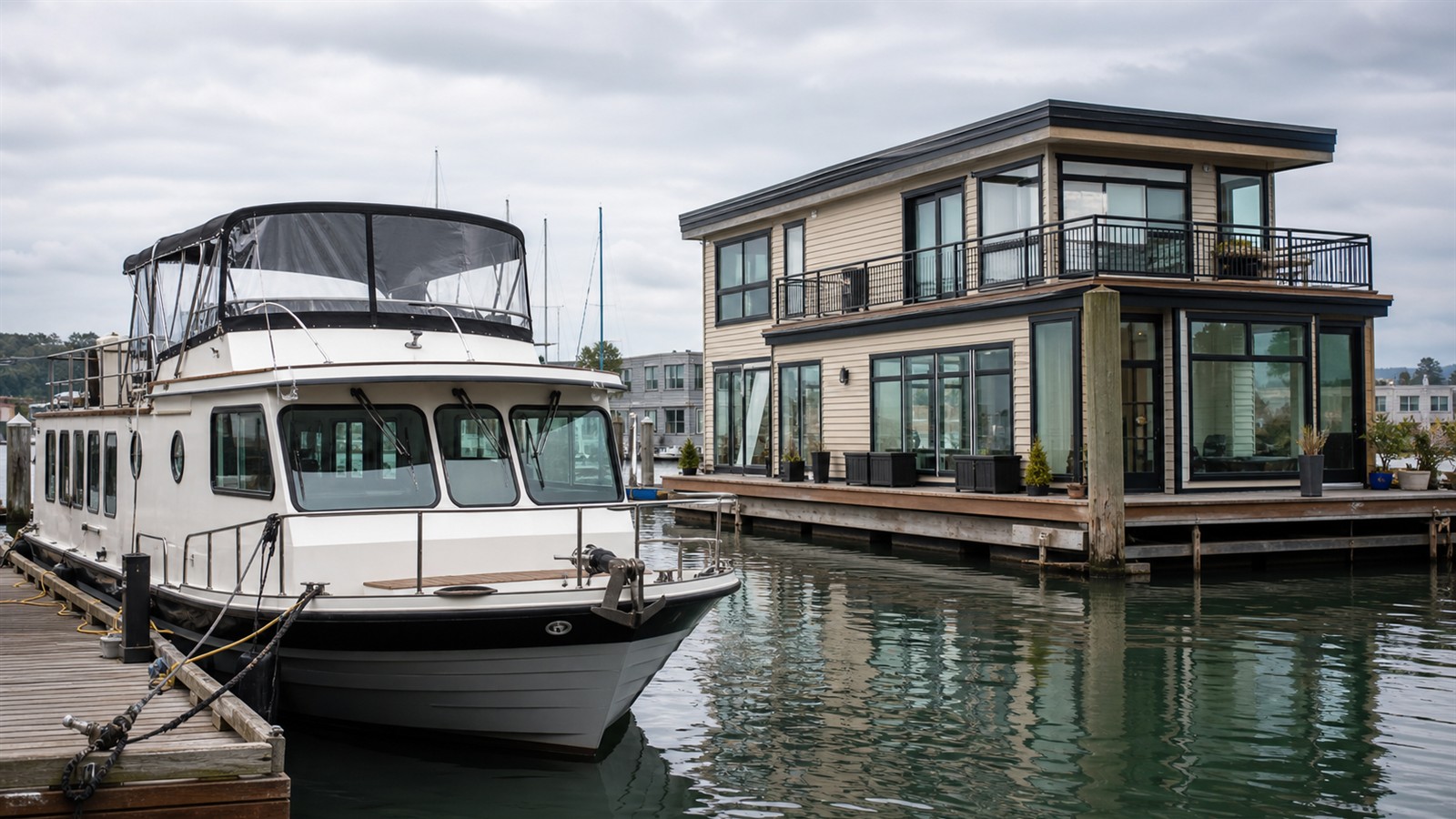
Houseboats and floating homes both promise life on the water, but they are not interchangeable. The terms are sometimes used casually, yet they can describe very different structures, legal statuses, financing options, insurance requirements, and daily responsibilities. A houseboat is usually treated as a vessel or vessel-like residence, especially if it has propulsion and marine systems. A floating home is more often a stationary dwelling built on a float, connected to utilities, and tied to a specific moorage community. That distinction affects where you can keep it, whether you can move it, how you insure it, what inspections matter, and what kind of lifestyle you are actually buying.
A: Often no. Many are stationary residences on floats, though definitions vary by location.
A: Usually not under its own power; relocation often requires towing and approval.
A: No. Condition, moorage, insurance, age, and local demand can outweigh the label.
A: Floating homes can feel more residential, while houseboats offer more mobility and boating character.
A: Both deserve inspection, but the survey focus differs between hull systems and float/residential systems.
A: Confirm legal occupancy, transferable moorage, insurance availability, and classification before negotiating price.
Mobility Is the First Big Split
The simplest question is whether the home is meant to travel. Many houseboats have engines, steering, navigation lights, fuel systems, and hull designs that allow movement on protected water. Even slow houseboats can leave the dock for a weekend, relocate between marinas, or anchor in suitable areas.
Floating homes usually do not operate like boats. They may be towed only for major relocation or maintenance, and their design is centered on residential comfort rather than cruising. If your dream includes exploring coves and changing scenery, a movable houseboat fits better. If your dream is stable waterfront living with more room, a floating home may make more sense.
Construction and Layout
Houseboats tend to compromise between vessel requirements and home comfort. They must account for weight distribution, marine access, tanks, bilges, deck hardware, and sometimes propulsion machinery. This can make spaces narrower or more boat-like, but it also keeps the home flexible.
Floating homes can feel more like small houses because they are not designed around regular navigation. They may have taller walls, larger windows, residential stairs, broader decks, and more conventional rooms. The tradeoff is dependence on a permitted float, a fixed berth, and local rules that may resemble waterfront housing more than boating.
Utilities and Systems
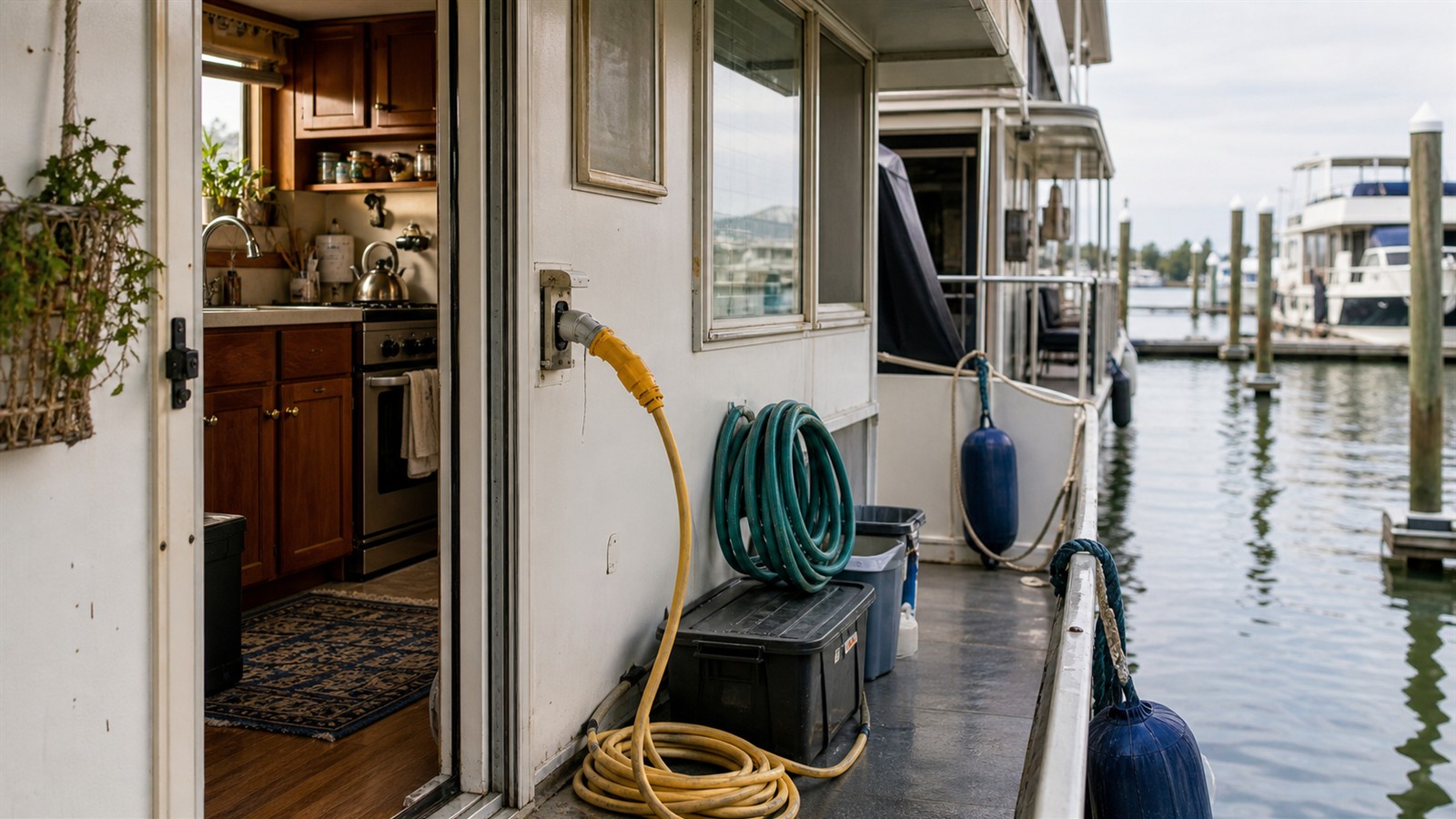
A houseboat often carries onboard water, waste, fuel, batteries, and pumps. At a marina it may plug into shore power and connect to dock water, but it still needs systems that can function independently for at least short periods. Owners must understand marine plumbing, bilge safety, battery care, and pump-out routines.
A floating home is more likely to have stable utility connections. Depending on the community, it may use municipal-style water, sewer, electric, internet, and garbage service. That can make daily life easier, but it also ties the home to that location and the rules of the moorage.
Ownership and Financing
Financing can differ sharply. A documented, insurable houseboat may be financed like a boat, especially if it is movable and has a recognizable hull identification history. Terms may be shorter than a home mortgage, and rates may reflect marine collateral risk.
Floating homes can be harder or easier to finance depending on the local market. In some regions, specialized lenders understand them well. In others, buyers face limited options because the structure floats, the water lot may be leased, and ownership rights differ from land-based real estate.
Moorage Rights
A houseboat owner usually rents or leases a slip. The marina controls liveaboard permission, vessel standards, insurance requirements, and sometimes age or appearance rules. Losing a slip can be a serious problem if nearby marinas have waitlists.
A floating home may come with a moorage agreement, membership structure, leased water space, or community association rules. Those documents matter as much as the structure itself. Buyers should review transfer rights, fees, assessments, maintenance obligations, and restrictions on remodeling.
Maintenance Differences
Houseboat maintenance includes marine concerns: hull condition, propulsion, fuel, bilge pumps, steering, electrical bonding, dock lines, and sometimes haul-outs. Owners who cruise also maintain engines, navigation equipment, anchors, and safety gear.
Floating-home maintenance may focus more on the float, roof, siding, decks, utility connections, and moisture control. It can still be marine maintenance, but it is usually less about engines and more about keeping a stationary structure level, dry, connected, and compliant.
Which One Fits Your Lifestyle?
Choose a houseboat if movement, boating identity, simpler ownership, and occasional travel matter to you. Choose a floating home if your priority is a stable waterfront address, more residential space, and less interest in operating a vessel. Both lifestyles can be wonderful, but confusion between the two leads to expensive surprises.
The best decision starts with the slip, not the sofa. Confirm whether the structure is legal where it sits, whether you can live aboard, what rights transfer with the sale, and what inspections are required. Once those pieces are clear, the choice becomes much easier.