Build Familiar Habits Before Adding Difficult Water
A new boater does not need to learn every maneuver in one weekend. A better start is a set of dependable habits practiced on the actual vessel in manageable conditions. Know the controls, prepare the deck, brief the crew, keep a proper lookout, and recognize when the outing should change. Those skills support one another. A tidy line is useful because it can be handled without a propeller foul; a route plan is useful because it preserves sensible options when the weather changes. This guide organizes first-season learning for recreational boaters. Use it alongside an appropriate safety course and practical instruction, then add difficulty gradually as you demonstrate competence rather than as confidence alone increases.
A: Build dependable habits through a gradual progression.
A: Use demonstrated skill and appropriate instruction.
A: Theory and practical handling serve different needs.
A: The finished arrangement must suit the load.
A: Keep people clear of crushing points.
A: A controlled reset is part of handling.
A: Boat, place, and crew ability change the decision.
A: Conditions, observed response, and the next practice need.
A: Use controlled training without unnecessary exposure.
A: Prepare, practice appropriately, observe, and review honestly.
Learn the Boat While It Is Safely Secured
Start with the owner’s manual and a slow physical tour. Identify the helm controls, engine stop, battery arrangements, fuel shutoffs where fitted, bilge equipment, safety gear, and access to the machinery. Ask a competent instructor or technician to explain anything unfamiliar. Do not operate an unknown valve simply to see what happens. Understanding a system includes knowing which tasks belong to the operator and which need professional service. Record the important locations so another responsible person can find them if you are occupied or unable to help.
Establish the boat’s dimensions, loaded draft, capacity information, propulsion arrangement, and practical range assumptions. Check how modifications or equipment affect the vessel you actually own. A brochure for a related model is a starting point rather than a substitute for accurate information. Learn how gear and passengers should be distributed within the boat’s limits. A beginner who understands the vessel’s physical constraints can choose more suitable routes and conditions before a handling problem ever arises. Keep essential information accessible aboard instead of relying on memory during a busy departure.
Turn Preparation Into a Repeatable Departure Routine
Use a checklist tailored to the boat and trip. It should cover condition, fuel, relevant fluids, electrical readiness, required equipment, communications, weather, route, and crew needs. Adapt the details to the manufacturer and local operating requirements. The purpose is to catch omissions before leaving the dock, not to complete a ritual without looking. If a check produces an unexpected result, resolve it before relying on the system. A warning indicator or unexplained leak deserves more attention than a hurried mark beside the checklist item.
Prepare the deck and cockpit with movement in mind. Secure equipment that could shift, remove trip hazards, and keep access to essential controls and safety gear. Lines and straps must stay clear of the propeller and moving machinery. Find a suitable place for the gear that is often used during departure so nobody needs to search through bags while the boat drifts. Good organization reduces the number of tasks competing for attention. It also makes it easier for a new crew member to help without creating another obstruction.
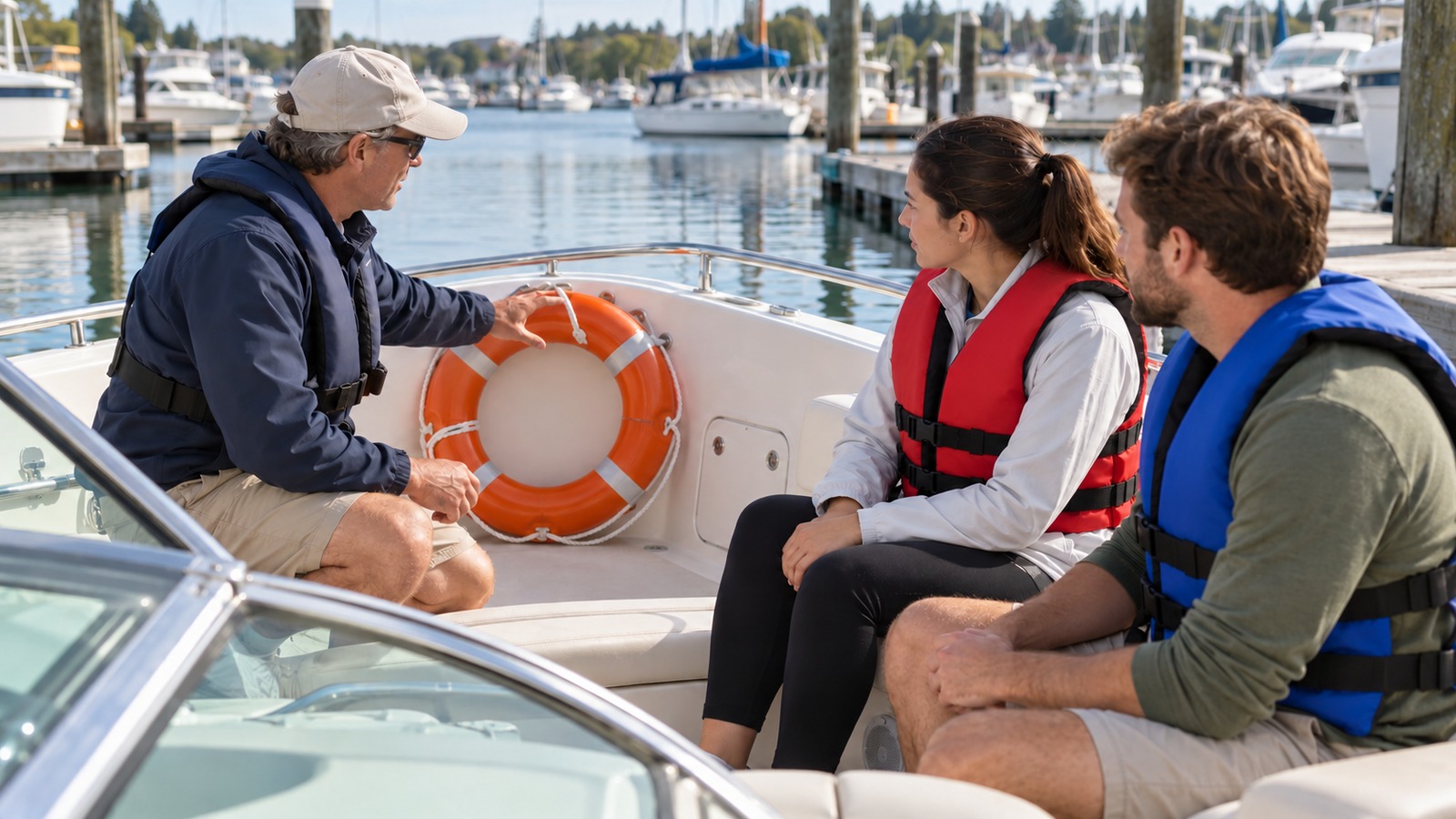
Brief passengers before they settle into their own routines. Explain flotation, seating, safe movement, where to keep hands during docking, and how to alert the operator to a concern. Identify a second person who can stop the engine and request assistance using the appropriate equipment. Use clear ordinary language and verify understanding. The briefing should be calm and specific rather than a long speech full of unfamiliar terms. Repeat important points when people or conditions change, especially if children or guests are aboard.
Prepare the return before departure as well. Confirm where the boat will be secured, how the crew will handle arrival, and whether assistance will be available if conditions change. Keep essential lights, lines, and communication equipment accessible throughout the outing rather than packing them beneath newly loaded gear. A first-season routine becomes stronger when the end of the trip receives the same attention as the exciting first few minutes. Discuss the alternative with the crew while everyone is calm and the boat is still securely alongside.
Practice Propulsion and Steering in Open Water
Learn the response of the boat away from crowded docks and hazards, with qualified instruction. Observe low-speed steering, momentum after selecting neutral, gentle stopping, and the way the stern moves during turns. Different propulsion arrangements respond differently, so copying another vessel’s wheel and throttle sequence can mislead. Follow the manufacturer’s shifting procedures and learn where the controls settle at idle. Begin in mild conditions with enough space to stop the exercise. The objective is predictable response, not a fast or impressive maneuver.
Practice looking around the boat while maintaining control. Beginners often fix their attention on the bow or a single point ashore, missing the stern and nearby traffic. Use a competent spotter where helpful, but keep the operator’s own awareness active. Learn how wind and current change the track even when the heading appears steady. Describe those effects aloud during a lesson so the instructor can correct a mistaken interpretation. The ability to notice movement early is more useful than a large correction applied after space has disappeared.
Progress to simple arrivals and departures only when the open-water response is understood. Select a forgiving practice berth and agree on an exit before approaching. Prepare lines and fenders in advance, assign roles, and allow an early reset when the plan stops working. Never ask a passenger to jump ashore or stop the hull with a limb. A controlled withdrawal is part of the exercise. It teaches that boat handling includes managing the circumstances of a maneuver, rather than committing to completion regardless of what changes.
Learn Rope Work Through Real Jobs
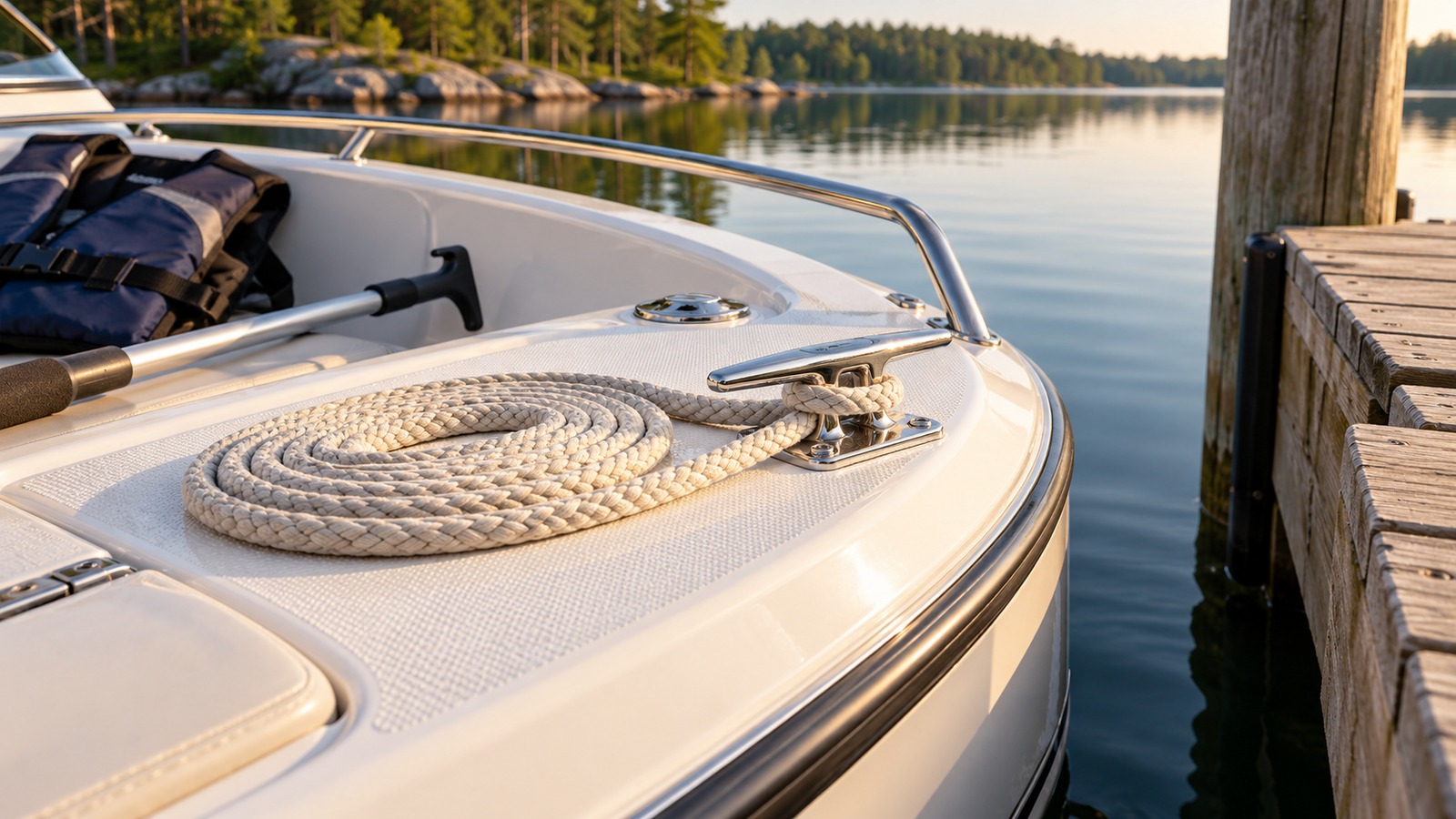
Begin with the line tasks your vessel routinely needs: securing an appropriate cleat, handling a bow or stern line, arranging springs, and keeping spare length controlled. Learn suitable knots and hitches from a competent instructor and practice them until they can be inspected and released properly for their intended use. A memorized knot has limited value if it is applied to an unsuitable fitting or loaded in an unintended direction. Match the whole arrangement to the task. Keep hands and feet away from rope bights and tensioned sections.
Inspect lines for chafe and damage, and learn the difference between a convenient handhold and a load-bearing attachment. Watch how a mooring arrangement responds to wakes and changing water levels. A line that looks tidy in calm water can become too tight or allow too much movement later. Learn to make adjustments safely without placing yourself between moving surfaces. Keep spare lines accessible and appropriate to the vessel. The skill is understanding what movement each line controls and what could happen if that line becomes loaded.
Rope practice can begin ashore with short unloaded exercises, but it must eventually connect to the boat. Show an instructor how you intend to lead and secure the line on your own cleats. Explain the expected load and release method. Correct small misunderstandings before practicing with engine thrust or strong current. Those conditions can create substantial forces quickly. A first-season owner should build a clear working method before attempting unfamiliar powered spring-line techniques in a crowded marina.
Anchor handling also belongs in the learning plan, but choose a sheltered location and suitable equipment. Understand depth, rode length, bottom suitability, swinging room, and how to test that the anchor holds. Brief the crew before deployment and keep people clear of moving chain and rope. Practice retrieval and secure stowage as carefully as the drop. Anchoring is useful only if the whole process fits the boat, crew, conditions, and available room. It is a reasoned choice of location and method, not simply putting metal on the bottom.
Connect Lookout With Basic Navigation
Maintain awareness through sight, hearing, and other appropriate available means rather than watching only a screen. Learn the applicable navigation rules through current official material and instruction. Pay attention to traffic, swimmers, floating objects, shore hazards, and changes in visibility. Choose a speed that leaves time to assess what is happening and respond within the boat’s capabilities. A familiar route still needs active observation. The fact that you have passed through an area before does not establish its present traffic or conditions.
Use a short route to practice position and progress checks. Know the expected landmarks, relevant aids, suitable depths, and a workable return or diversion. Compare the chart with observations rather than assuming the position icon answers every question. Check the units and references on the tools you use. If the picture does not make sense, preserve safe room to reassess before continuing into more difficult water. The BoatUS Foundation study guide provides a useful framework for the broader navigation and boating knowledge that practical lessons can develop.
Make Weather Decisions Before They Become Handling Tests
Read the appropriate marine forecast before departure and compare it with what is happening at the launch. Consider the whole route and the return window, including gusts, waves, visibility, and local current where relevant. Set limits that match the boat and demonstrated crew ability. Do not use a single wind-speed number copied from another owner as proof that a trip is reasonable. A sheltered lake edge, exposed channel, and open crossing can present very different demands on the same day.
Identify conditions that would cause you to shorten the trip or turn back. Review those triggers while choices remain easy and the crew can understand the alternatives. Watch for developing weather and changes in actual progress underway. Waiting until every margin is gone makes even a good decision harder to carry out. A beginner learns judgment by making small timely revisions and reviewing the result. Staying ashore or choosing a sheltered practice session can be the most productive boating decision of a particular day.
Prepare for a less convenient outing as part of normal planning. Carry appropriate supplies, communications, and the equipment required for the actual waters. Check that help can be requested and that another crew member knows the basic process. Practice relevant emergency skills through suitable training rather than inventing a response during an incident. Keep drills controlled and avoid putting a person in the water simply to create realism. An exercise should increase readiness without creating the very emergency it is intended to prepare for.
Check What You Can Demonstrate Before Adding Difficulty
| Task | Observable result |
|---|---|
| Departure preparation | Explain who controls the boat, which line is released when, and where every loose line goes. |
| Low-speed handling | Predict the response, make a small input, and identify whether the whole hull followed the expected path. |
| Rope work aboard a secured boat | Select the correct line, lead it clear of obstructions, make the instructor-taught fastening, and explain what motion it restrains. |
| Navigation handover | Identify the present position, next hazard, and next decision without relying on the skipper to supply every answer. |
After each practice session, record a small number of specific observations. Note the conditions, task, what the boat did, and what needs another coached attempt. Separate a preparation error from unfamiliar handling or a misunderstood control. That makes the next lesson more useful than a general conclusion that docking was bad or the day went well. Keep the learning record with relevant manuals and maintenance findings. Repeated difficulties may identify a repair or equipment issue as well as a skill gap.
Add new conditions one at a time as practical instruction and demonstrated performance support the change. A new berth, stronger breeze, longer route, or unfamiliar crew each adds demand. Combining them all makes it harder to understand why a maneuver became difficult. Return to simpler conditions when needed without treating that as a setback. Seamanship basics become dependable through clear preparation, appropriate practice, and honest decisions about limits. Those habits are the foundation for more advanced skills rather than a stage to rush through.